








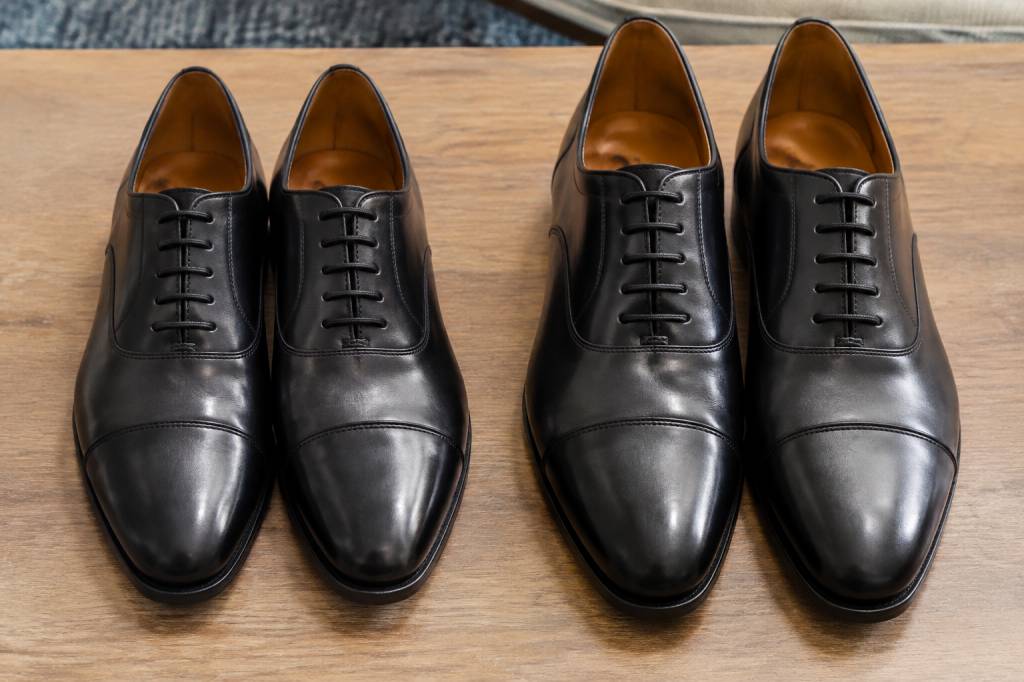
There is a small but surprisingly consequential gap between a men’s US size 9.5 and a size 10. Not enough to change your life, perhaps, but enough to turn a comfortable walk into a long conversation with your toes. I learned this the hard way while trying on a handsome pair of leather shoes that looked perfect in the mirror and felt like a tiny Italian interrogation by lunchtime.
So, what is the actual difference? A half-size usually adds about one-sixth of an inch—roughly 4 millimeters—to the shoe’s length. That sounds modest, but feet notice details our eyes miss. The catch is that shoe sizing is not perfectly consistent: the fit can vary by brand, style, width, and even the shape of the shoe’s toe.
The basic difference between size 9.5 and size 10
In the US men’s sizing system, each full size represents about one-third of an inch in length. A half-size is therefore about one-sixth of an inch, or approximately 4 millimeters. In simple terms, a size 10 is generally a little longer than a size 9.5, not dramatically longer.
That measurement describes the sizing scale, not a guarantee that every size 10 shoe will be exactly 4 millimeters longer than every size 9.5. Manufacturers use different patterns, materials, and construction methods. One brand’s 9.5 may feel close to another brand’s 10. A pointed dress shoe may also feel shorter inside than a round-toe sneaker marked with the same size, because the toe shape changes how much usable room your foot gets.
Think of the number as a useful starting point—not a promise from the shoe gods.
How much difference can 4 millimeters make?
More than you might expect. If a shoe is already a little tight at the front, another 4 millimeters can give your toes welcome breathing room. If the shoe is already a bit loose, that same extra length may let your heel slip or make the shoe feel less secure.
Fit is not only about length, either. Your foot needs enough room across the widest part, enough depth above the toes, and a heel that stays comfortably in place. A size 10 could solve a length problem while creating a width problem—or it might change nothing because the shoe’s last, the shape around which it was made, is simply a poor match for your foot.
That is why trying on both sizes can be worthwhile, especially when buying a new brand or a formal style. A few millimeters are easy to dismiss until you have spent an entire evening on your feet.
Signs that size 9.5 may be too small
Pay attention to what your feet tell you while standing and walking. A size 9.5 may be too short if your toes press against the front, feel cramped when you walk downhill, or become sore after a short period of wear. Your toes should not have to negotiate for territory.
Other warning signs include numbness, tingling, pressure on the toenails, or discomfort that grows as the day goes on. Feet often swell slightly throughout the day, so a shoe that feels acceptable first thing in the morning may feel much less charming by late afternoon.
Do not rely on the fact that you can squeeze your foot into the shoe. Leather may soften and adapt a little with wear, but it will not reliably become longer. If your toes are hitting the front, hoping for a miracle break-in is not a sound footwear strategy.
Signs that size 10 may be too large
A bigger shoe is not automatically a more comfortable shoe. If your heel lifts noticeably with each step, your foot slides forward, or you feel as if you are gripping the shoe with your toes to keep it on, the size 10 may be too long or too roomy.
Excess space can also cause rubbing and blisters. You might notice your foot moving around inside the shoe, especially on stairs or during a brisk walk. A little movement can be normal in some styles, but the shoe should feel secure without demanding constant attention.
If the size 10 feels too long but the 9.5 feels too tight across the sides, the issue may be width rather than length. Look for a wider fit or a different model instead of trying to solve a side-to-side problem by changing the number alone.
Length, width, and shoe shape all matter
Many shoppers focus on length because it is printed clearly on the box. Width is just as important. Two feet measuring the same length can differ noticeably in width, toe shape, arch, and instep height. A narrow, tapered shoe may pinch a wide forefoot even when the length is correct. A roomy sneaker may feel comfortable in the same nominal size.
Brands do not always use identical sizing standards, and individual shoe models can fit differently within the same brand. Athletic shoes, boots, loafers, and dress shoes may each have their own feel. Materials matter, too: flexible uppers can feel forgiving, while stiff leather or structured synthetic materials may feel less flexible from the start.
That is why the best question is not simply, “Am I a 9.5 or a 10?” It is, “Which size in this particular shoe lets my foot sit naturally and securely?” Your usual size is a helpful clue, not a lifelong contract.
How to compare the two sizes properly
Try shoes on later in the day, when your feet have had time to expand a little. Wear the socks you expect to use with them, and test both feet: it is common for one foot to be slightly larger. Fit the larger foot first, then check that the smaller foot still feels secure.
-
Stand up while checking the fit. Your feet spread under your body weight, so a seated try-on can be misleading.
-
Leave a small amount of space in front of your longest toe. The exact amount depends on the shoe, but your toes should not press against the front.
-
Walk around on a clean, safe surface. Notice heel movement, pressure, rubbing, and whether your toes can move comfortably.
-
Check the widest part of the shoe. It should hold your foot without squeezing or letting it slide from side to side.
-
Compare the two sizes in the same model, with the same socks. Otherwise, you are comparing different variables at once.
If you shop online, measure both feet against a wall on a piece of paper and compare the longer measurement with the brand’s size chart. Measure while standing, and follow that brand’s instructions where available. If you are between sizes, the best choice may depend on the shoe’s shape and whether the material can comfortably adapt—not on a universal rule to always size up.
Does a size 10 make you taller than a size 9.5?
No. A larger shoe size does not meaningfully increase your height. The difference between 9.5 and 10 is about length inside the shoe, not extra height under your heel. If you are choosing elevator shoes, look at the shoe’s stated height increase and its overall fit, rather than assuming a bigger shoe will lift you higher.
This point matters because elevator shoes have built-in height-increasing insoles. The internal construction can feel different from an ordinary shoe, and the fit needs to support your foot securely. A shoe that is too short may press your toes; one that is too large can let your foot shift around. Either way, the hidden lift becomes rather less useful when every step feels uncertain.
Try elevator shoes in the size that gives you a snug, comfortable fit without pinching. Follow the manufacturer’s sizing guidance, since the internal shape and available room can vary between designs. If possible, walk in them before deciding. A discreet height boost is best when your attention stays on the conversation, not on your footwear.
What about UK and European sizes?
US, UK, and European sizes do not follow one perfectly interchangeable scale. A US men’s 9.5 may be listed around a UK 8.5 or 9 and a European 43, depending on the brand and its chart. These are approximate conversions, not fixed mathematical truths.
When shopping internationally, use the specific manufacturer’s conversion chart and, if provided, the foot-length measurement in centimeters or millimeters. Do not assume that converting a US 9.5 to a European number will produce the same fit in every country or every brand. The shape of the shoe still has the final word.
Common mistakes when choosing between 9.5 and 10
The first mistake is buying a size that feels tight because you expect it to stretch dramatically. Some uppers soften, but a shoe should feel comfortable from the beginning, with no painful pressure or toe contact. The second is sizing up whenever a shoe feels narrow. A longer shoe may leave your heel loose while the sides remain tight.
Another common mistake is judging fit by appearance alone. A shoe can look elegant and still be the wrong size. Likewise, do not assume every pair you own should have the same number inside. A 9.5 in one brand and a 10 in another can both fit you perfectly.
Finally, avoid making the decision based on a quick try-on while sitting down. Stand, walk, and give each pair a moment. Your feet are doing the actual wearing; let them take part in the vote.
So, which size should you choose?
Choose 9.5 if it gives your toes enough room, holds your foot comfortably, and does not create pressure at the sides or front. Choose 10 if the 9.5 feels short or cramped and the larger size still keeps your heel and midfoot secure. If neither fits well, try a different width, shape, or brand.
The difference between a men’s 9.5 and 10 is small on paper—about 4 millimeters—but fit is personal, and small changes can matter. Look for comfortable toe room, a stable heel, and no painful pressure. Then take a few steps. If your shoes let you move naturally, you have found the right size. If they make you think about your feet every minute, keep looking; there are better walks ahead.