








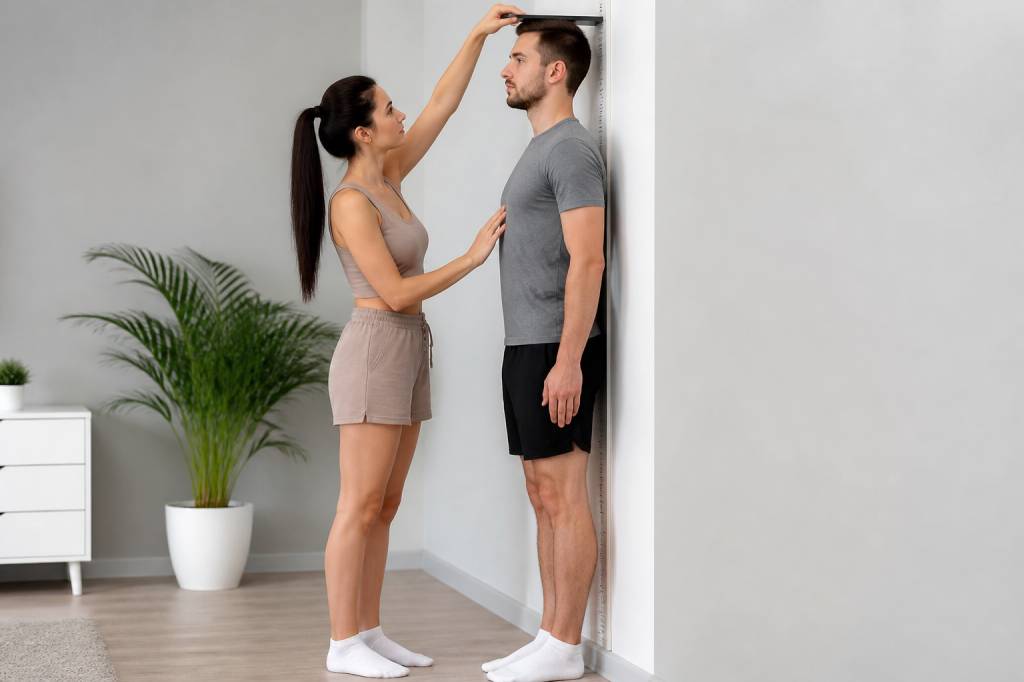
What really affects your height
Let’s start with the honest part, because honesty is stylish. Your final adult height is mostly written by genetics. If your parents are both tall, chances are you may have a little extra vertical grace in your own wardrobe. If not, well, nature sometimes prefers surprises of a different kind.
That said, genetics is not the whole story. During childhood and the teenage years, your body still needs the right conditions to grow well: proper nutrition, enough sleep, regular movement, and a healthy hormonal environment. Even after your growth plates close, you can still improve how tall you look by standing taller, moving better, and dressing smarter.
So if you’re searching for natural ways to increase your height, the best mindset is this: you may not be able to rewrite your DNA, but you can absolutely help your body reach its full potential and present it better. That’s already a powerful upgrade.
Sleep is where growth quietly happens
If there is one habit that deserves a gold medal in the “grow taller naturally” race, it’s sleep. Your body does a lot of repair work while you’re asleep, and growth hormone is released mainly during deep sleep. In plain English: staying up late scrolling, gaming, or binge-watching may be entertaining, but it’s not exactly a love letter to your height.
Teenagers and young adults still growing should aim for enough sleep every night, ideally on a consistent schedule. A messy sleep pattern can disrupt recovery, energy, and overall development. Even for adults, good sleep improves posture, muscle recovery, and the way you carry yourself.
Practical habits that help:
- Keep a regular bedtime and wake-up time.
- Reduce screen time before bed, especially bright light from phones and laptops.
- Make your room dark, cool, and quiet.
- Avoid heavy meals and caffeine late in the day.
Think of sleep as the tailor of your body: it does invisible work while you rest, adjusting the fit of everything that matters.
Eat like your height depends on it
Nutrition is one of the most important natural factors for growing well. A body that lacks key nutrients cannot build bone, muscle, and tissue efficiently. That is especially true during childhood and puberty, when growth happens at full speed.
If you want to support healthy growth, focus on a balanced diet with enough protein, vitamins, and minerals. Protein helps build tissue. Calcium and vitamin D support bone health. Zinc, magnesium, and iron also play important roles in growth and energy.
Good foods to include regularly:
- Eggs, fish, chicken, lean meat, tofu, and legumes for protein
- Milk, yogurt, cheese, fortified plant milks, and leafy greens for calcium
- Fatty fish, egg yolks, and safe sun exposure for vitamin D
- Fruits and vegetables for overall nutrient coverage
- Nuts, seeds, whole grains, and beans for minerals and steady energy
One mistake many people make is eating “enough calories” but not enough quality calories. A diet built mainly on fast food, sugary drinks, and ultra-processed snacks can leave nutritional gaps. Your body is not a sports car that runs on any fuel; it needs the good stuff if you expect it to perform.
Hydration also matters. Water supports every system in the body, from circulation to recovery. It won’t magically add centimeters, of course, but it helps your body function at its best.
Move your body to support growth and posture
Exercise will not make your bones grow longer once your growth plates are closed, but it can absolutely help you maximize your natural height potential and improve the way you carry yourself. During growth years, regular physical activity supports bone health, muscle development, coordination, and a healthy appetite. For adults, it strengthens the muscles that keep the spine aligned and the shoulders open.
Some of the best activities for overall development are simple and effective:
- Swimming
- Basketball
- Running
- Cycling
- Bodyweight training
- Yoga and mobility work
Swimming is often praised because it encourages full-body extension and mobility. Basketball and running are great for overall athletic development. Yoga may not grow your bones, but it can help you look and stand taller by improving posture, flexibility, and body awareness.
Strength training also deserves a place in the discussion. Some people worry that lifting weights “stunts growth,” but that is a myth when training is done correctly and safely. In fact, well-structured strength work can support strong bones and better posture. The key is proper technique, appropriate loads, and good supervision for younger athletes.
Posture can change your appearance more than you think
Here’s a truth many men discover only when they see themselves in a photo taken from the wrong angle: poor posture can steal visual height. Rounded shoulders, forward head position, and a compressed spine can make you look shorter than you actually are. The good news? Posture is trainable.
Stand in front of a mirror and check the basics: ears over shoulders, shoulders relaxed, chest open, abdomen engaged, and weight evenly distributed on both feet. You are not trying to stand like a soldier from a 19th-century parade. Just aim for natural alignment.
Simple posture habits that help:
- Take breaks from sitting every 30 to 60 minutes.
- Strengthen your core and upper back muscles.
- Stretch your hip flexors, chest, and hamstrings.
- Keep your screen at eye level when possible.
- Practice walking with an upright, relaxed frame.
One of my favorite little observations from style-conscious men is this: the same man can look two inches taller simply by fixing his posture and wearing better-fitting clothes. No miracle involved. Just good habits, and a bit of self-respect.
Stretching won’t lengthen your bones, but it can help you stand taller
Let’s be clear: stretching does not make your bones grow longer. That said, it can improve mobility, reduce stiffness, and help your spine and joints move more freely. The result is often a taller-looking silhouette and less of that compressed, tired posture people get after long hours at a desk.
Helpful stretches include:
- Cat-cow stretch
- Cobra stretch
- Child’s pose
- Hip flexor stretch
- Hamstring stretch
- Wall angels
Even hanging from a bar for short periods can decompress the spine temporarily and improve how you feel. Just don’t expect it to permanently add height overnight. If only it were that easy, half of us would be hanging from doorframes between coffee breaks.
Do not force extreme stretching or chase painful positions. The goal is openness, not drama. Your body should feel better afterward, not like it has been negotiated with by an overenthusiastic gym coach.
Avoid the habits that work against healthy growth
If you want the best chance of reaching your natural height potential, it also helps to avoid habits that interfere with growth and recovery. Some of them are obvious, but they’re still worth saying out loud.
- Poor sleep patterns
- Chronic stress
- Smoking and alcohol abuse during development years
- Repeated crash dieting or severe calorie restriction
- Ignoring persistent pain or posture problems
Chronic stress matters more than people think. A body under constant pressure tends to recover poorly, sleep badly, and behave as if it is always running late. That is not the best environment for healthy development.
If you are still growing, avoid the temptation to treat your body like a disposable accessory. It’s the one piece of style you’ll carry every day of your life.
Can you actually get taller as an adult?
This is the question that often brings people to blogs like this one. The short answer is: once your growth plates have closed, you cannot naturally increase your bone length. That part is biology, not motivation.
But before disappointment arrives wearing heavy boots, remember this: adults can still look taller in very real ways. Better posture, leaner body composition, stronger core muscles, and smarter clothing choices all create a taller visual impression. In some cases, improving posture alone can recover a surprising amount of visible height.
Also, spinal decompression during the day means your height naturally fluctuates a little from morning to evening. Most people are a bit taller after waking up. That’s not magic. It’s the spine relaxing overnight and then compressing slightly under gravity as the day goes on.
Style choices that make natural height work harder for you
Since this blog lives at the crossroads of fashion and height, let’s not ignore the power of style. Clothing cannot grow your bones, but it can sharpen your proportions and help you appear taller without effort.
Some easy style rules:
- Wear well-fitted clothes, not oversized ones that swallow your frame.
- Choose monochrome or low-contrast outfits to create a longer line.
- Use vertical details sparingly: open jackets, V-necks, and straight-leg trousers can help.
- Keep hems clean and proportions balanced.
- Choose shoes that add discreet height when needed.
This is where a good pair of elevator shoes can be a clever ally. They do not replace healthy habits, but they can give you extra confidence for work, dates, events, or any day when you want your posture and presence to say a little more. In my experience, confidence is often the first thing people notice, and height is usually the second.
Wear the right shoes, stand well, and suddenly the mirror becomes a little more cooperative. Life is kinder that way.
When to ask a doctor for advice
If you are a child or teenager and you are concerned about growth, it is wise to speak with a doctor, especially if growth seems unusually slow compared with peers or family patterns. Sometimes a medical issue can affect height development, and it is better to check early than to guess.
For adults, a doctor can help if you have posture issues, back pain, spinal concerns, or a sudden change in height. Losing height over time may signal compression, poor posture, or a medical condition worth evaluating.
In other words, natural growth is important, but so is knowing when the body needs expert attention. There is no style in ignoring a real health issue.
Small habits, real results
If you came here hoping for a miracle trick, I’ll spare you the fantasy. There is no secret juice, no overnight stretch, and no celebrity-level “one weird method” that adds permanent height on command. But there is a far better truth: your body responds to consistent, intelligent care.
Sleep well. Eat well. Move regularly. Protect your posture. Treat your body with patience. If you are still growing, these habits help you get the most out of your natural potential. If you are already an adult, they help you look taller, feel better, and carry yourself with more authority.
And if you want a little extra help from the style department, choose clothes and shoes that work with your frame instead of against it. Height is not only a number; it is also presence. And presence, my friend, can be cultivated every single day.