








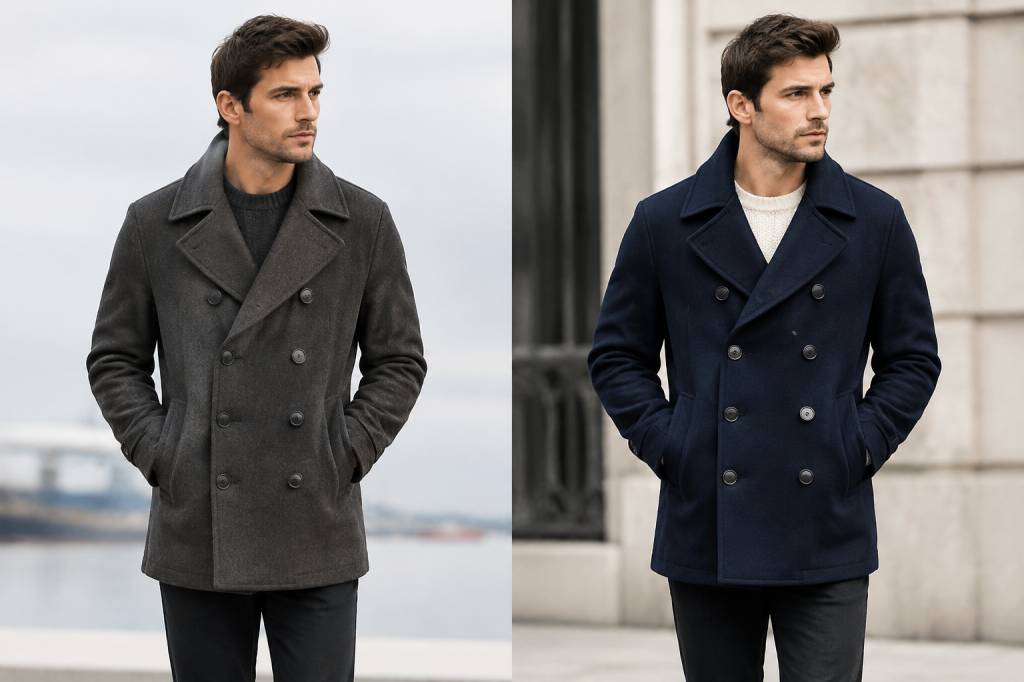
Stand in front of a rack of winter coats and you may spot two labels that seem to promise the same thing: “peacoat” and “navy.” One describes a coat; the other, a color. Yet fashion has a habit of making simple things look mysterious, especially under shop lighting. Is peacoat a shade of blue, a style of coat, or both? And when you are choosing a jacket to sharpen your silhouette, which one should you trust?
Let’s untangle the two. Navy is a color family: a deep, dark blue with a smart, dependable character. A peacoat is a double-breasted coat with a maritime history, most often made in navy wool. Because the classic version is so familiar, “peacoat” is also sometimes used to describe a particular blue shade. That overlap is where the confusion begins—and where a little style knowledge can save you from ordering the wrong coat.
Peacoat is first a coat style
The peacoat has its roots in naval clothing, where sturdy wool and practical design were essential rather than merely handsome. Its traditional features include a broad lapel, a double-breasted front, large buttons and a relatively short, structured cut. The familiar navy version became an enduring menswear staple because it looks polished without feeling formal.
Picture a cold evening by the harbor: wind tugging at your collar, wool holding its ground, and a row of buttons doing more than decorating your chest. That is the spirit of the classic peacoat. Today, designers reinterpret it in many colors and fabrics, but the recognizable shape remains.
So if a product description says “navy peacoat,” it usually means a peacoat coat in navy blue. If it says “peacoat blue,” it may mean a color inspired by the traditional coat, whether or not the garment is a peacoat at all. Context is your best friend here; the product image and description should tell you which meaning is intended.
What does peacoat blue look like?
There is no single, universally fixed color standard for peacoat blue. One brand’s version may be almost indistinguishable from navy, while another’s leans brighter, softer or slightly more muted. In general, the name suggests a deep blue associated with the traditional wool coat: rich, cool and dark enough to feel classic, but sometimes a touch less inky than the darkest navy shades.
Think of navy as the broad family and peacoat blue as one possible relative. It might sit close to midnight blue, or it might show a little more color in daylight. Some labels use the name for marketing rather than as a precise color specification, so don’t expect every “peacoat blue” shirt, sweater or pair of shoes to match every other one.
Lighting can make the difference look dramatic. Under warm indoor bulbs, both shades may appear nearly black. In daylight, a peacoat blue fabric may reveal a clearer blue cast, while a very dark navy can stay more subdued. If you are matching an outfit, compare the pieces in natural light whenever possible. Your hallway mirror may be flattering, but it is not always an honest color consultant.
Navy blue: the reliable classic
Navy has earned its place in men’s wardrobes by being easy to wear and surprisingly versatile. It is dark enough to look refined, but less severe than black. It works across seasons, pairs comfortably with neutrals and can move from a relaxed weekend outfit to a smart office look without changing its personality.
For example, navy trousers with a white shirt and brown shoes make a crisp combination. A navy jacket over a gray knit feels composed but not stiff. And a navy coat over denim can look intentional rather than as if you simply grabbed the warmest thing by the door—which, on a freezing morning, is a respectable achievement in its own right.
Navy also gives you room to play with texture. Wool, cotton, suede and smooth leather all behave differently in the same color. A textured navy coat can feel softer and more relaxed than a smooth navy suit, even though both share that dark blue foundation.
How the shades differ in an outfit
Because peacoat blue and navy can be very close, the distinction is often less about a strict rule and more about the effect you want. A deeper, nearly black navy tends to look formal, restrained and sharp. A slightly brighter peacoat blue can feel more open and relaxed, especially in daylight or against lighter colors.
When pairing two blue pieces, avoid assuming that “blue goes with blue” automatically means they match. A navy jacket and peacoat blue trousers can look excellent when the difference is deliberate. If the shades are almost—but not quite—the same, the outfit may appear as though you tried to match them and missed. Add contrast with gray, cream, white or tan to make the combination look intentional.
Here are a few dependable combinations:
-
Navy with white: Clean, crisp and easy to wear. A white shirt or sweater brightens the darkness of navy without competing with it.
-
Peacoat blue with gray: A cool, balanced pairing. Light gray adds contrast; charcoal makes the outfit moodier and more refined.
-
Either shade with tan or camel: A warm neutral brings out the richness of blue. Try a camel scarf, brown belt or tan leather shoes.
-
Blue with denim: It can work beautifully, but vary the washes. Dark navy above and mid-blue denim below usually create clearer separation than two nearly identical blues.
Choosing the right shade for your complexion
Both colors suit a wide range of complexions, but small differences in depth and brightness can change how a garment looks near your face. Very dark navy creates strong contrast and often feels especially polished. A slightly lighter peacoat blue may bring more visible color to an outfit and can feel less severe.
Rather than following a rigid rule, hold the garment near your face in good light. Does the blue make your complexion look lively, or does it seem to drain the color from your face? A shirt collar, scarf or sweater in white, cream or gray can also create a useful buffer if your outer layer is especially dark.
And remember that a coat is not a passport photo. You do not need to build your whole wardrobe around a shade that supposedly belongs to your complexion. Fit, fabric and confidence carry more weight than a color chart—though a well-cut coat certainly helps with the first two.
Using a peacoat to shape your silhouette
A classic peacoat can be a particularly useful piece for men who want a balanced, confident silhouette. Its structured shoulders and defined lapels give the upper body shape, while the double-breasted front adds visual presence. The shorter length often works well with jeans or tailored trousers because it does not overwhelm the legs.
Fit matters more than the color name. The shoulder seams should sit close to your natural shoulders, and the coat should button comfortably without pulling across the chest. Sleeves that cover most of your shirt cuffs can make the whole look feel neater. If the coat is too long or too roomy, even the most beautiful navy may seem to wear you instead of the other way around.
For a streamlined effect, keep the layers beneath the coat relatively close to the body. A fine-knit sweater, fitted shirt or lightweight turtleneck adds warmth without creating a bulky stack. Pair it with trousers in a contrasting but complementary shade, then choose shoes that continue the clean line of the outfit.
Footwear can make a subtle difference to your proportions, too. A sleek pair of elevator shoes can add discreet height while keeping the overall look natural. Choose a design that suits the formality of the coat: leather styles work well with tailored trousers, while cleaner casual designs can accompany denim. The goal is not to make your shoes the conversation; it is to feel comfortable in the complete outfit.
What to check when shopping online
Online color names are helpful clues, not guarantees. Screens vary, product photos may be edited, and the same shade can look different on wool, cotton or synthetic fabric. If you are choosing between “navy” and “peacoat blue,” look beyond the label before clicking “add to cart.”
-
Read the product description: Check whether “peacoat” refers to the coat’s shape or simply its color.
-
Look at several photos: Images in different lighting can reveal whether the shade is almost black, clearly blue or slightly muted.
-
Check the fabric: Brushed wool may appear softer and less saturated than smooth cotton or a tightly woven blend.
-
Compare measurements and fit notes: A flattering cut matters more than a tiny difference between two dark blues.
-
Review the return policy: Color is one of the hardest details to judge through a screen. A sensible return option gives you room to decide at home.
If you already own a navy coat, take a quick look at the rest of your wardrobe before buying another dark blue layer. Do you need a true replacement, or would a lighter, more visibly blue shade give you something different? A second coat should earn its place by offering a new combination, not by being nearly identical in a different product photo.
So which one should you choose?
Choose navy if you want maximum versatility and a shade that feels timeless, understated and easy to coordinate. Choose peacoat blue if you like the traditional maritime association or want a deep blue that may show a little more color, depending on the brand. If you are shopping for the coat itself, focus on the cut and construction first; the classic peacoat simply happens to look especially at home in navy.
In the end, the distinction is straightforward: navy is a color, while a peacoat is a coat style—and “peacoat blue” is a color name borrowed from that iconic garment. Treat the label as a useful hint, check the shade in real light and choose the version that works with the clothes and shoes you already enjoy wearing. The best blue is not the one with the most impressive name. It is the one you reach for on a chilly morning and feel good in all day.