







Why adjustable height insoles have become a quiet favorite
There are days when a few extra centimeters feel less like vanity and more like strategy. A first date, an important meeting, a wedding photo where everyone seems to have grown overnight in the group chat of life… you know the feeling. This is where adjustable height increase insoles enter the scene, not with drama, but with the practical charm of a well-cut jacket.
Unlike one-piece height boosters that give you a fixed lift, adjustable insoles let you fine-tune the elevation. That sounds like a small detail, but it matters. The difference between “I feel a bit taller and confident” and “why do I suddenly feel like I’m walking on stilts?” can be just a few millimeters. A good adjustable insole gives you control, and control is elegance.
For men who want an everyday height boost without announcing it to the room, this is one of the most discreet solutions available. And unlike elevator shoes, which are built around the lift from the start, height-increase insoles can be moved between shoes more easily. In short: more flexibility, less commitment, fewer wardrobe headaches. A beautiful deal, in my opinion.
What makes adjustable height insoles different?
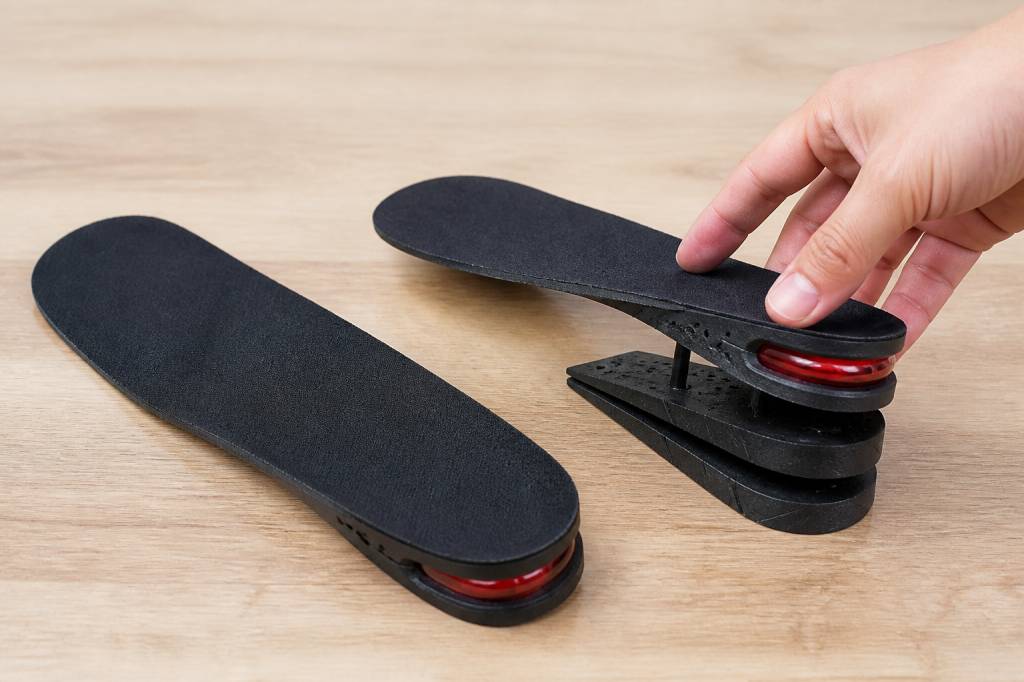
The basic idea is simple. These insoles are designed with removable layers or modular parts so you can choose your preferred lift. Depending on the model, you can usually adjust the height in increments, often from a subtle boost to something more noticeable.
This matters because not every situation asks for the same answer. A quiet 1.5 cm lift may be perfect for daily wear, while 3 cm may suit a more dressed-up look. Some men want just enough to feel more upright in jeans and sneakers. Others want a stronger boost for boots, tailored trousers, or special occasions. Adjustable height insoles make both possible without buying multiple pairs.
They also help you test your comfort level before committing to a larger lift. If you have never worn height-increasing products before, starting small is the wisest move. Rome was not built in a day, and neither is a stable stride in new insoles.
The main benefits for everyday wear
For daily use, adjustable height insoles bring several practical advantages. They are not magic. They will not turn you into a fashion deity by sunrise. But they can improve posture, confidence, and the visual line of your outfit in a very real way.
- They offer a customizable lift, so you can adapt the height to the shoe and the occasion.
- They are often cheaper than buying multiple height-enhancing shoes.
- They let you experiment with different heights before settling on a preferred boost.
- They can be swapped between compatible shoes, which makes them convenient for travel or a rotating wardrobe.
- They can help some men feel more balanced in clothes that look better with a slightly taller frame.
The key word here is “balanced.” A good height boost should not feel theatrical. It should make your silhouette look cleaner, your stance a little more composed, and your presence a little more grounded. The best compliments are the ones nobody can quite explain.
How much height can you realistically gain?
This is the question everyone asks eventually, usually with a mix of hope and suspicion. The answer depends on the insole design, the shoe type, and your own comfort. Adjustable insoles often allow a range of lift, commonly around 1 to 5 cm, though the more you add, the more important shoe volume and stability become.
For everyday wear, many men find the sweet spot between 2 and 4 cm. That range is noticeable enough to make a difference in appearance, yet usually subtle enough to remain comfortable through a normal day. If you go higher, the posture change becomes more obvious, and the shoe needs to support the foot properly. A hidden boost is great; a wobbly walk is not exactly the Mediterranean ideal of grace.
A useful rule: start with the smallest lift that gives you the result you want. Height is like seasoning. Too little and you barely notice it; too much and everything tastes like an experiment.
Which shoes work best with adjustable insoles?
Not every shoe is ready for an insole relationship. Some pairs have enough internal space to handle a lift, while others are too tight and will punish your feet for the attempt. The best options usually have a deeper interior and a more structured shape.
- Sneakers: Great for moderate lifts, especially if the shoe has a removable insole or extra volume.
- Casual boots: Often a strong choice because they provide more room and better ankle support.
- Dress shoes: Possible, but be careful. A slim elegant shoe can become cramped quickly.
- Loafers: Comfortable for some lifts, though fit varies widely by model.
- Running shoes: Usually not ideal unless the insole is specifically designed for athletic use.
The shoe must be able to absorb the extra height without making your heel sit too high or your toes feel compressed. If your foot feels pushed forward, or if the back of the shoe starts rubbing, the boost is probably too ambitious for that model.
Comfort is the real luxury
A height-increase insole can only be useful if you actually enjoy wearing it. That sounds obvious, but many men chase centimeters and forget the feet are the ones paying the bill. Comfort is not a bonus feature. It is the whole game.
Good adjustable insoles should offer a stable base, decent cushioning, and a shape that supports your arch rather than flattening it into resignation. If they slide around, pinch, or shift during walking, they lose their appeal very quickly. You may gain height, but you also gain irritation, and that is not a trade anyone should celebrate.
When testing insoles, walk on different surfaces. Hardwood, pavement, stairs, and carpet all reveal different things. A pair that feels fine in your living room might betray you in the real world, where sidewalks are less forgiving than your mirror.
How to choose the right adjustable height insole
There are a few details worth checking before you buy. These small technical points make the difference between a clever accessory and a regrettable drawer resident.
- Height range: Make sure the adjustment levels suit your goal, but do not chase the maximum by default.
- Material: Look for durable foam, gel, or layered systems that stay stable over time.
- Thickness distribution: A well-designed lift should support the heel and transition naturally toward the forefoot.
- Breathability: If you wear them daily, moisture control matters more than you think.
- Compatibility: Check the shoe interior before purchasing. A beautiful insole in the wrong shoe is just a tiny disappointment with packaging.
- Grip: Anti-slip surfaces help keep the insole in place and preserve comfort.
If you are between sizes in shoes, that also matters. A slightly roomier pair often works better than a snug fit. A boost needs space to breathe, just like style itself.
Adjustable insoles versus elevator shoes
This comparison comes up often, and for good reason. Both aim to increase height discreetly, but they do so in different ways.
Elevator shoes are built with hidden height inside the structure of the shoe. They usually offer a more integrated look and can provide a cleaner silhouette when well made. Adjustable insoles, on the other hand, are more versatile. You can move them between shoes, change the height level, and test what feels best before committing.
So which is better? It depends on your priorities.
- If you want maximum convenience across multiple shoes, adjustable insoles win.
- If you want a purpose-built shoe with a more seamless internal design, elevator shoes may be the stronger choice.
- If you are new to height enhancement, adjustable insoles are often a low-risk starting point.
- If you already know your preferred lift and wear one style of shoe often, elevator shoes can be a very elegant solution.
In many wardrobes, the smartest approach is not choosing one forever, but using both depending on the day. Fashion, after all, is rarely about one weapon. It is about the right one at the right time.
Tips for wearing them comfortably every day
Once you find a pair that works, the goal is to make it feel natural. That takes a little adaptation. No need to dramatize it, but respect the learning curve.
- Begin with the lowest height setting and wear them for short periods at first.
- Use them in shoes that already fit well without the insole, so the extra height does not create pressure.
- Break them in on days with lighter activity before wearing them for a long commute or a full event.
- Check whether your posture changes too much. A good boost should feel subtle, not forced.
- Keep your socks appropriate. Thin, well-fitting socks often improve the overall feel.
- Rotate between pairs if you use them daily, so both the insole and your feet get a rest.
And one more practical note: pay attention to how your body responds after a few hours. Small aches can be a sign that the lift is too high, the shoe too tight, or the arch support not quite right. Listening early saves trouble later.
Who are they best for?
Adjustable height increase insoles suit a wide range of men. They are especially useful if you want a discreet boost without changing your entire footwear collection. They can work well for office wear, social events, travel, and everyday errands.
They are also a strong option for men who are curious about height enhancement but not ready to commit to height-increasing shoes. Think of them as a gentle introduction, a way to discover your ideal lift without making a dramatic entrance.
If you care about appearance but still value practicality, they hit a pleasant middle ground. That is not always easy to find in menswear. Usually it is either style with sacrifice or comfort with compromise. Adjustable insoles, when chosen well, can give you a bit of both.
A few mistakes to avoid
There are some classic traps worth sidestepping. They are easy to make, and equally easy to regret.
- Choosing too much height too soon.
- Using them in shoes with too little internal space.
- Ignoring foot support and focusing only on the number of centimeters.
- Wearing them for a full day without a short adaptation period.
- Buying cheap, flimsy versions that collapse after a few wears.
It is tempting to treat height enhancement like a quick fix. But the best results come from matching the product to your daily habits, not just your wish list. Style works the same way: the smartest choices are the ones you can live in.
Why they fit so well into an everyday wardrobe
The real appeal of adjustable height insoles is not simply that they add height. It is that they let you shape your presence without making your outfit look engineered. That subtlety is powerful. A man who stands a little taller often carries himself differently. He reaches for the door handle with more confidence. He sits straighter. He moves with a touch more intention.
And that, perhaps, is the quiet success of this kind of accessory. Not the centimeters themselves, but what they do to the overall impression. The right insole does not ask for attention. It simply improves the line of the body, the fit of the clothes, and the feeling in the mirror before you head out.
In a world full of loud solutions, that kind of refinement is worth appreciating. Adjustable height increase insoles are not about pretending to be someone else. They are about giving your everyday look a better frame, one small layer at a time.