







Why a Barbour Jacket Works Over a Suit
There is something quietly reassuring about a Barbour jacket. It looks as if it has weathered a country lane, a sudden shower and at least one dramatic family story—and still has time for lunch. Put it over a suit and that easygoing character meets the polish of tailoring. The result feels refined without being stiff, practical without looking like you are on your way to repair a fence.
It is a particularly useful combination when the weather cannot make up its mind. A wool overcoat may feel too formal for a relaxed office, while a lightweight raincoat can seem out of place with a proper suit. A waxed cotton jacket fills the gap beautifully. It brings texture and personality, and it is genuinely useful when the sky turns a worrying shade of grey.
The secret is balance. A Barbour is casual by nature, so the suit beneath it should look considered, and the jacket should fit comfortably over the tailoring. Get those details right and the combination feels intentional. Get them wrong and you may look as though you borrowed your father’s coat on the way to a job interview.
Choose the Right Barbour Style
Barbour makes several jacket styles, but not all of them are equally easy to wear over a suit. The classic Bedale and Beaufort are dependable starting points. They have room for layers, a recognisable country look and enough structure to sit neatly over a jacket. The Bedale is shorter and slightly more compact; the Beaufort gives you extra length and a more generous fit.
That extra room matters. A suit jacket has shoulders, sleeves and lapels that need space. If the Barbour pulls across your back or crushes the suit shoulders, you will feel restricted before you have even reached the train station. Try the combination on together, rather than judging the outer jacket over a thin shirt. Raise your arms, sit down and button it up. A coat that only works while you stand perfectly still is not much of a coat.
For a more streamlined city look, consider a relatively simple model with minimal visible hardware. A very rugged jacket can still work, but it creates a stronger contrast with formal tailoring. That contrast is part of the charm—just make sure it looks deliberate.
Get the Fit Right Over Tailoring
When trying on a Barbour over a suit, pay particular attention to the shoulders and sleeves. The jacket should not flatten your suit shoulders or pull tight across the chest. You should be able to move naturally, with enough room for a fine knit or waistcoat if the day is cold. But avoid sizing up so far that the jacket hangs like a tent. Extra room is useful; a disappearing silhouette is not.
The sleeves should cover the suit sleeves comfortably, without swallowing your hands. The hem is also worth considering. A Barbour that ends around the hip or upper thigh is usually easy to wear with a suit. A longer jacket can work well too, particularly with a Beaufort-style cut, but check that its proportions do not make the suit look unusually short beneath it.
Here is a simple fitting test: put on the suit, button the jacket, then walk, sit and reach for something in an imaginary overhead luggage rack. If the shoulders stay comfortable and the front does not strain, you are in good shape. If not, try a different size or model before blaming your tailor—or your lunch.
Match the Colours, Not Every Detail
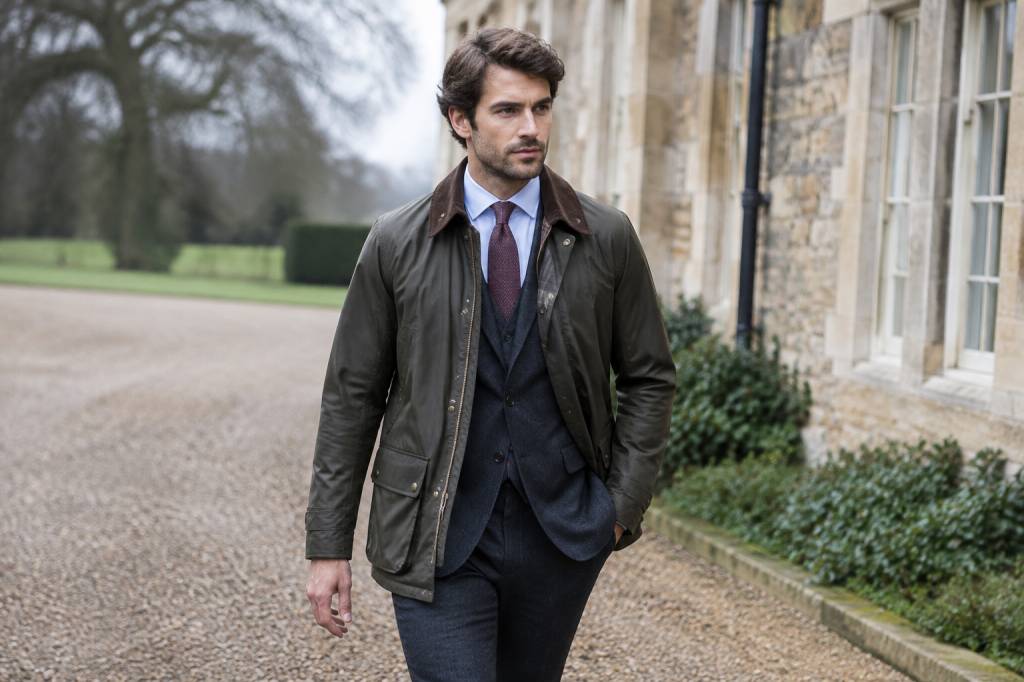
Olive is the classic Barbour colour for a reason. It works naturally with navy, charcoal, mid-grey and brown, making it an easy partner for most suits. Navy Barbours are also versatile and feel especially at home in the city. Black can look sharper and more urban, though it may seem a little severe with traditional country fabrics.
For the suit, start with navy or charcoal. Both create a clean contrast with olive, and neither competes with the jacket’s waxed texture. A mid-grey suit offers a softer, more relaxed effect. Brown suits and tweed can look excellent too, but the combination becomes distinctly countryside-inspired. Think autumn walk followed by a very respectable pub lunch—not a solemn board meeting.
A few reliable pairings:
-
Olive Barbour with a navy suit, white or pale blue shirt and dark brown shoes.
-
Olive Barbour with a charcoal suit, a fine grey knit and black or dark brown shoes.
-
Navy Barbour with a mid-grey suit, a white shirt and polished brown brogues.
-
Olive Barbour with a brown or tweed suit, a cream shirt and sturdy leather footwear for a relaxed country look.
You do not need to match the jacket exactly to your shoes or belt. In fact, trying too hard can make the outfit feel arranged by committee. Aim for colours that sit comfortably together, then let the textures add interest.
Keep the Suit and Shirt Appropriate
A Barbour jacket naturally lowers the formality of a suit. That does not mean your tailoring should look careless; it means a relaxed, textured suit will usually feel more at home than an ultra-formal, glossy one. Flannel, brushed wool and subtle checks are excellent choices in cooler months. A lightweight wool suit can work in spring or autumn, particularly when the jacket is not heavily padded.
For a business setting, keep the suit clean and simple: navy or charcoal, a crisp shirt, and a restrained tie if the occasion calls for one. The contrast between the jacket and the suit provides enough character. For a weekend event, you can loosen things up with an open-collar shirt or a fine merino sweater under the suit jacket.
One important point: avoid bulky layers under both the suit and Barbour. A heavy sweater, waistcoat and thick lining can make the whole arrangement feel crowded. A fine knit is usually warmer and neater than a chunky one. The goal is to look comfortable, not as if you have packed for an expedition to the Alps.
Choose Shoes That Complete the Look
Shoes help decide whether the outfit reads as city-smart or country-casual. For a polished office combination, try Oxford or Derby shoes in dark brown or black. Brogues are a natural partner for a Barbour, especially with flannel or tweed, because their detailing bridges the gap between tailored and outdoorsy.
On wet days, a leather Chelsea boot or a sturdy lace-up boot can be more practical than a delicate dress shoe. Keep the shape reasonably streamlined so it still works with your suit trousers. Very chunky soles may tip the outfit into full countryside mode, which is fine if that is the intention, but less ideal when you are heading to a formal appointment.
Proportion matters here, too. A clean trouser break and a well-fitted jacket help create a longer, more balanced outline. If you like a little extra height, a discreetly elevated dress shoe can sit naturally beneath tailored trousers without drawing attention to itself. Think of it as a quiet assist, not a theatrical entrance. The best style choices are often the ones people notice as confidence rather than as a specific trick.
Use Accessories with a Light Touch
A Barbour already has plenty of personality: corduroy at the collar, metal fastenings, pockets and that distinctive waxed finish. Let it have the stage. A simple wool scarf in navy, grey or burgundy adds warmth without making the outfit busy. A patterned scarf can work too, as long as its colours connect with the suit rather than picking a fight with it.
For work, a leather briefcase or a clean, structured bag looks more at ease with tailoring than a technical backpack. A compact umbrella is useful, although the jacket may handle a shower on its own. Remember that waxed cotton is water-resistant, not an invitation to stand under a waterfall while waiting for a taxi.
If you wear a tie, choose one with a little texture: knitted silk, wool or a subtle woven pattern. A shiny satin tie can feel overly formal beside a matte waxed jacket. Small adjustments like this make the whole outfit feel more coherent.
Mind the Weather and the Wax
A Barbour is especially useful in transitional weather, but the right layer depends on the season. In autumn, a medium-weight suit with a shirt and light knit is often enough. In winter, choose a warmer suit fabric and add a scarf. In mild spring weather, keep the layers light and make sure the jacket is not heavily insulated.
Waxed cotton can feel stiff when new, then gradually soften with wear. It also has a distinctive finish, so give it a little space in the wardrobe and avoid treating it like an ordinary machine-washable coat. Follow the care guidance for your particular jacket. In general, wipe off dirt with a damp cloth and do not put it in the washing machine, which can strip away the wax and leave you with a jacket that has lost its weather protection and much of its character.
Over time, the finish may fade in places. That is part of the appeal for many owners: the jacket gathers a history of its own. If it needs re-waxing, use the appropriate product or a specialist service. A well-maintained Barbour can last for years, which makes it more than a passing style experiment.
Three Easy Outfits to Try
-
For the office: Wear an olive Bedale over a navy suit, white shirt and dark brown Derby shoes. Add a plain navy tie if your workplace expects one. The result is professional, but not precious.
-
For a smart weekend: Choose a charcoal flannel suit, an open-collar pale blue shirt and an olive Beaufort. Finish with brown brogues. It is relaxed enough for lunch and polished enough for an unexpected invitation.
-
For a rainy commute: Put a navy Barbour over a mid-grey suit, add a fine merino sweater and wear weather-ready leather boots. Keep the scarf simple and carry a compact work bag. You will arrive looking prepared rather than defeated by the forecast.
Common Mistakes to Avoid
The first mistake is choosing a jacket that is too tight. The second is choosing one so large that your suit disappears inside it. Try both layers together and judge the silhouette from the front, side and back. Comfort is important, but so is proportion.
Another common misstep is pairing a very formal, shiny suit with a heavily rugged Barbour without considering the contrast. It can be done, but it takes a confident hand. If you are unsure, choose textured tailoring and classic colours. Also avoid overloading the outfit with country references: checked suit, patterned tie, bright scarf, leather gloves and brogues can quickly become a costume. One or two expressive details are plenty.
Finally, do not assume that the jacket is only for the countryside. That is the beauty of the combination. A Barbour over a suit can work on a city commute, at a relaxed wedding or on a weekend visit when the weather has its own plans. Wear it with ease, make sure it fits over your tailoring, and let the practical jacket bring a little life to the formal suit. If someone asks whether you are dressed for the office or the country, you can simply say: both, depending on what the sky decides.