







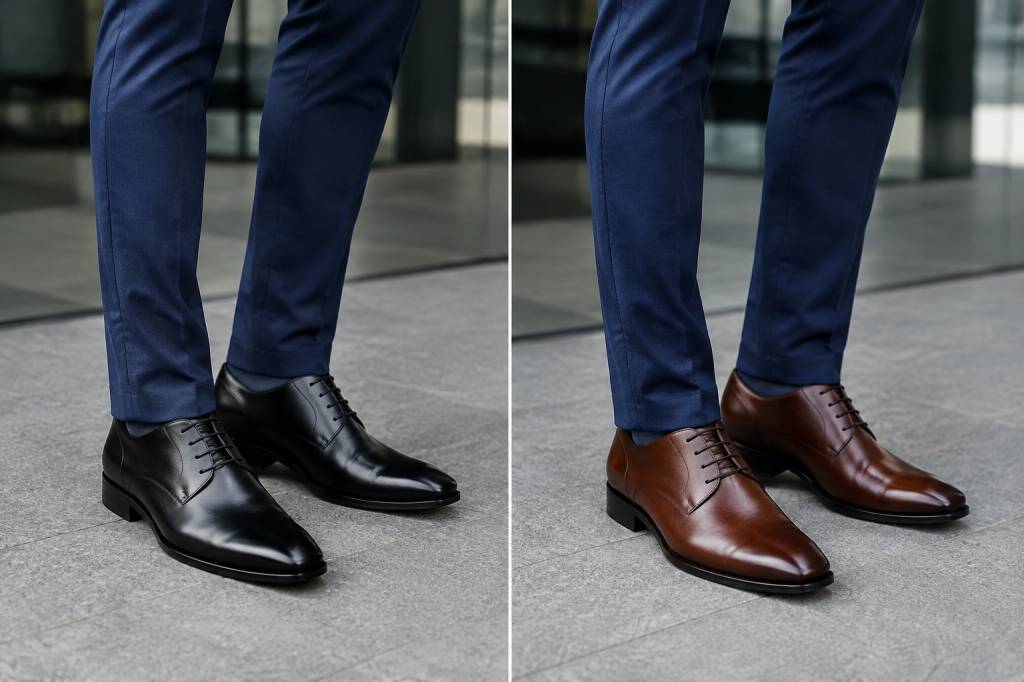
There is a small moment of indecision that happens in front of many wardrobes: navy trousers are ready, the shirt is waiting, and two pairs of shoes stare back at you. Black or brown? Both can work beautifully. The trick is not to ask which color is always right, but which one suits the occasion, the rest of your outfit, and the impression you want to make.
I learned this the hard way before an evening event in Milan. I had chosen a navy suit and, in a final burst of confidence, reached for brown shoes. They looked excellent in the mirror. Then I discovered that the room was full of men in black leather, all dressed for a formal occasion. My shoes were not wrong, exactly; they simply told a more relaxed story than the rest of the evening. A useful lesson: the best shoe choice is the one that speaks the same style language as your outfit.
The Short Answer: Both Colors Work
Black shoes with navy pants create a clean, formal, understated look. Brown shoes bring warmth and a little more personality. Neither combination is a fashion mistake. The better choice depends on what you are wearing, where you are going, and how polished you want to look.
-
Choose black for formal occasions, business settings, evening events, and outfits with a sharp, minimalist feel.
-
Choose brown for daytime outfits, smart-casual settings, and looks that benefit from warmth or texture.
-
When in doubt, match the formality of the shoes to the formality of the trousers and the occasion.
Before we get into the details, remember that navy is a remarkably versatile color. It behaves almost like a neutral, which is why it works with so many shades of leather. The cut and fabric of your pants matter, too. Navy suit trousers call for a different kind of shoe than navy chinos worn on a sunny weekend.
When Black Shoes Are the Better Choice
Black shoes are the natural choice when the outfit needs to look formal, serious, or especially streamlined. Pair them with navy suit pants for a job interview, a wedding with a traditional dress code, an important presentation, or an evening event. The contrast is subtle: black adds definition without competing with the deep blue.
This combination is particularly effective with a navy suit, a crisp white shirt, and a dark tie. The black shoes keep the look neat from head to toe, while the navy stops the outfit from feeling as severe as an all-black suit. For a formal business outfit, try polished black Oxford shoes. Their closed lacing and simple shape give the whole ensemble a composed finish.
Black also works well when your outfit already contains cool or dark colors. Think of a charcoal coat, a black belt, or a slate-gray shirt. Black footwear ties these pieces together and keeps the palette focused. It is a little like choosing the bass line in a song: not always the loudest detail, but it holds everything in place.
One small warning: black shoes can look overly stiff beside very casual navy pants. A chunky, glossy dress shoe paired with soft chinos and a relaxed shirt may feel like it arrived from a different outfit. If the pants are casual, choose a less formal black style, such as a suede loafer or a simple derby, and keep the rest of the look relaxed too.
When Brown Shoes Bring More Style
Brown shoes make navy pants feel warmer, friendlier, and often more relaxed. They are an excellent choice for daytime wear, business-casual outfits, dinners, and weekend plans. A pair of medium-brown brogues with navy trousers, a pale blue shirt, and a brown belt gives you a polished look without looking as if you are on your way to a board meeting.
Brown is not one color but a whole family of them. Light tan feels casual and lively. Medium brown is versatile and easy to wear. Dark chocolate brown is more refined and can approach the formality of black, especially in a sleek leather shoe. The darker the brown, the easier it is to dress up.
For navy chinos, brown often has the advantage. A pair of suede loafers or leather derbies in medium brown adds texture and contrast, making the outfit look considered rather than overly coordinated. Add an olive overshirt or a cream knit and the combination feels relaxed but still put together. No complicated styling tricks required.
Brown can also bring out the richness of navy. This is especially true with textured fabrics such as flannel, corduroy, or tweed. In cooler weather, dark-brown boots with navy trousers and a camel coat create a handsome, grounded palette. There is something almost cinematic about it: the sort of outfit that suggests you know your way around both a good café and a good coat rack.
Let the Occasion Set the Tone
If you are choosing shoes in a hurry, start with the occasion. It is easier than trying to memorize an endless list of fashion rules.
-
Formal events: Black leather Oxfords or sleek black derbies are dependable with navy suit pants. For a less traditional event, very dark brown can work, particularly with a well-fitted suit.
-
Office wear: Black is a safe choice in conservative workplaces. Brown is equally appropriate in many offices and can make a navy suit feel less severe.
-
Smart-casual plans: Brown derbies, loafers, or chukka boots pair naturally with navy chinos and casual trousers. Black suede can work when you want a cooler, more modern look.
-
Weekend outfits: Brown leather or suede usually feels at home with denim, chinos, and textured layers. Simple black sneakers can also look sharp with navy pants.
Dress codes can vary, of course. A wedding invitation that says black tie is not the moment to experiment with pale tan loafers. At a casual garden celebration, however, dark-brown shoes might be just right. Pay attention to the setting as well as the words on the invitation.
Match the Shoe Style to the Pants
Color matters, but shape and material matter just as much. A formal navy trouser needs a shoe with a clean silhouette. A casual pair of navy chinos can handle a softer, more relaxed design. When the formality levels disagree, even the right color can look out of place.
With navy suit trousers, consider Oxfords, sleek derbies, or refined loafers. Black is the classic choice, while dark brown adds a little warmth. With chinos, you have more freedom: suede chukka boots, penny loafers, brogues, and simple leather sneakers can all work. For navy jeans, clean sneakers or casual boots will usually feel more natural than highly polished dress shoes.
Pay attention to the hem, too. A trouser leg that bunches heavily over the shoe can make even a beautiful pair look clumsy. A neat break—or a slightly shorter hem with casual pants—lets the shoe show clearly and gives the whole outfit a more intentional line.
Coordinate Your Belt Without Becoming a Robot
A belt that is close in color to your shoes can pull an outfit together, particularly in a formal setting. Black shoes look neat with a black belt; brown shoes generally pair well with a brown belt. The shades do not need to be identical. In fact, trying to match leather perfectly can turn getting dressed into a small detective investigation.
For casual outfits, the rule is more relaxed. You can wear brown shoes with a belt that is a slightly different shade, or skip the belt if your pants fit comfortably without one. The goal is harmony, not a uniform. Consider the other leather details as well, such as a watch strap or a bag, but do not feel obliged to make every accessory the same color.
Think About Socks and the Rest of the Outfit
Your socks can connect the shoes to the navy trousers and make the transition look smooth. Navy socks are a reliable choice with either black or brown shoes. Charcoal works well with black footwear, while burgundy, olive, and muted patterned socks can add character to brown shoes.
Try not to let your socks become the loudest part of a formal outfit unless that is your intention. A flash of bright novelty fabric may be amusing at a party, but it can distract from an otherwise elegant suit. For everyday dressing, a subtle pattern or a deep color gives you personality without demanding an introduction.
Also consider the colors near your face. A white or pale-blue shirt is easy with both shoe colors. Earthy colors such as cream, rust, and olive often make brown shoes feel especially natural. Gray, black, and crisp white can reinforce the cooler, sharper mood of black footwear. These are guidelines, not laws; the mirror gets the final vote.
A Quick Guide to Shades of Brown
If you own only one pair of brown shoes, medium or dark brown is usually the most useful place to start. Very light tan can look excellent with navy, but it is more casual and may be harder to wear in formal settings. Dark chocolate brown offers a smarter alternative and works beautifully with navy suits.
-
Light tan: Best with chinos, summer outfits, and relaxed daytime looks.
-
Medium brown: A versatile choice for office-casual outfits, trousers, and many types of navy pants.
-
Dark brown: A refined option for suits, evening plans, and occasions where black feels a little too stark.
Material changes the impression, too. Shiny calfskin looks formal; brushed leather and suede feel softer. A dark-brown suede loafer can be less formal than a polished black Oxford, even though both colors are considered smart. Think about color and texture together rather than making your decision by color alone.
Common Mistakes to Avoid
The first mistake is assuming that black is always more formal and therefore always better. Black is reliable, but a polished black dress shoe can feel too serious with casual navy chinos. The opposite mistake is treating brown as automatically relaxed. A dark-brown leather Oxford can look extremely elegant with a navy suit.
Another common misstep is wearing shoes that are noticeably worn or poorly maintained. Scuffs, dull leather, and loose laces can undermine an outfit faster than a slightly imperfect color pairing. A quick brush and polish make a remarkable difference. Shoes may be at the bottom of your body, but people notice when they look cared for.
Finally, avoid adding too many competing shades. Navy pants, bright tan shoes, a red belt, a patterned jacket, and colorful socks might each be appealing on their own. Together, they can turn a simple outfit into a crowded conversation. Choose one or two details to stand out and let the rest support them.
How to Choose in Ten Seconds
Stand in front of the mirror and ask three questions: Is the occasion formal? Are the pants tailored or casual? Do I want the outfit to feel sharp or warm? If the occasion is formal and the pants are tailored, reach for black or dark-brown leather. If the pants are chinos and you want a relaxed, welcoming look, try medium-brown shoes. If both seem right, wear the pair that is in better condition and more comfortable.
That last point matters more than people admit. A stylish outfit loses some of its magic when you spend the evening thinking about your aching feet. If you wear height-increasing shoes, the same principle applies: choose a pair that feels stable, fits properly, and suits the occasion. A discreet lift can give you a little extra height, but comfort and a natural-looking silhouette should come first.
So, black or brown shoes with navy pants? Black when you want crisp, formal, and understated; brown when you want warm, versatile, and a touch more relaxed. Keep the shoe style in step with the trousers, pay attention to the setting, and let the rest of your outfit join the conversation. Then leave the house with confidence. Your shoes have done their part; now it is your turn.