
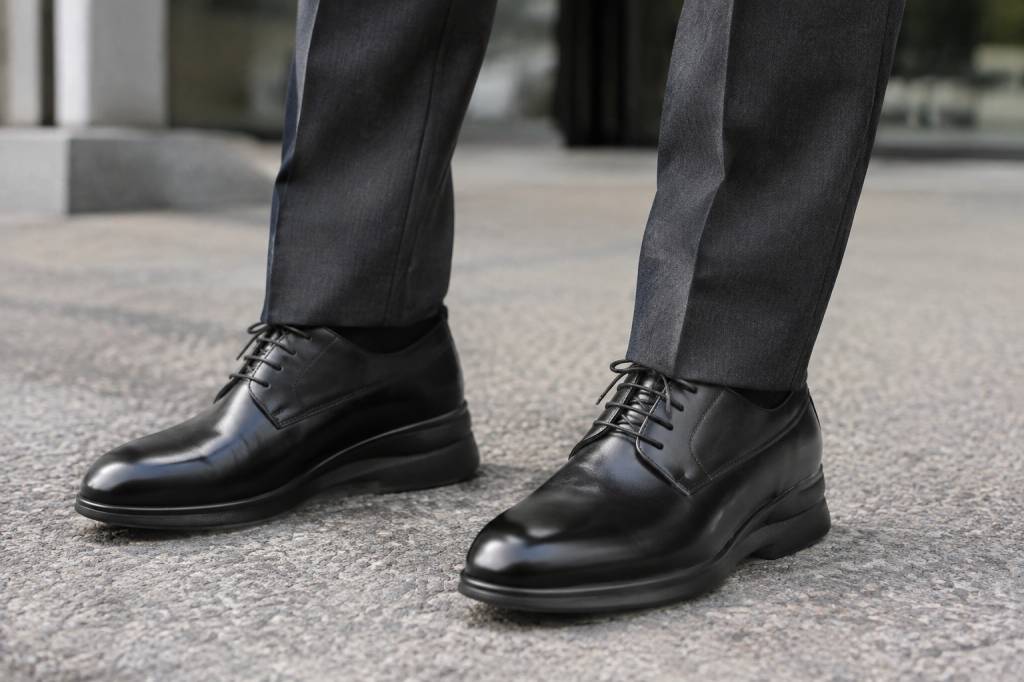
A tuxedo has a particular kind of magic. The jacket sharpens the shoulders, the shirt catches the light, and the trousers finish the story—ideally without bunching around your ankles like an overnight guest who has missed the last train. Add elevator shoes to the outfit and that final detail matters even more. A little extra height can make your silhouette feel more balanced, but only if your trousers are cut to work with the shoes beneath them.
Cuffed tuxedo trousers can look elegant, confident, and wonderfully old-school. They can also make a poor fit more obvious. The good news? With the right length, a clean line, and a tailor who understands the shoes you actually wear, cuffs and elevator shoes can make a very handsome partnership.
Can You Wear Cuffed Tuxedo Trousers With Elevator Shoes?
Yes. Cuffs, also called turn-ups, are not forbidden with a tuxedo, and they can look excellent when the whole outfit is deliberate. They add weight to the hem and give trousers a defined finish. That weight can help the fabric hang neatly over an elevator shoe rather than fluttering around it.
There is one traditional point to know: classic black-tie trousers are often made without cuffs. A plain, uninterrupted hem is considered the most formal choice, especially with a very traditional dinner jacket. Cuffs are a slightly more relaxed, fashion-forward option. If the invitation says “strict black tie” or the event is highly formal, choose plain hems. For a modern wedding, a stylish evening reception, or a black-tie look with a little personality, cuffs can be entirely appropriate.
Elevator shoes do not change that etiquette. They do, however, change the shape and height of the footwear, so the trouser length needs to be checked with them on. A hem fitted to your usual flat shoes may sit too high, drag at the back, or catch on the shoe once you switch to a concealed lift.
Why the Right Trouser Length Matters More With Elevator Shoes
Elevator shoes raise your heel inside the shoe. From the outside, a well-made pair should look like polished formal footwear, but the higher heel and shaped interior can affect how the trousers fall. Some styles also have a slightly more substantial sole or a higher profile than a conventional Oxford.
If the trousers are too short, the hem can hover above the shoe and expose too much sock when you walk or sit. If they are too long, the fabric may pile up over the vamp, hiding the clean lines of the shoe and creating a heavy-looking break. With cuffs, excess length is especially noticeable: the extra fabric has weight, and the cuff can knock against the heel or fold awkwardly.
The aim is not to hide your shoes—or to make your trousers look like they have been startled upward. It is to create a smooth line from the thigh to the shoe, with just enough room for natural movement.
Choose the Cuff With the Whole Silhouette in Mind
Cuffs draw the eye to the bottom of the leg. They can make a strong finish, but their proportions should suit your build and the width of the trousers. A very deep cuff on a narrow trouser leg can look heavy. A tiny cuff on a broad leg may appear accidental rather than intentional.
As a practical starting point, many men find a cuff around 1.5 to 2 inches deep works well on formal trousers. That is not a law carved into a tailor’s measuring tape. The right depth depends on your height, the trouser width, the fabric, and the visual weight of your shoes. A sleek black leather elevator Oxford usually calls for a more restrained cuff than a chunky, fashion-forward formal shoe.
Proportion matters, too. Cuffs create a horizontal line at the ankle, which can visually shorten the leg. If you are using elevator shoes to add height, balance that line with a clean, fairly narrow trouser shape and a jacket that fits properly through the shoulders and waist. The point is a unified silhouette, not a competition between your hem and your shoe.
Get the Break Right
“Break” is the small fold of fabric where the trouser hem meets the shoe. For a sharp tuxedo look, a no-break or slight-break finish is usually the safest choice. The trousers should lightly touch the shoe, or form one modest crease at the front, rather than stacking in several folds.
With cuffed trousers, a slight break often gives the fabric enough movement while keeping the cuff visible and crisp. A pronounced break can make the cuff slump and bunch. A completely cropped hem may look stylish with some modern suits, but it can feel too casual for traditional evening wear and may expose the sock whenever you move.
Check the trousers from more than one angle. At the front, the hem should sit neatly over the shoe. At the back, it should not drag on the floor or collapse over the heel. Elevator shoes can have a different heel height from your everyday footwear, so the back hem deserves particular attention.
Have the Tailor Measure You in Your Actual Shoes
This is the rule I repeat whenever someone asks me about hemming trousers for height-increasing footwear: bring the shoes to the fitting. Not a similar pair. Not the shoes you plan to wear “most of the time.” The exact elevator shoes intended for the tuxedo.
I once watched a friend arrive for a final fitting in ordinary dress shoes, then change into his new elevator Oxfords at the event. His trousers, which had looked perfect in the tailor’s mirror, suddenly sat a little high at the front and caught at the back. Nothing disastrous happened—he still looked handsome—but he spent the first hour checking his hem in every reflective surface. Nobody wants their black-tie evening to become a private investigation into trouser length.
At the fitting, wear the shirt and belt or braces you plan to use. Stand naturally, then walk, sit, and stand again. The tailor can pin the hem while the trousers move with your body, rather than judging them only while you stand stiffly like a statue outside an Italian palazzo.
Tell Your Tailor About the Hidden Lift
You do not need to turn the fitting into a technical lecture, but do explain that the shoes have an internal height lift. The tailor does not need to know every detail of the shoe construction; they do need to see the actual pair and understand that its heel height and shape are part of the outfit.
Ask the tailor to check:
- The front hem, so the trousers skim the shoe without excessive pooling.
- The back hem, so it clears the floor and does not catch on the heel.
- The cuff depth, so it sits evenly and has enough weight to hang well.
- The leg opening, so it covers the top of the shoe without swallowing it.
- The fit while walking and sitting, not just while standing still.
Also ask whether the trousers have enough hem allowance. If you are buying tuxedo trousers off the rack, the fabric inside the hem may limit how much the length can be adjusted. A good tailor can assess this before making changes, which is far better than discovering the problem after the scissors have done their work.
Mind the Leg Shape and Fabric
The opening at the bottom of the trouser leg should work with the shape of your elevator shoes. A very narrow opening may cling to the shoe or catch on its upper. A very wide opening can cover the shoe entirely and make the lower half look heavy. Aim for a clean drape that follows the line of the leg without gripping the ankle.
Tuxedo trousers are often made from fine wool, sometimes with a satin or grosgrain stripe down the outer seam. The fabric should fall smoothly rather than stretch tightly across the calf. If the trousers are slim, make sure they still allow you to sit comfortably. A hem that looks elegant only while you are standing is not a successful hem; it is a costume with limited mobility.
Keep the formal details in harmony. A satin side stripe looks especially polished with a plain black elevator Oxford. Cuffs add another detail at the bottom, so avoid overloading the outfit with too many decorative elements elsewhere. Let the jacket, shirt front, bow tie, and shoes speak in a measured voice. Even a stylish Italian man knows that not every part of the orchestra needs a solo.
Use Socks to Keep the Look Finished
Cuffed trousers can reveal more sock when you sit or walk, and elevator shoes make a secure, comfortable fit important. Choose long formal socks that stay up and match the trousers, or use black socks that blend into the shoe and leg. Avoid short socks that expose skin above the shoe when you cross your legs.
Before the event, try the full outfit at home. Walk across the room, sit in a chair, stand up, and take a few steps. Look for a cuff that twists, fabric that catches on the heel, or a gap that appears whenever you move. These are small adjustments, but small adjustments are precisely what separate “I put on a tuxedo” from “I look as though the tuxedo was made for me.”
A Simple Fitting Plan
If you are preparing for a wedding or formal event, leave enough time for alterations. A simple hem may be quick, but a cuffed hem takes more care because the tailor has to preserve the cuff’s shape and finish. Bring the elevator shoes to the first fitting, not only the final one.
- Choose the shoes before the trousers are hemmed.
- Wear the shirt, belt, or braces planned for the event.
- Ask for a no-break or slight-break finish as a starting point.
- Check the front and back hem while standing, walking, and sitting.
- Make sure the cuffs hang evenly and do not knock against the heel.
- Try the full outfit again after alterations, ideally under good lighting.
If you are ordering trousers online, check the inseam and alteration options before you buy. Do not assume a size label guarantees the right length: brands cut trousers differently, and elevator shoes add one more variable. When in doubt, choose trousers with enough extra length to be tailored, rather than a pair that is already too short.
Wear the Look With Confidence
Cuffed tuxedo trousers and elevator shoes can work beautifully together when the fit is intentional. Keep the cuff proportionate, choose a clean break, and have the trousers measured with the exact shoes you will wear. Then check the outfit in motion, because a tuxedo is meant to accompany you through a long evening, not simply pose for a photograph.
Most importantly, let the shoes support your confidence rather than distract you from the celebration. When the hem falls cleanly, the cuff sits neatly, and the shoe looks like a natural part of the outfit, nobody is studying the construction. They are noticing the man who arrived looking polished, comfortable, and ready for the first dance.