








If you have ever looked in the mirror and thought, “Could I stand a little taller?” you are in very good company. Men have been chasing height for centuries, whether through posture, styling tricks, or the noble art of buying smarter shoes. But before we talk about style hacks, let’s look at the part that starts from the ground up: movement.
Can exercise really make you taller? The honest answer is a bit of yes, a bit of no, and a lot of “it depends.” If your growth plates have already closed, no workout will magically lengthen your bones like a movie montage. But the right exercises can improve posture, decompress the spine, strengthen the muscles that support an upright frame, and help younger bodies reach their natural potential. In other words, you may not become a new man overnight, but you can absolutely look and stand taller.
And when it comes to confidence, that extra inch in posture can feel like a small victory with surprisingly big consequences. Let’s get into the workouts that help the most, why they work, and how to build a routine that supports a taller, leaner silhouette.
What exercise can realistically do for height
Before diving into the workouts, it helps to separate myth from reality. Exercise does not permanently increase bone length in adults. That said, it can influence how tall you appear and, in some cases, how much of your natural height you actually express.
Here is what the right training can do:
- Improve posture by strengthening the back, core, and glutes
- Reduce spinal compression through stretching and decompression movements
- Support healthy growth in children and teens by encouraging good overall physical development
- Make you look taller by opening the chest, aligning the pelvis, and lengthening tight muscle groups
Think of it like tailoring a suit. The fabric is the same, but the fit changes everything. A man with rounded shoulders and a collapsed stance can look noticeably shorter than he really is. The good news? That is often fixable.
The best workouts to get taller naturally
If your goal is to maximize your height potential naturally, focus on movement that improves posture, mobility, and spinal alignment. The best routines are not flashy. They are consistent, intelligent, and surprisingly simple.
Hanging from a pull-up bar
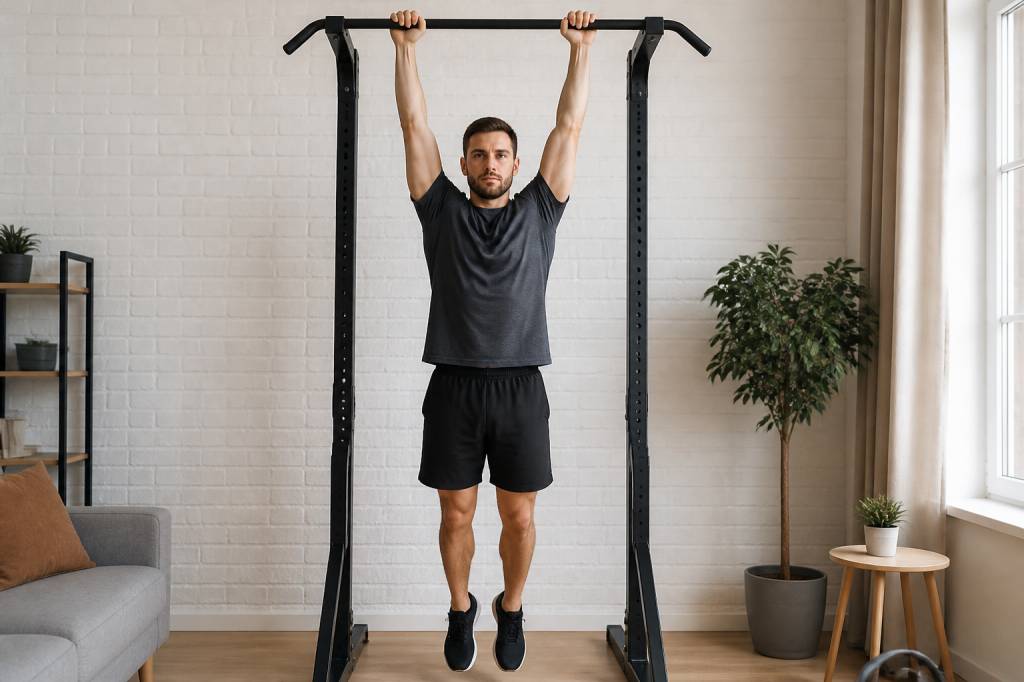
This one is a classic for a reason. Dead hangs help decompress the spine by gently stretching it under your body weight. After a long day of sitting, driving, or staring at a laptop like it owes you money, hanging can feel like a reset button.
How to do it:
- Grab a sturdy pull-up bar with both hands
- Let your body hang freely with arms extended
- Keep your core lightly engaged and shoulders relaxed
- Hold for 20 to 40 seconds
- Repeat 3 to 5 times
If you are new to hanging, start with short intervals. The goal is not to impress anyone with heroic suffering. The goal is to decompress safely and consistently.
Swimming
Swimming is one of the most complete exercises for posture and spinal health. It strengthens the whole body while reducing joint impact, which makes it especially appealing if your back feels tight or compressed. There is also something elegantly upright about swimmers; they tend to carry themselves as if gravity has fewer opinions.
Why swimming helps:
- It strengthens the back and shoulders
- It improves flexibility in the spine and hips
- It encourages a long, extended body position
- It is low-impact and sustainable
Freestyle, backstroke, and butterfly are especially useful for opening the chest and extending the spine. If you already swim regularly, you are doing more for your posture than you may realize.
Yoga for posture and flexibility
Yoga is not just about serenity, incense, and people who can bend like origami. It is one of the best tools for creating the look of height because it targets tight areas that drag your posture down: hip flexors, hamstrings, chest, and lower back.
A few poses worth including:
- Mountain Pose for alignment and upright posture
- Cobra Pose for chest opening and spinal extension
- Downward Dog for stretching the posterior chain
- Cat-Cow for spinal mobility
- Child’s Pose for gentle decompression
Hold each pose with control, breathe deeply, and avoid forcing your body into extremes. Yoga works best when it is done with precision, not drama. You are aiming for length, not a human pretzel competition.
Pilates and core strengthening
A strong core does not just mean visible abs. It means a trunk that can stabilize the spine and support an upright posture all day long. Pilates is excellent for this because it strengthens deep abdominal muscles, improves control, and teaches you how to hold yourself with quiet confidence.
Why core strength matters for height:
- It reduces slouching
- It supports a neutral pelvis
- It keeps the upper body stacked properly over the hips
- It helps you look longer and leaner
Exercises like the plank, dead bug, leg raises, and bird dog are particularly useful. A weak core often lets the body collapse forward, and that posture alone can steal a visible inch. Train the center, and the whole frame benefits.
Barre-style leg and glute training
Strong legs and glutes are underrated when it comes to looking taller. If the pelvis tilts too far forward or backward, the entire posture chain can suffer. Well-trained lower-body muscles help you stand with better alignment and reduce the “bent in the middle” effect that shortens your appearance.
Useful lower-body exercises include:
- Bodyweight squats
- Reverse lunges
- Glute bridges
- Hip thrusts
- Calf raises
Do not underestimate the role of the glutes. They are the quiet architects of upright posture. When they are weak, your lower back often overworks, and your stance can become sloppy. That is not the look we are after.
Stretching routines that support a taller appearance
Stretching will not lengthen bones, but it can make a dramatic difference in how tall you look and feel. Tight muscles create tension, pull the body out of alignment, and make the spine work harder than necessary. A good stretching routine is like opening the curtains in a dark room: everything instantly looks brighter, cleaner, and more spacious.
Focus on these areas:
- Hamstrings
- Hip flexors
- Chest and shoulders
- Lower back
- Neck and upper traps
Try a simple daily routine of 10 to 15 minutes. Hold each stretch for 20 to 30 seconds and breathe deeply. If your desk job has turned you into a question mark, this is one of the best habits you can build.
Jumping and plyometric exercises for younger people
If you are still in your growth years, dynamic exercise can support healthy development by stimulating the body, improving bone strength, and promoting overall fitness. Jumping exercises do not directly make you taller, but they can be a valuable part of a balanced routine for teens and young adults whose growth plates are still open.
Examples include:
- Jump rope
- Box jumps
- Skipping drills
- Burpees
- Vertical jumps
The key is moderation and good technique. Too much high-impact training without rest is not clever, no matter how determined you are to outgrow your classmates. Recovery, nutrition, and sleep matter just as much, if not more.
Daily posture habits that make exercise work better
Here is the truth many people ignore: your workout can be excellent, but if you spend the rest of the day folded over a phone like a tired croissant, the benefits fade fast. Posture is a 24-hour project.
Simple habits that help:
- Keep your screen at eye level
- Stand up every 45 to 60 minutes
- Walk with your chest open and chin level
- Avoid sitting with a rounded lower back
- Sleep on a supportive mattress and pillow setup
These small adjustments may sound ordinary, but they work quietly in the background. Over time, they help your body remember what “tall” actually feels like.
Nutrition and sleep: the invisible height boosters
Exercise is powerful, but it does not work alone. If you are trying to support natural growth, especially during adolescence, food and sleep are the real co-stars of the show.
Important nutrients include:
- Protein for muscle and tissue growth
- Calcium for bone health
- Vitamin D for calcium absorption
- Magnesium and zinc for overall development
And then there is sleep. Growth hormone is strongly tied to deep sleep, which is why teenagers who sleep like champions often develop better than those who treat midnight like a hobby. Aim for consistent, quality sleep every night.
A simple weekly routine for looking taller
If you want a practical plan, here is a balanced weekly structure that supports posture, mobility, and overall physique:
- 2 to 3 sessions of strength training focused on core, back, glutes, and legs
- 2 sessions of swimming or another low-impact full-body activity
- Daily stretching for 10 to 15 minutes
- 1 to 2 sessions of hanging or spinal decompression work
- Consistent posture awareness throughout the day
You do not need to train like an athlete to see benefits. You need rhythm. A little bit, repeated well, beats heroic enthusiasm followed by two weeks of aches and excuses.
Who should be careful with height-focused workouts
Most of these exercises are safe, but not every body is the same. If you have back pain, a spinal condition, joint issues, or any medical concern, it is smart to speak with a healthcare professional before starting a new routine. The goal is to look taller, yes, but never at the expense of your health.
If you are a teenager and still growing, it is especially important to keep training balanced. Overtraining, poor nutrition, and lack of sleep can work against you. The body grows best when it is respected, not pushed into a corner.
Exercise cannot rewrite genetics, but it can help you stand as tall as your body allows. And that is not a small thing. A straighter back, an open chest, and strong, aligned muscles can change the way you move through the world. Sometimes the difference is measured in centimeters, but the impact is measured in confidence.
So if you are wondering whether workouts can help you get taller naturally, the answer is this: they can help you unlock better posture, better alignment, and a better version of your natural height. Pair that with good sleep, smart nutrition, and a little style knowledge, and you are giving yourself every possible advantage. And if you still want a discreet boost on top of that, well, Mario has a few thoughts on shoes too.