
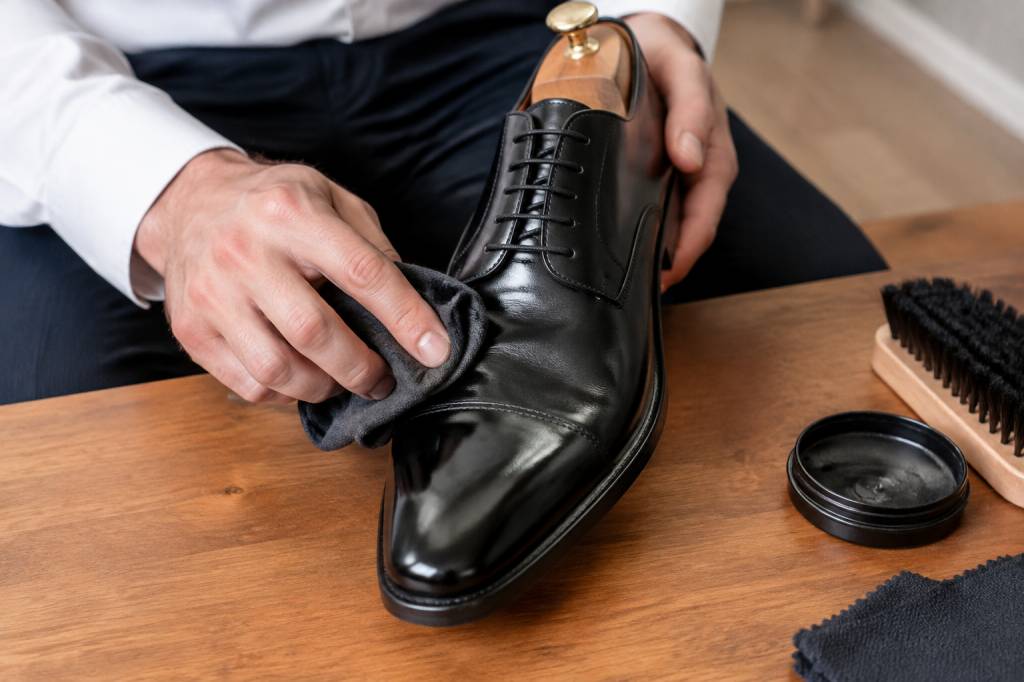
A pair of well-polished shoes can change the whole impression of an outfit. The leather catches the light, the edges look cared for, and even a familiar suit feels a little more refined. If you have ever admired a mirror-like shine on a pair of dress shoes, you may have heard of “fire shining”: a traditional technique that uses heat to help wax polish create a glossy finish.
Before you reach for a lighter, though, let’s set one thing straight: shoes do not need to meet an actual flame to shine beautifully. Heat can make wax easier to spread, but direct fire can scorch leather, damage stitching, or turn a simple shoe-care session into an emergency. The safer method is to build a mirror shine with thin layers of polish, a little water, and patience. Your shoes will still look bright enough to catch someone’s eye across the room—without the smoke alarm joining the conversation.
What does “fire shining” mean?
In traditional shoe care, “fire shining” usually refers to warming hard wax polish so it softens and spreads more easily over the leather. Some methods involve holding a polish tin near a flame or briefly heating the surface of the wax. The softened wax can then be applied in very thin coats to the shoe’s toe and heel, where a high-gloss finish is most noticeable.
That idea has a practical basis: wax becomes easier to work with when warm. But a flame is difficult to control, and leather is not a material that rewards guesswork. Too much heat may dry, discolor, or crack the finish. It can also soften adhesives or damage nearby materials, especially on shoes with mixed leather, synthetic panels, or delicate detailing.
For most people, the goal is not to use fire. It is to create a smooth surface with several light layers of wax. A gentle alternative is to warm the closed polish tin in your hands or place it in a shallow bowl of warm—not hot—water for a few minutes. Never put the tin directly on a flame, stove, or hot surface. A little patience is safer than a dramatic story involving singed laces.
Check your shoes before you start
Not every shoe should be polished in the same way. Traditional wax polish is best suited to smooth, finished leather. It is generally not appropriate for suede or nubuck, whose soft, textured surfaces need a brush and products designed specifically for them. Patent leather also has its own glossy coating; ordinary wax can leave it cloudy or sticky.
Elevator shoes deserve the same care as any other quality dress shoes, but take a moment to inspect their construction. Many height-increasing styles have a concealed lift inside the shoe, and that lift is not part of the polishing process. Keep polish, water, and cleaning products on the exterior leather. If the shoe has fabric panels, decorative finishes, or an unusual coating, test your product on a small, hidden area first.
Ask yourself: is the leather dusty, stained, cracked, or simply dull? A mirror shine works best on clean, smooth leather. Polish cannot repair deep scratches or make neglected leather healthy again, just as a handsome jacket cannot persuade a tired pair of shoes to walk itself home.
Gather your shoe-shining kit
You do not need an elaborate collection of brushes to get a pleasing result. A few reliable tools will do the job:
-
A soft brush for removing dust and dirt.
-
A clean cotton cloth, such as an old cotton T-shirt, for applying polish.
-
A small amount of cream polish in a color that matches your shoes.
-
Hard wax polish for building shine on the toe and heel.
-
A small bowl of clean water or a dropper for controlling moisture.
-
A horsehair brush for buffing the leather.
-
A shoe tree, if you have one, to help the shoe hold its shape while you work.
Choose products made for leather shoes, and avoid applying too much. A heavy coat can look cloudy, crack as the shoe bends, or collect dust. The best shine is built gradually. Think of it as dressing well: one carefully chosen detail often says more than five loud ones.
Clean the leather first
Remove the laces if they cover areas you want to polish. Insert a shoe tree or gently support the shoe with your hand, then brush away loose dust and grit. Pay attention to the welt, seams, and the crease across the vamp. Tiny particles left on the leather can scratch the finish as you rub.
If the shoes are visibly dirty, wipe them with a slightly damp cloth and let them dry naturally. Do not place them beside a heater or use a hair dryer to speed things up. High heat can dry leather unevenly. If the shoes are muddy, let the mud dry first, then brush it away rather than grinding it into the surface.
For an occasional deeper clean, use a leather cleaner according to its instructions. You do not need to strip the finish every time you polish. Regular, gentle care keeps leather looking good without turning shoe maintenance into a chemistry experiment.
Condition and add a base of color
Once the leather is clean and dry, apply a small amount of cream polish with a cloth. Work it into the shoe using light, circular motions, paying attention to scuffs and areas where the color looks tired. A matching cream can refresh the leather and help maintain its appearance. Let it sit for a few minutes, then buff with a soft brush.
Less is more here. If the cloth is loaded with polish, you are likely applying too much. A thin, even layer is easier to buff and less likely to leave residue around the seams. Give the shoes time to absorb the product. A quick shine on leather that is still damp or overloaded with cream is a bit like taking a portrait before you have opened your eyes.
Build the mirror shine without a flame
Now comes the satisfying part. A mirror shine is usually built on the toe cap and heel counter, where the leather flexes less. Avoid layering hard wax heavily over the bending part of the shoe. Too much wax there can crack when you walk.
Wrap a clean, smooth cotton cloth around two fingers. Pick up a tiny amount of hard wax—just enough to leave a faint film. Add one small drop of water to the leather or the cloth, then move your fingers in very small circles. The surface may look slightly dull at first. That is normal. Continue with a light touch rather than pressing harder.
When the wax begins to feel smooth, add another thin layer. Alternate a little wax with a little water, allowing each layer to settle before building the next. The goal is to fill the tiny surface irregularities gradually, creating a smoother surface that reflects light. If the cloth begins to drag, add a drop of water. If the shoe looks cloudy or sticky, pause and buff gently instead of adding more product.
There is no magic number of layers. The leather, polish, and your technique all make a difference. A few careful rounds can produce a handsome gloss; more rounds can deepen the shine. Do not rush it. In my experience, the best shoe-care sessions have the rhythm of a slow Sunday morning: coffee nearby, music in the background, and no appointment waiting to steal the final buff.
If you still want to use gentle heat
Some experienced enthusiasts warm hard wax to make it easier to spread. If you choose to experiment, keep the heat indirect and controlled. Warming a closed tin in warm water is safer than heating it over a flame. Dry the tin before opening it, and use only a small amount of softened polish at a time.
Never hold a lighter to the shoe or apply a flame to the leather. Do not heat polish in a microwave, and do not leave warmed wax unattended. If a product’s label gives different instructions, follow the label. And if the shoes are expensive, delicate, or unfamiliar, skip the experiment and use the standard thin-layer method. A professional shine costs less than replacing damaged leather.
Common mistakes that dull the shine
-
Using too much wax: Thick layers can turn cloudy and may crack in areas that bend. Keep each coat very thin.
-
Polishing dirty shoes: Dust trapped under the cloth can scratch the leather. Brush first, every time.
-
Using too much water: A drop is often enough. A soaked cloth can make the process messy and slow.
-
Buffing too aggressively: Light, patient movements are more effective than vigorous rubbing.
-
Polishing the whole shoe with hard wax: Concentrate mirror shine on firmer areas such as the toe and heel.
-
Using the wrong product: Suede, nubuck, and patent leather need different care.
-
Trying to fix deep damage with polish: A scratch through the finish or cracked leather may need repair, not another coat of wax.
Keep your shoes looking sharp
A great shine does not have to be a special-occasion project. Brush your shoes after wearing them, let them air out, and use shoe trees when practical. Rotate pairs so each one has time to rest and dry. If the leather looks dry, use a suitable conditioner sparingly. Then refresh the wax shine when it begins to fade.
For dress shoes worn often, a quick brush and occasional light polish usually work better than repeated heavy treatments. Store them away from direct sunlight and sources of heat. If they get wet, blot away moisture and let them dry at room temperature. Good habits protect the leather and make each future shine easier.
Whether your shoes add a little extra height or simply complete a favorite outfit, a bright, well-kept finish is a small detail with a noticeable effect. Fire shining may sound exciting, but the real secret is not fire at all: it is clean leather, quality wax, a light touch, and enough patience to let each layer do its work. Give your shoes a careful polish, step into the light, and let them do the talking—quietly, elegantly, and without setting anything alight.