
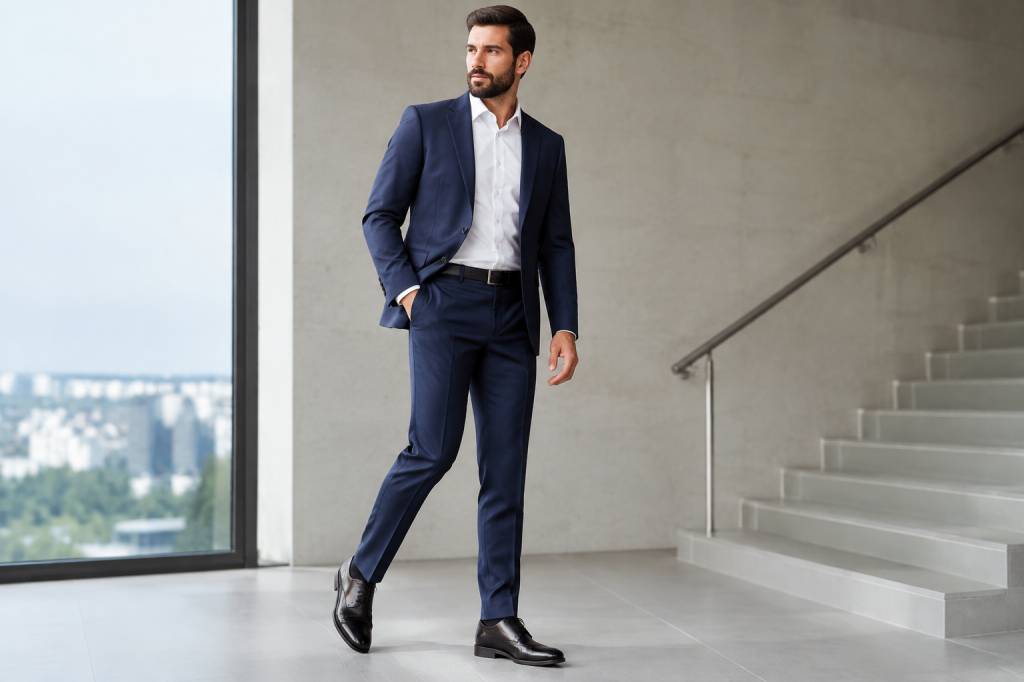
Two blue jackets can look almost identical on a screen, then behave like distant cousins once they are out in daylight. One feels calm and polished; the other seems to enter the room before you do. That little difference is often the distinction between French blue and royal blue.
Both shades can make a man look sharp, and neither belongs exclusively to formalwear. But their depth, brightness, and styling effect are not quite the same. If you have ever ordered a blue shirt online and wondered why it looked bolder than expected, this guide is for you. Let’s unpack the names, compare the shades, and find out how each one works with the rest of your wardrobe—including your shoes.
What is French blue?
French blue is a clear, medium-to-deep blue that usually has a slightly softened, classic feel. Depending on the fabric and the brand, it may lean a little toward navy, or appear brighter and more open. It is not a single, universally fixed color. Fashion retailers, paint makers, and textile producers may use the name for subtly different shades.
In practical terms, picture a blue dress shirt that feels more lively than pale blue but less dramatic than a vivid royal blue. French blue often has enough richness to stand out while remaining easy to wear. It looks at home in a tailored shirt, a summer blazer, or a knit polo—especially when you want color without announcing that you have recently discovered color.
The name has French associations, but it does not guarantee a precise historical recipe or one official shade. When shopping, trust the actual color you see, not just the label. Screens can shift blues dramatically, and two products both called “French blue” may not match.
What is royal blue?
Royal blue is typically a stronger, brighter, and more saturated blue. It tends to have a more noticeable presence than French blue, often sitting between classic blue and navy in depth while appearing more vivid than either. In some lights, it can look almost jewel-like.
Its name suggests grandeur, and the color certainly knows how to make an entrance. A royal blue blazer, tie, or sweater can become the focal point of an outfit without needing a complicated pattern. That confidence is part of its appeal—but it also means that the rest of your clothes should give it a little room to breathe.
As with French blue, “royal blue” is not a guarantee of an exact color value. One brand’s royal blue may be brighter than another’s. Fabric matters, too: smooth satin reflects light and can make the shade appear more intense, while wool or brushed cotton tends to soften it.
French blue vs. royal blue: the main differences
The simplest distinction is mood. French blue usually feels balanced, versatile, and slightly understated. Royal blue usually feels bolder, brighter, and more energetic. Neither is automatically better; they simply do different jobs in an outfit.
- Brightness: Royal blue is generally more vivid. French blue is often a little more restrained.
- Formality: French blue can move easily from business settings to relaxed outfits. Royal blue can be dressy, but its stronger color makes it more noticeable.
- Versatility: French blue tends to pair comfortably with a wide range of neutrals. Royal blue works well with neutrals, too, but may dominate a look.
- Visual effect: French blue adds color without demanding attention. Royal blue draws the eye and can make a simple outfit feel more expressive.
Think of the difference as volume rather than quality. French blue is a pleasant conversation across the table; royal blue is the friend who tells the story with excellent hand gestures. Both are welcome, provided the occasion suits them.
How lighting and fabric change the shade
Blue is famously sensitive to its surroundings. A French blue shirt may look crisp and bright outdoors, then seem deeper under warm indoor lighting. Royal blue can appear especially intense under direct sun or on a shiny fabric. This is why judging a color from a small online image can be a risky business.
Before buying, check the item in more than one photo if possible. Look for images taken in natural light, read the product description, and compare the shade with clothes you already own. If you can shop in person, hold the garment beside a white or neutral item. That makes it easier to see whether the blue is cool, warm, muted, or highly saturated.
Texture also changes the impression. A matte cotton shirt diffuses light, making the color feel softer. A silk tie or polished synthetic fabric reflects light and can make the same shade look brighter. A wool blazer usually gives blue more depth, which is one reason a strong color can still look refined in tailoring.
Which blue is easier to wear?
For an everyday wardrobe, French blue is often the simpler starting point. It works in the office, at dinner, and on a weekend without requiring a complete change of outfit. A French blue button-down can sit comfortably beside charcoal trousers, dark denim, or beige chinos.
Royal blue is an excellent choice when you want a visible accent. Try it in a tie, sweater, pocket square, or casual jacket. If you are wearing a royal blue piece, keep the surrounding colors relatively calm. Let the blue do its work; it does not need a supporting brass band.
Your coloring and personal taste matter more than any rigid rule. If you enjoy bright colors and feel confident in them, royal blue may be your natural choice. If you prefer a quieter wardrobe, French blue may earn more regular outings. The best color is the one you will actually wear, not the one that looks impressive on a mannequin with suspiciously perfect posture.
How to style French blue
French blue is particularly easy to combine with classic menswear neutrals. Navy, grey, white, cream, tan, and brown all make useful partners. For a clean office look, wear a French blue shirt with a charcoal suit and a dark tie. For something more relaxed, pair it with stone chinos and a brown belt.
It also works well in layers. A French blue sweater over a white shirt gives you color without turning the outfit into a competition. A blue blazer can pair with grey trousers for a smart-casual combination that feels polished but not overly formal.
When choosing shoes, consider the overall level of contrast. Brown leather shoes—especially medium or dark brown—bring warmth to French blue. Black shoes can look sharp with a suit, particularly when the rest of the outfit is formal. For casual wear, clean white sneakers can keep the look fresh. If you wear elevator shoes, the same color principles apply: choose a style that complements the outfit rather than pulling attention away from it. A discreet height boost is most effective when the whole look feels naturally put together.
How to style royal blue
Royal blue likes a simple supporting cast. Pair a royal blue sweater with charcoal trousers, or wear a royal blue tie with a white shirt and a navy or grey suit. Black can work, but the combination may feel stark, so adding a softer neutral—such as grey, cream, or tan—can make the transition more comfortable.
For a casual outfit, try a royal blue polo with dark jeans and understated shoes. Avoid stacking several loud colors unless you are dressing for an event where bold combinations are the point. A single vivid blue piece is often enough to give an outfit personality.
Accessories should be chosen with a light hand. A brown belt and matching brown shoes can warm up royal blue, while black leather gives it a sharper, more urban edge. A patterned item can work, too, provided its other colors connect with the rest of your outfit. The goal is coordination, not making every accessory match the shirt like members of a synchronized swimming team.
Choosing between the two for different occasions
For a job interview, client meeting, or formal event, French blue is often the safer choice, particularly in a shirt. It looks professional and confident without becoming the main subject of discussion. Royal blue can still work, especially as a tie or pocket square, but use it as an accent if you are unsure about the dress code.
For a wedding, a dinner party, or a celebration, either shade can be excellent. French blue brings a classic, composed feel. Royal blue gives a suit or jacket more visual impact, which can be welcome when the occasion calls for a little flair. Just check the dress code before bringing the full royal treatment.
On weekends, choose based on the mood you want. French blue is easygoing and adaptable; royal blue is lively and expressive. A T-shirt, sweatshirt, or casual shirt in either shade can work with jeans. The difference is simply how much attention you want the color to attract.
Common mistakes to avoid
- Assuming the name is exact: Color labels vary between brands. Compare the garment itself rather than relying on the name alone.
- Wearing too many competing strong colors: Royal blue is already a statement. Give it a few calm pieces to balance it.
- Ignoring the fabric: A shiny fabric can make a blue look much brighter than the same color in cotton or wool.
- Matching every item too closely: Your shoes, belt, and shirt do not need to be identical shades. They need to work together.
- Forgetting the occasion: A vivid blue blazer may be perfect for a party and less suitable for a conservative workplace.
A quick way to decide
If you want one blue that can handle many situations, start with French blue. It is a flexible choice for shirts, knitwear, and jackets, and it tends to blend easily with a practical wardrobe. If you already own plenty of neutrals and want a more noticeable accent, try royal blue.
When in doubt, test the shade beside your usual trousers and shoes. Put the outfit on, step into natural light, and ask yourself whether the blue feels balanced or overpowering. Clothing should make you feel at ease, not leave you negotiating a peace treaty between your shirt and your shoes.
French blue and royal blue are close enough to be confused, but different enough to shape an outfit in their own way. French blue offers relaxed versatility; royal blue brings confident energy. Choose the one that suits the occasion, your wardrobe, and—most importantly—your personality. Then wear it with good posture. The color may catch the eye, but the way you carry yourself completes the look.