
If you’ve ever stood in front of a mirror, pulled your shoulders back, and wondered whether there’s a smarter way to look a little taller without relying only on shoes, you’re in good company. I’ve had that moment myself—usually while adjusting a jacket that fits beautifully everywhere except the part that matters most when you want to project presence: posture. The good news? You can absolutely help your body look taller and more confident with the right exercises, and you may be surprised by how much difference a straighter, more open posture makes.
Let’s be clear from the start: no exercise will magically lengthen your bones after puberty. But many people do leave height “on the table” through poor posture, tight hips, rounded shoulders, or a compressed spine. Fixing those issues can help you stand at your natural maximum height and move with the kind of upright ease that looks elegant in any outfit—whether you’re wearing tailored trousers or a pair of elevator shoes with a discreet lift.
Why posture changes how tall you look
Height is not only a number on a medical chart. It’s also a visual impression. Two men can be the same exact height, yet the one who stands tall, with a long neck, open chest, and relaxed shoulders, will usually appear taller. That’s posture at work.
Modern life is not exactly kind to our alignment. Long hours at a desk, staring down at phones, driving, working on laptops—these habits encourage the classic “collapsed” posture: rounded shoulders, forward head, tight hip flexors, and a spine that loses some of its natural curves. Over time, that can make you look shorter than you are.
Here’s the practical side of the story: when you improve posture, you’re not just “standing up straighter.” You’re creating space through the spine, opening the chest, aligning the pelvis, and reducing the slouch that steals visual height. And yes, that can make a noticeable difference in mirrors, photos, and real life.
The best growth taller exercises to improve posture and presence
The exercises below are not about turning you into a circus performer touching the ceiling. They’re about restoring mobility, strengthening the right muscles, and giving your body the support it needs to stand tall naturally.
Wall posture reset
This one is simple, almost suspiciously simple, but it works beautifully as a posture check.
Stand with your back against a wall. Your heels should be a few inches away from the wall, with your glutes, upper back, and head touching it as comfortably as possible. Keep your chin slightly tucked and your ribs relaxed. Hold this position for 30 to 60 seconds while breathing normally.
What it does: It teaches awareness of what proper alignment feels like. Many people don’t realize how far their head juts forward until they try this. It’s a bit like trying on a perfectly cut blazer after years of wearing oversized ones—you instantly notice the difference.
Try this a few times a day, especially before heading out. It’s a quick way to “reset” your posture.
Chin tucks
If your head spends its life reaching toward your screen like a curious pigeon, chin tucks are for you.
Sit or stand tall. Gently draw your chin straight back, as if making a subtle double chin, without tilting your head down. Hold for 3 to 5 seconds and release. Repeat 10 to 15 times.
Why it matters: Forward head posture compresses the neck and makes the upper body look shorter and less refined. Chin tucks help align your head over your shoulders, which can instantly improve your silhouette.
Shoulder blade squeezes
Rounded shoulders are one of the fastest ways to look smaller. Shoulder blade squeezes help open the chest and bring the upper back to life.
Stand or sit upright, then draw your shoulder blades gently together and down—imagine sliding them into your back pockets. Hold for 2 to 3 seconds, then release. Do 12 to 15 repetitions.
Keep the movement controlled. This is not a dramatic military pose; it’s a subtle correction. If you do it right, your chest will open, and your torso will look longer.
Cat-cow stretch
This yoga classic is one of the easiest ways to mobilize the spine and reduce stiffness.
Start on all fours, hands under shoulders, knees under hips. Inhale as you arch your back and lift your head and tailbone slightly. Exhale as you round your spine and tuck your chin. Flow slowly between the two positions for 8 to 10 rounds.
What it does: Cat-cow encourages spinal movement in both directions, helping you feel less compressed. A flexible, mobile spine often translates into better posture and easier upright standing.
Hip flexor stretch
Tight hip flexors are the hidden villains behind poor posture. They pull the pelvis forward, which can create an exaggerated lower-back curve and make standing tall feel awkward.
To stretch them, kneel on one knee with the other foot in front, both knees bent at roughly 90 degrees. Keep your torso upright and gently shift your weight forward until you feel a stretch in the front of the hip of the kneeling leg. Hold for 20 to 30 seconds, then switch sides.
For an extra benefit, squeeze the glute of the kneeling leg. That helps deepen the stretch in a safe way.
If you sit a lot, this stretch is practically mandatory. Think of it as undoing the damage of too many hours spent folded over a laptop like a gentleman in exile.
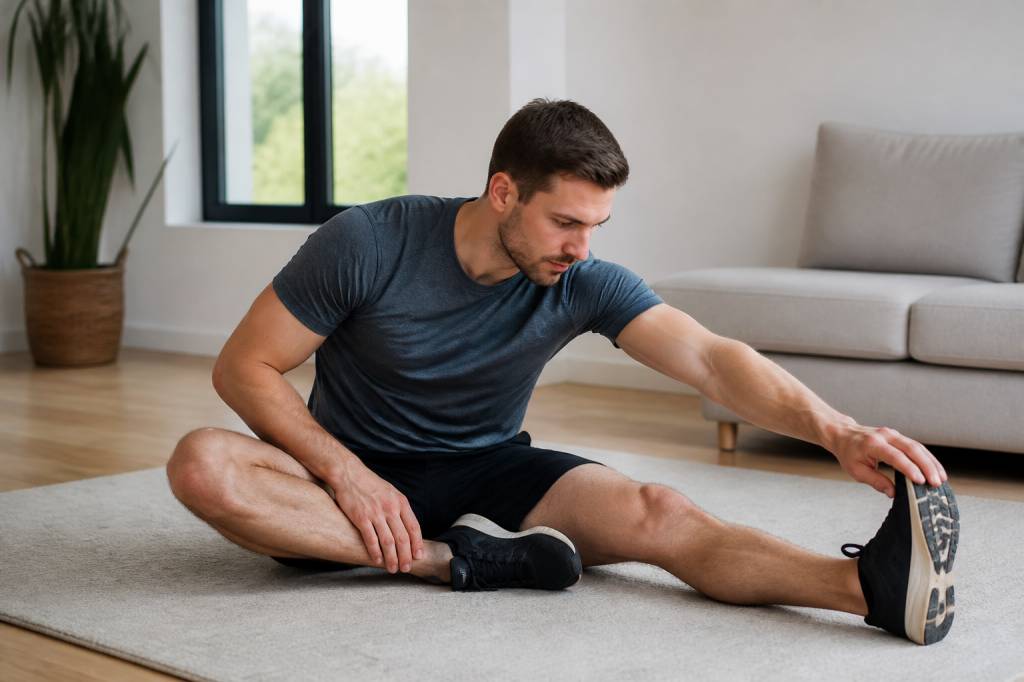
Hamstring stretch
Tight hamstrings can pull your pelvis out of position and contribute to a slouched stance. Loosening them can help your lower body support better alignment.
Sit on the floor with one leg extended and the other bent, or stand and place one heel on a low surface. Keep your back long, hinge forward gently from the hips, and stop when you feel a stretch behind the thigh. Hold for 20 to 30 seconds per side.
Remember: the goal is not to fold yourself like a postcard. The goal is to lengthen the muscles enough to support better posture.
Plank
The plank is not glamorous, but it’s effective. Strong core muscles help stabilize the spine and keep you from collapsing forward through the day.
Start in a forearm plank or high plank position. Keep your body in a straight line from head to heels. Don’t let your hips sag or rise too high. Hold for 20 to 45 seconds, depending on your level.
A strong core supports a tall posture because it reduces the urge to hunch and overcompensate with your back. Think of it as building the internal structure that lets your frame stand with confidence.
Glute bridges
Your glutes do more than fill out a pair of trousers nicely. They also help support pelvic alignment, which affects how tall and balanced you appear.
Lie on your back with your knees bent and feet flat on the floor. Press through your heels, lift your hips, and squeeze your glutes at the top. Hold for a second or two, then lower slowly. Aim for 12 to 15 repetitions.
Glute bridges are especially useful if you spend most of your day seated. They wake up the muscles that help you stand with less strain and better posture.
Dead hangs
If you have access to a pull-up bar, dead hangs can be excellent for spinal decompression and shoulder mobility.
Grip the bar with both hands and let your body hang freely. Keep your shoulders engaged gently rather than collapsing into them. Start with 10 to 20 seconds, then build up as your grip and shoulder comfort improve.
There’s something wonderfully old-school about dead hangs. They feel minimal, almost elegant—no equipment circus, no complicated routine, just gravity doing part of the work.
Exercises that help you look taller by opening the chest
A closed chest and rounded upper back can shorten your appearance almost instantly. If you want a longer visual line through the torso, chest-opening work deserves a spot in your routine.
- Doorway chest stretch: place your forearm on a doorframe and gently step forward to open the chest.
- Wall angels: stand with your back against a wall and move your arms up and down in a snow-angel motion.
- Thoracic extensions over a foam roller: gently extend the upper back to counter daily rounding.
These movements are not about being flexible for the sake of it. They help your upper body stack more neatly over your hips, which is exactly what gives the impression of height and confidence.
How often should you do these exercises?
Consistency matters more than intensity here. You don’t need an hour-long routine every day. In fact, a short, regular practice is usually more effective than an occasional heroic effort followed by three days of soreness and regret.
A practical weekly approach might look like this:
- Daily: wall posture reset, chin tucks, shoulder blade squeezes
- 3 to 4 times per week: hip flexor stretch, hamstring stretch, cat-cow, planks, glute bridges
- 2 to 3 times per week: dead hangs and chest-opening work
If you’re very tight or spend long hours sitting, even five to ten minutes in the morning and another five minutes in the evening can make a noticeable difference over time.
Common mistakes that sabotage posture
Sometimes the problem is not lack of effort but the wrong kind of effort. I’ve seen people chase “better posture” by forcing themselves upright like a soldier on parade. That usually backfires. Good posture is not stiff posture.
Watch out for these mistakes:
- Overarching the lower back to look taller
- Pushing the chest out excessively
- Holding the chin too high
- Ignoring hip tightness while only focusing on the shoulders
- Expecting results after two sessions and a motivational speech
Real posture improvement feels balanced. Your body should feel stacked, not braced. Relaxed, not rigid. The difference is subtle, but it matters.
Small daily habits that support a taller look
Exercises are important, but your habits matter just as much. If you spend eight hours hunched over a laptop and then do one stretch before bed, you’re fighting uphill with one hand tied behind your back.
Try these simple habits:
- Keep your screen at eye level when possible
- Take standing breaks every 30 to 45 minutes
- Carry your bag evenly instead of always on one shoulder
- Strengthen your upper back and core regularly
- Practice standing tall before meetings, photos, or social events
And yes, footwear still matters. A good pair of elevator shoes can add extra height instantly, but they look best when your posture supports the overall effect. Tall shoes plus slouched shoulders? That’s a missed opportunity. Tall shoes plus aligned posture? Now we’re speaking the language of understated confidence.
What kind of results can you expect?
If you’re consistent, you may notice changes in a few areas fairly quickly: less tension in the neck, a more open chest, better standing balance, and a taller visual line in photos or mirrors. Some people also report feeling more confident simply because they’re no longer trying to “hide” in their own body.
That said, results depend on your starting point. If your posture is deeply affected by years of sitting, it may take time. If your issues are mild, changes can appear faster. Either way, the process is worthwhile because it improves not only appearance but comfort and movement quality too.
And that, in my book, is the best kind of style upgrade: one that makes you look better and feel better at the same time.
A simple 10-minute routine to start today
If you want an easy place to begin, try this sequence:
- 1 minute wall posture reset
- 10 chin tucks
- 15 shoulder blade squeezes
- 8 cat-cow rounds
- 30 seconds per side hip flexor stretch
- 30 seconds per side hamstring stretch
- 20 to 30 second plank
- 12 glute bridges
Repeat it daily for two weeks and pay attention to how you stand, sit, and walk. Often, the first thing people notice is not a dramatic change in height, but a cleaner, more vertical presence. And that is where real visual height begins.
With the right exercises, better posture becomes less of a goal and more of a habit. A good habit, like polished shoes or a jacket that fits just right, quietly changes everything.