
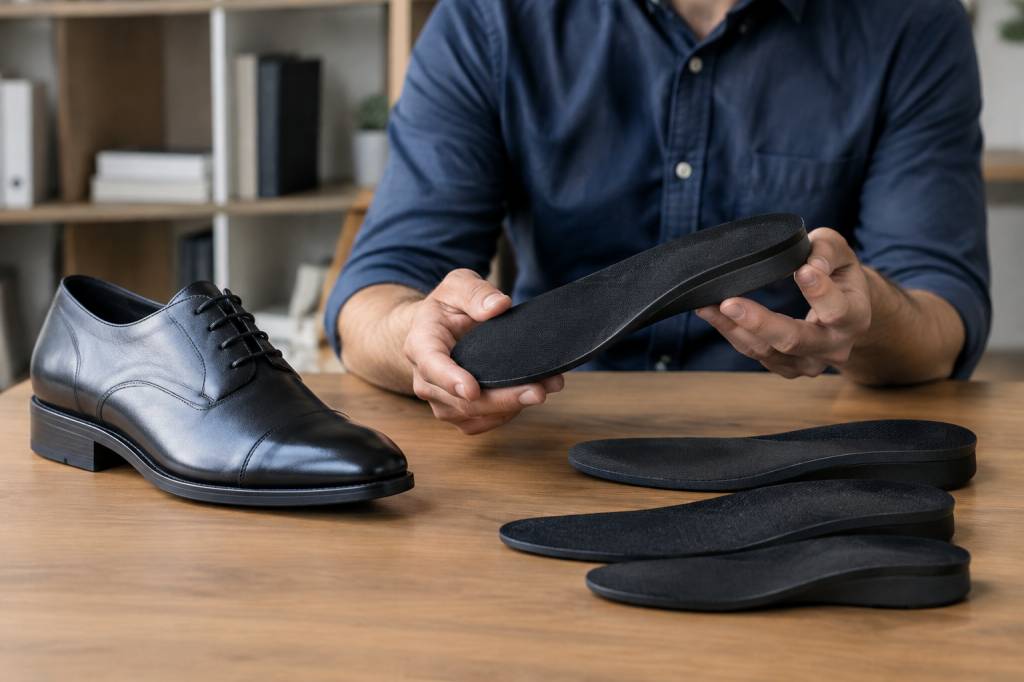
There is a particular moment when a man discovers height increasing insoles: he places them inside his favourite shoes, stands in front of the mirror, and suddenly thinks, “Why did nobody tell me about these before?” I know the feeling. A few extra centimetres can change the way trousers fall, how a suit looks from the side, and—perhaps most importantly—how comfortable you feel when you walk into a room.
But not every height up insole is suitable for every pair of elevator shoes. Choosing the wrong height can create pressure under the heel, make the shoe feel unstable, or leave your toes negotiating for space. The right insole should provide a discreet lift while allowing you to walk naturally.
So, how do you choose the right height-increasing insole for elevator shoes? Let’s look at the key points: lift height, shoe structure, comfort, foot position, and everyday use.
What is a height-increasing insole?
A height-increasing insole is a removable insert designed to raise the heel and create additional height inside a shoe. Unlike a standard comfort insole, it usually has a raised heel section made from foam, gel, cork, or a combination of materials.
These insoles can be used in certain boots, sneakers, derbies, and other shoes with enough internal volume. They are often adjustable, allowing you to add or remove layers depending on the height you want. This makes them different from built-in elevator shoes, where the lift is integrated into the shoe and carefully distributed throughout the sole.
That distinction matters. A height insole can be practical when you already own a roomy pair of shoes, but it cannot transform every ordinary shoe into a perfectly engineered pair of elevator shoes. The shoe must have the right shape, depth, heel support, and upper construction.
How much extra height do you really need?
The first question is simple: how many centimetres do you want to add? The second question is more important: how many centimetres can your shoes comfortably accommodate?
Height insoles are commonly available in different lift levels, often ranging from a subtle increase of around 2 to 3 centimetres to a more noticeable lift of 5 centimetres or more. Some adjustable models use removable layers, so you can begin with a modest lift and increase it gradually.
- 2–3 cm: A discreet option for everyday wear, work shoes, and men who want a natural change in proportions.
- 3–5 cm: A versatile range that works well in suitable boots, sneakers, and spacious casual shoes.
- 5 cm and above: A more dramatic lift that requires carefully selected footwear with sufficient depth and strong heel support.
My advice is to start lower than your ambition. It is tempting to reach for the tallest insole immediately, especially when the product description promises an impressive increase. But comfort is not a minor detail. A 3-centimetre lift that you can wear confidently all day is usually more useful than a 6-centimetre lift that makes every step feel like a small architectural experiment.
Adjustable height insoles: a smart way to begin
If you are new to height increasing insoles, an adjustable model can be an excellent choice. These insoles usually contain removable layers or sections that allow you to control the final height.
Begin with the lowest setting for several hours. Pay attention to your heel, arch, toes, and the way your foot sits inside the shoe. If everything feels stable, you can test the next level on another day. This gradual approach helps you discover the height that suits your feet and your shoes.
Adjustable insoles are also useful because different shoes have different internal shapes. A pair of roomy elevator boots may accept a higher setting, while a slim pair of elevator sneakers may feel better with one layer removed. One insole does not necessarily have to provide one fixed result.
There is also a psychological advantage. You can choose a subtle lift for a long day at work and a higher setting for a short evening event. Your footwear becomes more adaptable, rather like a well-tailored jacket with a surprisingly clever lining.
Match the insole to the shoe type
Not every shoe is suitable for a height insole. The best candidates have a relatively deep interior, a closed heel, and a firm upper that can hold the foot securely.
Elevator boots
Boots are often the easiest shoes for height insoles because they naturally offer more ankle support and internal space. Chelsea boots, lace-up boots, and some dress boots can work particularly well, provided the heel counter is firm and the opening is not too tight.
Boots with a higher shaft are especially useful for taller insoles because they help keep the foot aligned. However, check that your heel does not lift excessively when walking. A little movement is normal; a loose, unstable fit is not.
Elevator sneakers and casual shoes
Sneakers can accommodate height insoles if they have a deep footbed and a padded collar. Look for styles with removable original insoles, as removing the factory footbed can create the extra space needed for the height insert.
Minimal, low-profile sneakers are more complicated. Their sleek shape may leave little room above the toes, and a thick insole can push the foot too high inside the upper. This may cause rubbing at the heel or pressure across the instep.
Formal shoes and derbies
Formal shoes require a little more caution. A traditional derby with a generous opening may work better than a narrow slip-on. Lace-up styles allow you to adjust the fit after inserting the height insole, which is a useful advantage.
For business wear, a moderate lift usually looks more natural. The purpose is to improve your proportions discreetly, not to make your feet appear raised inside the shoe. When wearing a suit, the clean line of the trouser and the polished shape of the shoe should remain the stars of the show.
Check the internal space before choosing the lift
The most common mistake is choosing an insole based only on its advertised height. A 5-centimetre insole may sound appealing, but the real question is whether your shoe has enough vertical space to hold it.
Before purchasing, inspect the shoe carefully:
- Remove the original insole if it is removable and measure the available depth.
- Check whether the shoe has a firm heel counter.
- Make sure the upper is not already tight across the instep.
- Look for enough room around the toes after the insole is inserted.
- Confirm that the shoe closes securely with laces, straps, or a firm ankle opening.
If the shoe becomes tight after adding the insole, do not assume it will “break in” magically. Leather can soften, but it cannot create unlimited space. Your feet should not be compressed simply to gain an extra centimetre.
Heel lift versus full-length height increase
Some height insoles raise only the heel, while others create a more gradual slope or extend further towards the front of the foot. This design difference affects both comfort and walking style.
A heel-only lift provides a noticeable increase but can place more pressure under the heel and alter the angle of the foot. It may be suitable for short periods, particularly in boots with strong support, but it can feel less natural when worn for a full day.
A full-length or gradual-rise insole distributes the elevation more evenly. These models may feel more stable because the foot is not perched entirely on the back section. For regular use, look for a shape that supports the arch and transitions smoothly towards the toes.
This is one reason purpose-built elevator shoes are often more comfortable than ordinary shoes fitted with a very tall insert. Their internal construction is designed around the lift from the beginning, rather than adding height as an afterthought.
Comfort features worth looking for
A good height-increasing insole should do more than add centimetres. It should also support your foot during ordinary movement. Look for practical features rather than impressive packaging.
- Shock-absorbing foam: Helps reduce the impact of each step on hard floors.
- Arch support: Encourages a more stable foot position, especially when the heel is elevated.
- Non-slip texture: Prevents the insole from sliding inside the shoe.
- Breathable cover: Useful when wearing the shoes for work, travel, or long evenings.
- Contoured heel cup: Helps keep the heel centred and reduces unwanted movement.
- Removable layers: Allow you to adjust the height and improve versatility.
Materials also influence the experience. Soft foam is light and comfortable, while gel can improve shock absorption. Firmer materials may provide stronger support, but they can feel less forgiving if the shoe is already rigid. The ideal combination depends on your foot shape and how long you plan to wear the shoes.
How to test a new height insole
When your insole arrives, do not wear it immediately for a twelve-hour day at the office. Your feet deserve a more diplomatic introduction.
Place the insole inside the shoe and walk around your home for ten to fifteen minutes. Check whether your heel stays in place and whether your toes can move naturally. Then try the shoes on a short walk outside. If the fit remains comfortable, gradually increase the wearing time.
Pay attention to these warning signs:
- Numbness or tingling in the toes.
- Persistent rubbing at the heel or ankle.
- Pressure across the top of the foot.
- A feeling that the shoe may come off while walking.
- Unusual strain in the calves or lower legs.
If any of these problems appear, reduce the height or try a different shoe. A small adjustment can make a major difference. Sometimes removing a single layer is all that is needed to turn an uncomfortable pair into a practical one.
Should you choose insoles or built-in elevator shoes?
Height insoles are appealing because they are flexible. You can move them between suitable shoes, experiment with different heights, and upgrade a pair you already own. They are a useful option for occasional wear or for someone who wants to test the feeling of added height.
Built-in elevator shoes, however, are generally the better choice for frequent use. Their internal lifts are integrated into the sole and designed to support the foot more evenly. The exterior also looks like a normal, well-proportioned shoe rather than a standard shoe carrying an extra insert.
If you need reliable comfort for daily commuting, business meetings, or long periods of standing, consider investing in elevator shoes designed for the height you want. If you are exploring the idea or need an adaptable solution, adjustable height insoles can be an excellent starting point.
Style tips for wearing height increasing insoles discreetly
The most convincing look is always the one that feels natural. Choose shoes with a substantial enough profile to accommodate the insole without changing their silhouette. Boots, structured sneakers, and classic lace-up shoes are often easier to style than very thin loafers or minimalist trainers.
Keep the rest of the outfit balanced. Straight or gently tapered trousers usually fall neatly over elevator shoes, while extremely narrow trousers may reveal that the foot sits higher inside the shoe. A clean trouser break helps maintain a polished line from the ankle down.
For casual outfits, elevator sneakers paired with dark jeans or chinos create an easy everyday combination. For professional settings, polished elevator derbies or boots work well with tailored trousers and a structured jacket. The aim is not to announce the lift. The aim is to look well dressed, comfortable, and quietly confident.
The right height is the height you can wear confidently
Choosing the right height-increasing insole is a balance between ambition and practicality. Consider the lift you want, but also the internal space of your shoes, the support around your heel, the shape of the insole, and the amount of time you will wear it.
For most men, a moderate and adjustable lift is the best place to begin. It offers flexibility without forcing the foot into an unnatural position. As you become familiar with the fit, you can decide whether to stay with a subtle increase or move towards a taller setting.
And remember: the finest elevator shoes are not simply the ones that promise the most centimetres. They are the ones that let you walk naturally, dress confidently, and forget that you are wearing a little extra height at all. That is when the magic works best—quietly, comfortably, and with excellent Italian-style discretion.