
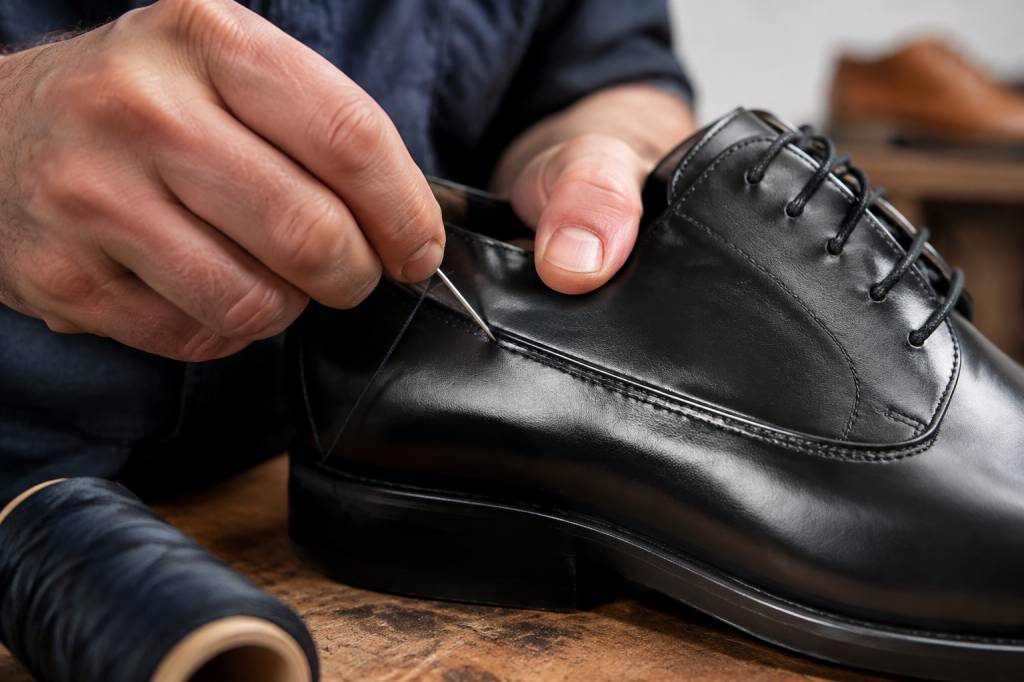
When we talk about quality in men’s footwear, we often notice the obvious details first: the leather, the silhouette, the shine, and—if we are discussing elevator shoes—the extra height hidden inside. Yet some of the most important details are much quieter. They live along the seams, under the lining, and in the patient rhythm of the stitching.
One of these details is single needle stitching. It may sound technical, even a little mysterious, but it has a direct influence on how an elevator shoe looks, feels, and performs over time. In the same way a well-tailored jacket depends on precise seams, a refined shoe depends on the accuracy of its construction.
So, what exactly does single needle stitching bring to elevator shoes? More importantly, why should you care when choosing a pair designed to add discreet height and elegant confidence to your appearance? Let’s take a closer look.
What is single needle stitching?
Single needle stitching is a sewing technique in which one needle and one thread are used to create a seam. The thread passes through the materials in a controlled, even line, producing a clean and refined finish.
At first glance, it may seem less impressive than the machinery behind modern mass production. But in quality footwear, precision matters more than speed. A single needle allows the maker to follow curves, corners, and changes in material with greater control. This is particularly useful for dress shoes, where the upper must be shaped carefully around the foot.
Many inexpensive shoes are produced with faster stitching methods that can create uneven lines, bulky seams, or excess thread. These shortcuts may reduce manufacturing time, but they do not always produce the elegant finish expected from a well-made pair of shoes.
Single needle stitching is not simply decorative. It is a sign that attention has been given to the small details—those details that become very noticeable after months of walking, working, traveling, and attending events in the same pair.
Why stitching matters in elevator shoes
Elevator shoes are not constructed exactly like ordinary shoes. Beneath the footbed, they contain a discreet internal lift designed to increase height while maintaining a natural appearance. This hidden structure changes the internal balance of the shoe.
The upper must sit securely around the foot. The heel area must remain stable. The sole must be attached firmly enough to support the additional internal components. Every part needs to work together without making the shoe feel stiff, heavy, or artificial.
This is where careful stitching becomes especially valuable. A precise seam helps the upper retain its shape around the internal lift. It also contributes to the overall stability of the shoe, particularly around areas that receive considerable stress, such as:
When these areas are sewn accurately, the shoe is more likely to remain balanced and comfortable. That is essential for elevator shoes because the goal is to add height without announcing how it is done. Nobody wants to walk into a room looking taller but moving like a sailor on a stormy deck.
A cleaner and more elegant appearance
One of the first benefits of single needle stitching is visual refinement. The stitch line is usually narrow, consistent, and discreet. This gives the shoe a polished appearance that works beautifully with formal trousers, tailored suits, chinos, and even smart denim.
On an elevator dress shoe, the stitching can be particularly important because the design often aims to remain understated. The shoe should look like a beautifully proportioned men’s shoe—not like a technical product hiding a secret inside.
A neat stitch line helps maintain this illusion. It follows the contours of the shoe without creating unnecessary visual noise. Around the toe cap, for example, evenly spaced stitches can emphasize the elegant shape of the shoe. Along the side panels, a controlled seam can make the silhouette appear sharper and more structured.
This is one reason high-quality elevator shoes often have a calm, confident appearance. They do not need exaggerated decoration. The craftsmanship speaks quietly, like a gentleman who never needs to announce that his suit is expensive.
Improved durability in high-stress areas
Every shoe experiences stress, but elevator shoes can place additional demands on their construction. The internal lift changes the geometry of the footbed, and the foot may distribute pressure differently while walking. Good stitching helps the shoe manage these forces.
With single needle construction, the maker can control the tension of the thread more carefully. If the thread is too loose, the seam may open or allow the materials to shift. If it is too tight, the leather can pucker and become uncomfortable. The ideal tension creates a strong, flexible seam that supports the shoe without making it rigid.
This matters at the point where the upper bends over the toes. When you walk, the leather folds and unfolds thousands of times. A poorly made seam may begin to crack, stretch, or separate in this area. A carefully sewn seam is better prepared for repeated movement.
The heel area also deserves attention. The heel counter helps keep the rear of the foot stable, while the internal elevator insert provides additional height. Strong, precise stitching helps these elements remain properly aligned. The result is a shoe that feels more secure and maintains its shape for longer.
Better control over premium materials
Leather is a natural material. It has grain, texture, thickness, and personality. Two pieces from the same hide may not behave in exactly the same way. This is part of leather’s charm, but it also demands skill during construction.
Single needle stitching gives the shoemaker greater control when working with fine leather. The seam can be adjusted to suit the material, and the stitching can follow the natural shape of the upper without forcing it into an awkward line.
This is particularly helpful when using soft calfskin or smooth full-grain leather. These materials can create a luxurious finish, but they also reveal mistakes easily. Uneven tension, unnecessary holes, or a crooked seam can remain visible forever.
With good workmanship, the leather lies flat and retains its natural character. The shoe feels supple rather than cardboard-like, and the surface develops a more attractive patina with wear. In other words, the shoe does not merely survive your wardrobe; it becomes part of your personal style story.
Comfort is more than cushioning
When men shop for elevator shoes, comfort is often associated with the hidden lift. Is the insert soft? Is the arch supported? Does the shoe feel stable? These are important questions, but stitching also contributes to comfort in ways that are easy to overlook.
A cleanly sewn upper creates fewer irritating ridges and bulky areas inside the shoe. This can reduce friction around the heel, sides, and toes. If you have ever worn a shoe with a rough internal seam, you already know how a tiny construction flaw can become the main character of your day.
Accurate stitching also helps the lining remain in place. A lining that shifts can bunch up beneath the foot or rub against the skin. In a shoe with an internal height increase, keeping the lining smooth is especially important because the foot already needs to adapt to a different internal structure.
Comfort should not mean softness alone. A well-made elevator shoe should provide controlled support. The foot should feel held, not squeezed; elevated, not tilted into uncertainty. Good stitching contributes to that feeling of calm stability.
Single needle stitching and long-term shape retention
A quality pair of shoes should look good not only on the first day but also after many months of use. Shape retention is a major part of that equation.
Elevator shoes are designed to create a taller, more balanced appearance. If the upper begins to collapse, the heel leans, or the toe loses its structure, the entire visual effect can suffer. Precise stitching helps keep the components in their intended position.
This is especially noticeable in dress styles. A structured Oxford or Derby should maintain a clean line from the lacing area to the toe. If the seams stretch unevenly, the shoe may look tired long before it should.
Single needle stitching supports the relationship between the upper, the lining, and the sole. It helps prevent small movements from becoming larger distortions. Naturally, no construction method can defeat poor care or years of daily abuse. Even the best shoes appreciate a little rest—much like the rest of us after a long wedding reception.
How to recognize quality stitching
You do not need to be a master shoemaker to inspect a pair of elevator shoes. A few simple observations can tell you a great deal about the construction.
It is also worth remembering that perfect symmetry is not always the goal with natural leather. Small variations may be signs of genuine material rather than poor quality. What matters is whether the construction is deliberate, secure, and aesthetically balanced.
Single needle versus speed-focused production
Modern shoe manufacturing offers many efficient techniques, and not every alternative to single needle stitching is automatically inferior. Some machine methods are perfectly reliable when used correctly. The issue is usually the level of control and attention given to the final product.
Fast production can lead to stitching that is technically functional but visually careless. A seam may hold the shoe together while still looking bulky or uneven. For casual footwear, this may be acceptable. For an elegant elevator shoe intended to refine a man’s silhouette, the difference becomes more important.
Single needle stitching is often associated with craftsmanship because it encourages precision. It takes time to guide the material carefully, adjust the thread, and maintain a consistent result. That extra attention can be seen in the finished shoe, especially when the design is simple and every line is visible.
Think of it as the difference between a hurried haircut and a skilled barber’s work. Both may remove hair, but only one makes you pause in front of the mirror with quiet satisfaction.
Why this detail is worth paying for
A well-constructed elevator shoe is an investment in more than added height. It is an investment in proportion, comfort, confidence, and everyday presentation. The hidden lift may help you appear taller, but the visible craftsmanship determines whether the shoe looks convincing.
Single needle stitching supports that impression in several ways:
These benefits may not appear on a product specification sheet in large dramatic letters. They reveal themselves gradually: when the shoe still feels stable after a long day, when the leather continues to sit beautifully around the foot, and when someone compliments your style without realizing that your shoes are giving you a discreet lift.
Looking after your stitched elevator shoes
Even excellent stitching needs proper care. Rotate your shoes when possible, allowing each pair to rest and dry naturally between wears. Use a shoe tree to help preserve the shape, especially in leather elevator shoes.
Keep the shoes away from direct heat if they become wet. Excessive heat can dry the leather and place unnecessary tension on the seams. Instead, remove the insoles if appropriate, wipe away moisture, and let the shoes dry slowly in a well-ventilated room.
Regularly apply a suitable leather conditioner and polish, but avoid saturating the stitching with heavy products. When cleaning, use a soft brush to remove dust from the seams. If you notice a loose thread, do not pull it dramatically as though opening a secret letter. Have it trimmed or repaired properly before the problem grows.
With thoughtful construction and sensible care, single needle stitching can help an elevator shoe remain attractive, supportive, and discreet for a remarkably long time. And that is the real beauty of quality footwear: the most important work is often the work you never notice—until a cheaper pair reminds you what it is missing.