







The Polished Way to Button a Trench Coat
A trench coat has a certain magic. You put one on, and even a simple outfit of jeans, a sweater, and clean shoes suddenly looks as though you had a plan all along. But there is one small detail that can make the difference between effortlessly sharp and slightly tangled: how you fasten it.
I learned this on a windy afternoon in Milan, when I buttoned my coat in a hurry and stepped outside looking rather like a parcel that had been wrapped by a nervous shop assistant. The coat was beautiful. The arrangement of buttons, belt, and collar was not. Since then, I have treated trench-coat fastening as a simple style ritual: a few considered choices, made before the weather makes them for you.
Whether your trench is double-breasted or single-breasted, buttoning it well comes down to fit, comfort, and the impression you want to create. Here is how to get it right without turning a classic coat into a puzzle.
Start With the Coat’s Fit
Before you decide which buttons to fasten, check how the coat sits on your body. A trench should give you enough room to wear a jacket or a midweight sweater underneath, but it should not swallow your frame. The shoulder seams should sit close to your natural shoulders, and the sleeves should reach your wrists without covering your hands.
This matters because fastening a coat cannot improve a poor fit. If the buttons pull into a tight X across your chest, the coat is probably too small or your layers are too bulky. If the front hangs open like curtains even when fastened, the coat may be too large. Aim for a clean line that follows your shape while leaving enough space to move comfortably.
For men who like to create a taller, more streamlined silhouette, pay attention to the coat’s length and proportions. A trench that falls around the knee often works well for many builds. A shorter man may prefer a hem just above or around the knee, which can keep the coat from visually overwhelming his frame. Pair that balanced length with neat trousers and well-chosen shoes, perhaps elevator shoes if you enjoy a discreet lift, and the whole outfit feels intentional from top to bottom.
Understand the Double-Breasted Front
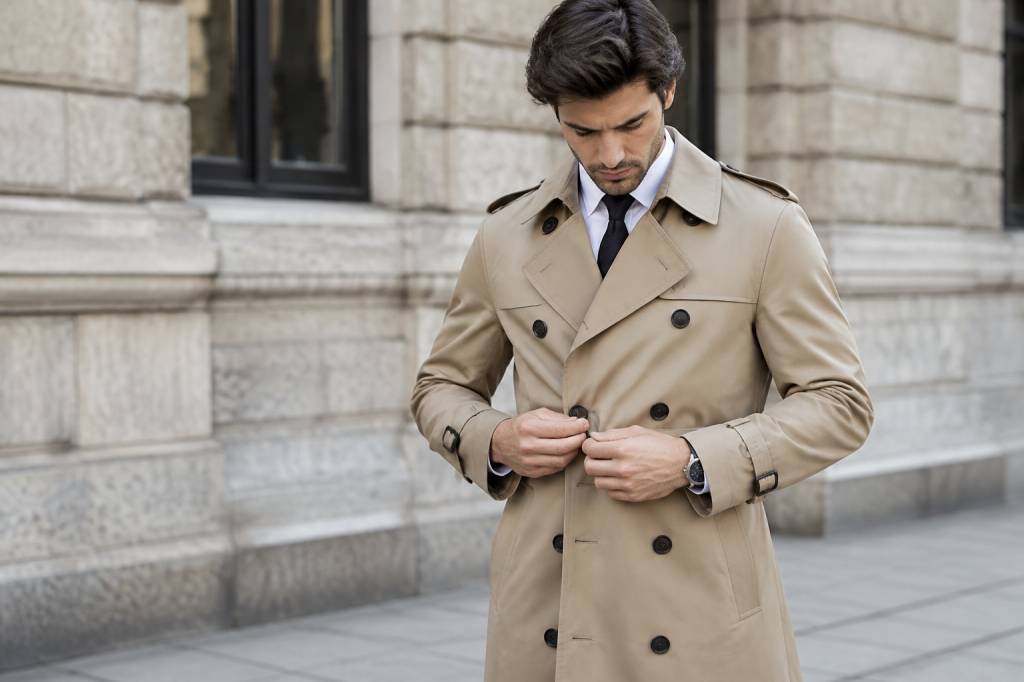
Most classic trench coats are double-breasted. That means one front panel overlaps the other, creating a broad, structured front and usually two rows of buttons. The overlap is part of the design, not a mistake to be corrected. When the coat is fastened properly, it should lie smoothly across your chest and stomach.
On many models, the buttons are arranged so the coat can be fastened on either side. This is useful if the weather changes or if you want to adjust how the coat sits. Look for the buttons and buttonholes before putting the coat on, especially if it is new to you. Some coats have an inner button that keeps the overlapping panel in place. It is easy to miss, but it can make the front look much tidier.
For a polished everyday look, close the inner button first if your coat has one, then fasten the main buttons from the inside out. Smooth the fabric with your hands as you go. The goal is not to pull the coat tight, but to help both front panels lie flat without bunching.
How Many Buttons Should You Fasten?
There is no single rule that applies to every trench and every occasion. The right choice depends on the cut of the coat, the temperature, and what you are wearing underneath. Still, a few dependable guidelines make getting dressed much easier.
-
For a neat, formal appearance: Fasten the main buttons across the chest and waist, as long as the coat remains comfortable and the fabric lies flat.
-
For a relaxed but tidy look: Fasten the central buttons and leave the lower portion open, especially when walking or sitting.
-
For a quick dash outdoors: Fasten the top button or two to keep the wind out, then secure the belt if the coat has one.
-
When wearing a suit: Button the coat enough to keep the suit covered and the front smooth, but make sure you can move your arms without feeling restricted.
A common mistake is fastening every button simply because it is there. Some coats look more natural with one or two buttons left open at the bottom. Others are designed to be closed more fully. Stand in front of a mirror, walk a few steps, and check the shape from the side. If the coat pulls or kicks outward at the hem, loosen it. A polished look should not require you to breathe like a man waiting for a tailor to release him.
What to Do With the Belt
The belt can sharpen the waist and give the coat its familiar, distinguished shape. But it can also become the part that takes longest to manage. You have three straightforward options: buckle it, tie it, or leave it loose.
For the most formal finish, thread the belt through the buckle and fasten it comfortably. The buckle should sit near the centre of your waist, not so tight that the coat wrinkles around it. A little definition is elegant; a dramatic squeeze is not. If the coat already has a strong shape, you may not need to cinch the belt much at all.
For a more casual, relaxed appearance, tie the belt in a simple knot. Keep the knot flat and centred or slightly to one side. A large, floppy bow can make a classic trench look fussy, unless the coat’s design specifically calls for it. When the weather is mild and you prefer the coat open, let the belt hang neatly behind you or tie it at the back. Avoid dangling belt ends that catch on bags, chairs, or your own patience.
One practical detail: if you are wearing the coat open, check that the belt loops are doing their job. A belt sliding down toward your knees is not the dramatic fashion moment anyone hopes for.
When to Leave the Coat Open
A trench coat does not have to be buttoned to look polished. On a dry, mild day, wearing it open can show off the layers underneath and create a long, clean vertical line. That line can be especially flattering when your outfit is built around similar colours, such as a navy coat over a blue sweater and dark trousers.
If you leave the coat open, give the rest of the outfit some structure. A shirt collar, a fine-gauge sweater, or a crisp jacket underneath can keep the look deliberate rather than unfinished. Make sure the coat’s lapels sit neatly and that the belt is not twisted. Open works best when it looks like a choice, not the result of losing a fight with the buttons.
In cold or windy weather, close the coat. A beautiful silhouette is lovely, but arriving at dinner shivering is less so. Fasten the front, secure the belt, and raise the collar if needed. The trench is practical clothing, after all, not simply a handsome background for a photograph.
Use the Collar and Storm Flap Wisely
Many trench coats have a throat latch, sometimes called a collar tab, which can be fastened to close the collar around your neck. It is useful in wind and rain, but usually unnecessary indoors or on a calm day. If you use it, make sure the collar sits comfortably rather than pressing against your throat.
The storm flap and shoulder tabs are also part of the coat’s character. They should lie flat and sit where they belong. Do not tuck them under the coat or pull them out of shape just to make the front look simpler. These details were designed for function, and they lend the trench its distinctive, purposeful appearance.
When fastening the coat, smooth the lapels and check that the collar is even on both sides. Small adjustments make a surprising difference. Think of them as the final brushstroke on an outfit: no one may notice the exact movement, but they will notice when the whole picture looks right.
Buttoning for Different Occasions
At the office: Wear the trench over a suit or tailored separates and fasten it enough to keep the front clean. A centred belt buckle adds a formal touch. Before stepping inside, remove the coat and hang it neatly rather than leaving it bunched on a chair.
On a date or evening out: A slightly more relaxed approach often feels natural. Fasten the middle buttons, leave the bottom open if the coat allows it, and tie the belt neatly. The aim is to look composed, not as if you have dressed for a military inspection.
For travel: Comfort comes first. Button the coat where it stays secure when you walk, then loosen the belt when sitting. A coat that is easy to move in is a better travel companion than one that looks perfect only while you stand still.
In rain: Close the coat securely, fasten the belt, and use the throat latch if the wind is driving rain toward your collar. Check that your sleeves are not pushed up beneath the coat, where water can find them. Weather has a remarkable talent for discovering the one small gap you forgot to close.
Common Buttoning Mistakes to Avoid
-
Pulling the coat too tight: Tight fabric creates wrinkles and makes even a quality trench look uncomfortable.
-
Ignoring the inner button: If your coat has one, fastening it can keep the overlap from shifting.
-
Leaving the belt twisted: A twisted belt distracts from the clean lines of the coat. Straighten it before you leave home.
-
Fastening the wrong side in a hurry: Take a moment to check the buttonholes. Not every coat is arranged the same way.
-
Forgetting to check the back: A quick glance in a mirror can reveal a flipped belt, raised hem, or bunched lining.
A Quick Mirror Check
Before you head out, take ten seconds to check your coat from the front, side, and back. Are the buttons lying flat? Is the belt centred or tied neatly? Can you lift your arms and walk without the fabric pulling? Does the hem fall at a flattering point? If the answer is yes, you are ready.
The best trench-coat styling rarely looks complicated. Choose the fastening that suits the weather and the occasion, keep the fabric smooth, and let the coat work with your proportions rather than against them. A well-buttoned trench adds structure, confidence, and a touch of old-world charm to an everyday outfit. And if the wind catches it just as you step onto the pavement, well, that is not a wardrobe malfunction. That is your cinematic entrance.