
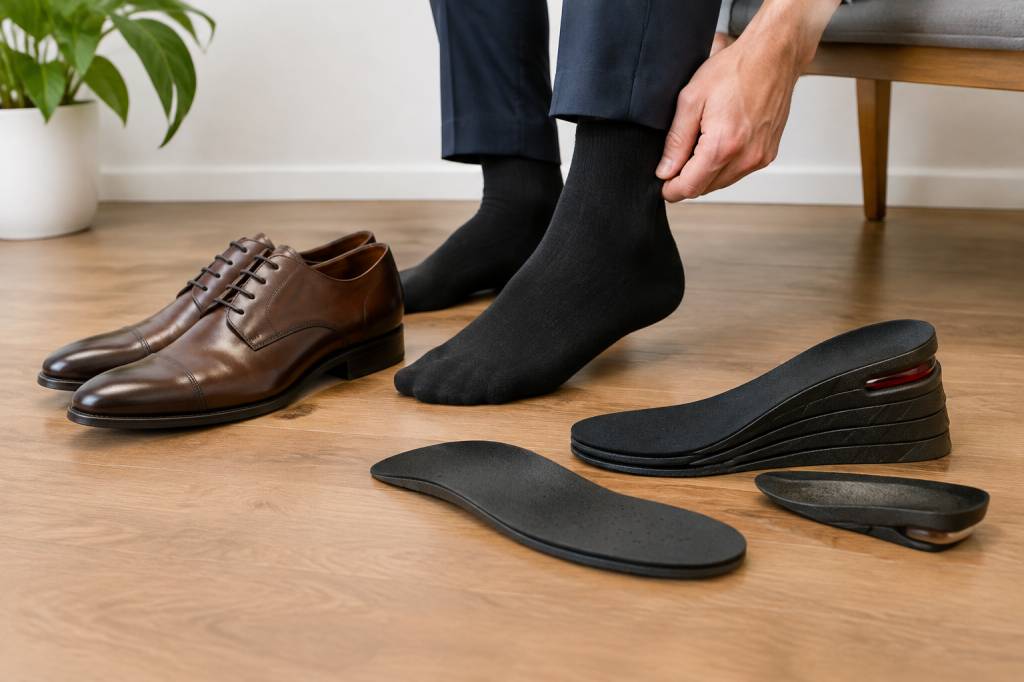
There is something wonderfully discreet about a good height increasing insole. Slip it into the right pair of shoes, adjust the fit, and you can enjoy a subtle lift without changing your entire wardrobe or announcing your intentions to the room. No dramatic platform, no awkward “look at me” effect—just a little extra height working quietly beneath your feet.
But choosing the right height insoles is not as simple as picking the tallest option available. A lift that looks impressive on paper may feel uncomfortable after twenty minutes. An insole designed for boots may not fit elegant leather shoes. And a model that works beautifully in one pair of sneakers may turn another pair into a rather unconvincing foot sandwich.
The right choice depends on your shoes, your preferred height increase, your daily routine, and the level of discretion you want. Here is how to choose height increasing insoles for shoes with confidence—and without sacrificing comfort.
What are height increasing insoles?
Height increasing insoles, also called height insoles or shoe lifts, are inserts placed inside your shoes to provide additional height. They are usually made from materials such as foam, silicone, gel, or layered synthetic compounds. Some designs offer a fixed lift, while others allow you to adjust the height by adding or removing layers.
Unlike full elevator shoes, which are designed from the beginning with a hidden internal lift, height insoles can be used with selected shoes you already own. This makes them an appealing option for men who want flexibility. One day, you might wear them with casual sneakers; the next, with ankle boots or a roomier pair of smart shoes.
However, regular footwear does not always have enough internal space. That is the first important point to remember. A shoe lift works best when the shoe has sufficient volume around the heel and instep. If the shoe is already snug, adding a thick insole can create pressure, heel slippage, or discomfort.
Decide how much extra height you really need
The most discreet height increasing insoles usually provide a modest boost. Depending on the design, you may find lifts offering approximately 1 to 3 inches of additional height. Some adjustable models allow you to begin with a smaller lift and increase it gradually.
More height is not automatically better. In fact, a lift that is too high for your shoes can make your walking pattern feel unnatural. Your heel may sit too far above the shoe collar, and the back of the foot may become less stable. The goal is not to build a tower beneath your heel. The goal is to create a balanced, comfortable lift that looks and feels natural.
- Subtle boost: Around 1 inch is often easiest to combine with everyday sneakers, loafers, and casual shoes.
- Moderate boost: Around 1.5 to 2 inches can work well in boots and roomier footwear.
- Higher boost: Above 2 inches generally requires carefully selected shoes with enough depth and ankle support.
If you have never worn height insoles before, start low. It is much easier to add another layer later than to spend the afternoon walking like a marionette whose strings have been cut.
Choose between fixed and adjustable height insoles
Fixed height insoles have a single built-in lift. They are simple, quick to use, and often slimmer than adjustable models. If you already know the amount of height you prefer and intend to use the insoles with one particular pair of shoes, a fixed option may be all you need.
Adjustable height insoles use removable layers or inserts. This allows you to customize the lift depending on the shoe and the occasion. You might choose a lower setting for a long day at work and a slightly higher setting for a short evening event.
Adjustability is especially useful when your shoe collection includes different styles. A pair of elevator sneakers may accommodate more height than a slim leather derby. Boots usually offer more room and ankle support, while low-cut shoes demand a more cautious approach.
- Choose fixed insoles if you prefer simplicity and use one compatible pair of shoes regularly.
- Choose adjustable insoles if you want versatility across sneakers, boots, and casual footwear.
- Choose a lower setting when wearing low-cut shoes or walking for many hours.
- Choose a higher setting only when the shoe has enough depth, structure, and heel coverage.
Check the shape of your shoes
Not every shoe is suitable for height increasing insoles. The internal shape matters just as much as the advertised lift.
High-top sneakers and boots are usually the easiest styles because they provide extra coverage around the ankle. This helps keep the foot secure and reduces the chance of the heel lifting out of the shoe. They are also excellent choices for beginners who want to test height insoles without immediately investing in a full pair of elevator shoes.
Roomy sneakers can also work well, particularly models with removable factory insoles. Removing the original insole creates additional space for the height insert and can help preserve a more natural fit.
Low-cut dress shoes require more precision. A thick lift may push the heel above the collar, making the shoe look too small or causing the foot to slide forward. For formal footwear, a slim height insole or a purpose-built pair of elevator dress shoes is often the more polished solution.
- Best match: boots, high-top sneakers, roomy trainers, and shoes with removable insoles.
- Possible match: casual leather shoes with a deep interior and firm heel counter.
- Riskier match: narrow loafers, shallow dress shoes, ballet-style slip-ons, and already-tight footwear.
Look for proper heel and arch support
A height insole should do more than add material beneath your heel. A good design should support the foot and keep the heel positioned securely. Look for a stable heel cup, a gently contoured shape, and enough arch support to prevent the foot from sliding forward.
Heel cups are particularly important. Without one, the heel may move from side to side, especially when walking quickly or climbing stairs. That movement can make the shoes feel unstable and may cause rubbing around the ankle.
The front of the insole should also transition smoothly. Some shoe lifts are steeply angled, creating a noticeable difference between the raised heel and the forefoot. Others use a gradual slope, which generally feels more natural during walking.
For daily wear, prioritize stability over maximum height. A discreet boost is only discreet if you can move comfortably. The most convincing elevator shoes and height insoles are the ones nobody notices—including you.
Pay attention to materials
The material affects comfort, durability, breathability, and the overall feel inside the shoe.
Foam insoles are lightweight and often comfortable for casual use. They can provide useful cushioning, although softer foam may compress over time. If you choose foam, look for a dense construction that retains its shape.
Silicone and gel insoles offer excellent shock absorption and can feel pleasant under the heel. They may be slightly heavier, and some designs can become warm during long periods of wear. A textured or breathable upper surface can help prevent sliding.
Layered synthetic insoles are popular for adjustable models. Their structure allows you to change the height, but the layers should lock together securely. Loose layers can shift inside the shoe, which is not the kind of surprise anyone wants halfway through a business meeting.
Leather-covered or fabric-covered insoles can provide a more refined feel, especially in smart footwear. They may also help manage moisture, depending on the construction. Whatever the material, check that the surface is smooth and does not create excessive friction.
Make sure the insole fits the shoe correctly
A height insole should sit flat and stable inside the shoe. It should not curl at the edges, slide backward, or press heavily against the toes. Before wearing it outside, test the fit at home.
If the insert is too long, some models can be trimmed carefully along the marked lines. Always follow the manufacturer’s instructions. Cutting too much can alter the balance of the insole and leave the foot poorly supported.
When the shoe has a removable factory insole, take it out and compare the shapes. The replacement height insole should cover the heel and most of the foot without creating a ridge beneath the arch. If the original insole is glued in place, avoid forcing it out. In that case, choose a thinner lift or a shoe with more internal room.
After inserting the lift, wear the shoes with the socks you normally use. A shoe that fits perfectly with thin socks may feel very different with thicker winter socks. Small details matter when internal space is limited.
Consider your everyday activities
Your lifestyle should guide your choice. Height insoles for a short dinner or special occasion do not need to meet exactly the same demands as inserts worn from morning until evening.
For office wear, select a stable and breathable design that fits securely in your shoes. If you spend much of the day standing, cushioning and a gradual slope become especially important.
For travel or city walking, choose comfort first. A moderate lift inside supportive sneakers or elevator sneakers is generally more practical than a high insert inside a shallow fashion shoe. Your feet will appreciate the decision after the third train platform and the mysterious “short walk” that becomes forty minutes.
For formal occasions, discreetness and appearance take priority. Make sure the insert does not raise your heel so far that the shoe collar becomes visible or the trousers fall awkwardly over the footwear. In some cases, formal elevator shoes provide a cleaner result because the hidden lift is integrated into the entire design.
Height insoles versus elevator shoes
Height increasing insoles are flexible and economical, but they are not a universal replacement for elevator shoes. Their success depends on the shape and construction of the footwear used with them.
Elevator shoes are engineered with a concealed internal lift and an exterior design that maintains balanced proportions. The extra height is distributed through the shoe rather than concentrated only beneath the heel. This can provide better stability, a more natural walking experience, and a cleaner appearance.
Choose height insoles when you want to adapt compatible shoes you already own or experiment with a modest lift. Choose elevator shoes when you want a dependable daily solution, a higher boost, or a refined style designed specifically around internal height enhancement.
Many men use both. Height insoles can be useful in casual sneakers or boots, while elevator dress shoes provide a more polished option for professional and formal settings.
Test your new height insoles gradually
Even a well-designed insole may require a short adjustment period. Begin by wearing it indoors for 20 to 30 minutes. Walk across different surfaces, sit down, stand up, and check whether your heel remains secure.
Pay attention to pressure points around the toes, arch, heel, and ankle. Discomfort is not a badge of honor and should not be dismissed as part of the process. If the shoe feels tight, try reducing the lift, removing an existing insole, or using a roomier pair of shoes.
Once the fit feels comfortable, increase the wearing time gradually. This approach helps you discover whether the design works for your real routine rather than merely surviving a five-minute mirror inspection.
A practical checklist before buying
- Measure the available interior space in the shoe.
- Check whether the original insole can be removed.
- Choose a lift height that matches the shoe’s ankle coverage.
- Look for a secure heel cup and a gradual slope.
- Consider breathable materials for extended wear.
- Confirm whether the height is fixed or adjustable.
- Read the sizing information carefully.
- Test the insoles indoors before wearing them outside.
- Reduce the height if your heel slips or your toes feel compressed.
- Consider elevator shoes when you need a more integrated and reliable solution.
The best height increasing insole is not necessarily the tallest or the most heavily cushioned. It is the one that fits your shoe, supports your foot, and gives you a natural lift that suits your style. Start with the footwear you plan to wear, choose comfort over bravado, and let the extra height remain your little secret.
That is the beauty of a discreet boost: the shoes do their work, your outfit stays balanced, and you can walk into the day with a little more confidence in every step.