
Every man I know has, at least once, stood a little straighter in front of a mirror and wondered: Could I look taller? It’s a very human question. Sometimes it comes from style, sometimes from confidence, and sometimes from that moment when a friend in loafers seems to gain two extra inches just by walking into a room like he owns the Mediterranean coast.
Now, let’s be honest from the start: exercise does not magically lengthen your bones after puberty. If your growth plates have already closed, no workout will turn you into a basketball legend overnight. But exercise can do something very valuable, and often underestimated: it can help you maximize your natural height, improve posture, reduce compression in the spine, and create the visual impression of being taller. For younger men and teens, the right physical activity can also support healthy growth by strengthening bones, improving sleep, and keeping the body in good condition.
So if you’ve been searching for practical ways to grow taller by exercise, let’s separate the myths from the useful truths. And yes, we’ll keep it stylish, realistic, and free of miracle promises. No snake oil here. Just solid advice, a few field-tested habits, and the kind of details that actually matter.
Can exercise really help you grow taller?
The short answer is: it depends on your age and what you mean by “grow taller.”
If you are still in your growth years, exercise can support normal development. It does this indirectly by improving circulation, stimulating hormones related to growth, supporting bone health, and helping you sleep better. Growth is not only about genetics; it’s also about giving your body the right environment to do its job.
If you are fully grown, exercise won’t make your leg bones longer. But it can still help you look taller by improving posture, strengthening the muscles that hold your spine in a healthy position, and reducing slouching. That alone can make a noticeable difference. Some men regain one to two centimeters simply by standing properly instead of folding inward like a disappointed accordion.
That’s why the real goal is not to chase fantasy, but to use exercise intelligently: to support growth when possible, and to enhance your visible height when growth is no longer on the table.
The best exercises for looking and standing taller
Not all workouts are equal when the topic is height. Some build strength, some improve mobility, and some help your posture so much that you appear more confident and more upright immediately.
Here are the most useful types of exercise if your goal is to grow taller by exercise or at least look taller with better alignment:
Each of these serves a different purpose, but together they create a body that carries itself better. And a body that carries itself well always looks taller. Always.
Stretching: the simplest habit with the biggest visual payoff
If your back, hips, and hamstrings are tight, your posture pays the price. Tight muscles pull the body out of alignment, making you look shorter than you are. Stretching won’t make your skeleton grow, but it can restore your natural height by undoing the small daily compressions of modern life.
Think about it: hours at a desk, on a couch, in a car, on a phone. The body slowly learns the shape of the chair. Not very glamorous, is it?
Useful stretches include:
A short daily routine of 10 to 15 minutes is often enough to make a difference. The key is consistency. A single heroic stretching session before a beach holiday will not erase six months of bad posture. The body is polite, but it does not believe in miracles.
Hanging exercises and spinal decompression
Hanging from a bar is one of the most interesting exercises when people ask how to grow taller by exercise. Why? Because it creates temporary spinal decompression. Your spine is compressed all day by gravity, and hanging allows it to lengthen slightly for a short time.
This does not permanently increase bone length. But it can relieve pressure, improve posture, and make you feel more open through the upper body. If you are someone who spends a lot of time sitting, that feeling alone is worth its weight in good tailoring.
Try this:
If you are new to hanging, start slowly. Your grip and shoulders may need time to adapt. And if you have shoulder issues, check with a professional before making it a habit.
Core strength: the hidden secret behind standing tall
A strong core is not just about abs and aesthetics. It is the central support system for your spine. If your core is weak, your posture tends to collapse forward. If it is strong, your body has a much easier time standing tall without effort.
That’s important because many men try to “look taller” by pulling their shoulders back in an awkward, stiff way. That doesn’t last. Real posture comes from strength and alignment, not from pretending to be a statue.
Good core exercises include:
When the core is working well, the shoulders sit better, the pelvis is more balanced, and the spine feels less compressed. That gives you a taller, cleaner silhouette.
Swimming: the elegant full-body exercise for posture and length
Swimming has a special place in any discussion about height. It stretches the body, strengthens the back, opens the chest, and improves coordination. There’s a reason swimmers often look long and lean. The movement itself encourages extension.
For younger people, swimming is excellent because it promotes overall fitness without high impact. For adults, it is one of the best ways to counteract stiffness. Freestyle, backstroke, and gentle laps can all help the body move in a longer, more fluid pattern.
And let’s be honest: swimming has a certain cinematic quality. It makes you feel less like someone trapped in office furniture and more like a man who could step out of the water and ask for a linen shirt and a cold espresso.
Yoga and Pilates for a taller posture
If your goal is to appear taller, yoga and Pilates are among the smartest tools you can use. Why? Because they train alignment, body awareness, and mobility all at once. They teach you how to carry your frame with precision rather than tension.
Some useful yoga-inspired poses include:
Pilates, meanwhile, is excellent for building the deep stabilizing muscles that hold your posture together throughout the day. It is subtle work, but the effects are noticeable. You begin to move differently. You stand differently. You stop collapsing at the first sign of fatigue.
Jumping, sprinting, and why impact matters for younger bodies
If you are still growing, athletic movement matters a lot. Exercises like sprinting, jumping, basketball, skipping rope, and other high-impact sports can support healthy bone development and overall growth.
This doesn’t mean “the more you jump, the taller you become.” Growth still depends heavily on genetics, nutrition, sleep, and hormones. But exercise encourages the body to develop strong, dense bones and healthy muscles, which are essential during the growth years.
For teens and young adults, a well-rounded routine should include:
Balance is crucial. Too much training, poor recovery, and bad nutrition can work against growth. The body grows when it feels supported, not when it feels punished.
What actually helps growth beyond exercise
Exercise is powerful, but it is only one part of the equation. If you want the best possible height outcome while you are still growing, you need to pay attention to the basics.
These matter more than many people want to admit:
No workout can compensate for sleeping four hours a night and surviving on snacks that resemble colorful cardboard. The body is a system, not a trick.
How to build a height-friendly weekly routine
If you want a practical approach, keep it simple. You do not need a complicated program with heroic promises and impossible demands. You need a routine you can repeat.
Here is a balanced weekly structure that supports posture, mobility, and overall physical development:
If you are already an adult, this routine will help you stand taller, move better, and look more confident. If you are still growing, it gives your body a healthier environment to reach its natural potential.
The style advantage of standing taller
There is one last point that deserves attention. Height is not only a measurement. It is also a presence. A man who stands upright, moves cleanly, and carries himself well often appears taller than his actual height suggests.
This is where exercise and style meet. Better posture improves how clothes fit. Jackets fall more cleanly. Trousers look sharper. Even a simple t-shirt sits differently on a body that is elongated rather than folded inward.
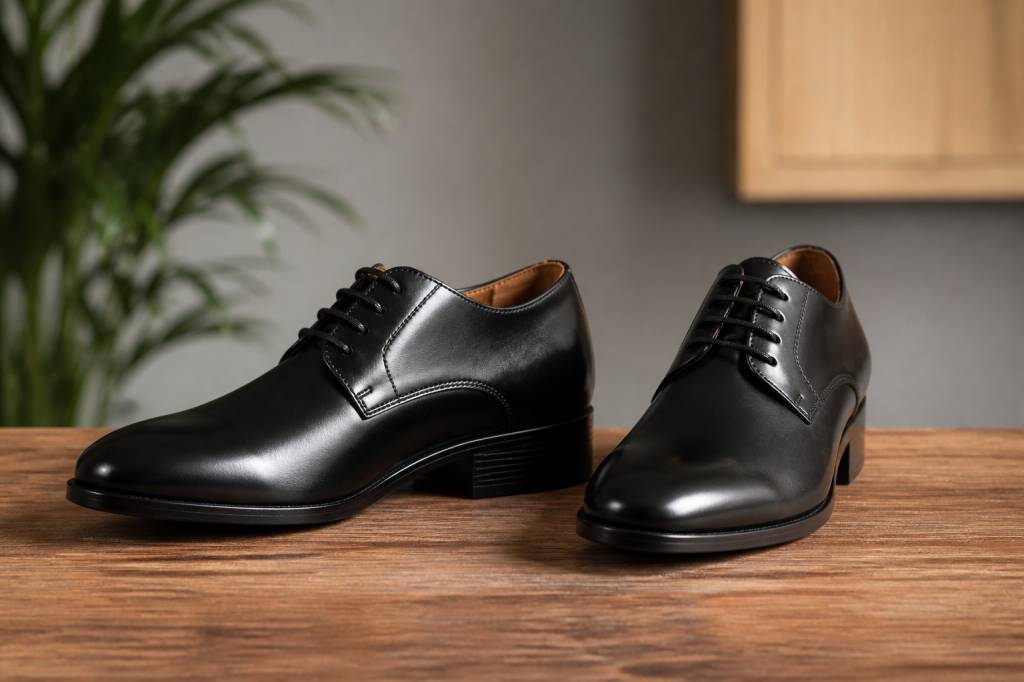
And if you want to take that visual advantage even further, shoes matter too. A well-chosen pair can complement your posture and add discreet elevation without looking forced. But even before footwear enters the story, your body language is already doing half the work.
So if your aim is to grow taller by exercise, think of it this way: your workout is not only building muscle or burning calories. It is teaching your body to present itself with more height, more balance, and more confidence. And honestly, that may be the more elegant victory anyway.
Start with a few stretches. Add core work. Hang from a bar. Swim when you can. Sleep properly. Move like a man who has somewhere important to be. The inches will take care of themselves as much as they can — and the presence you gain may be even more valuable.