
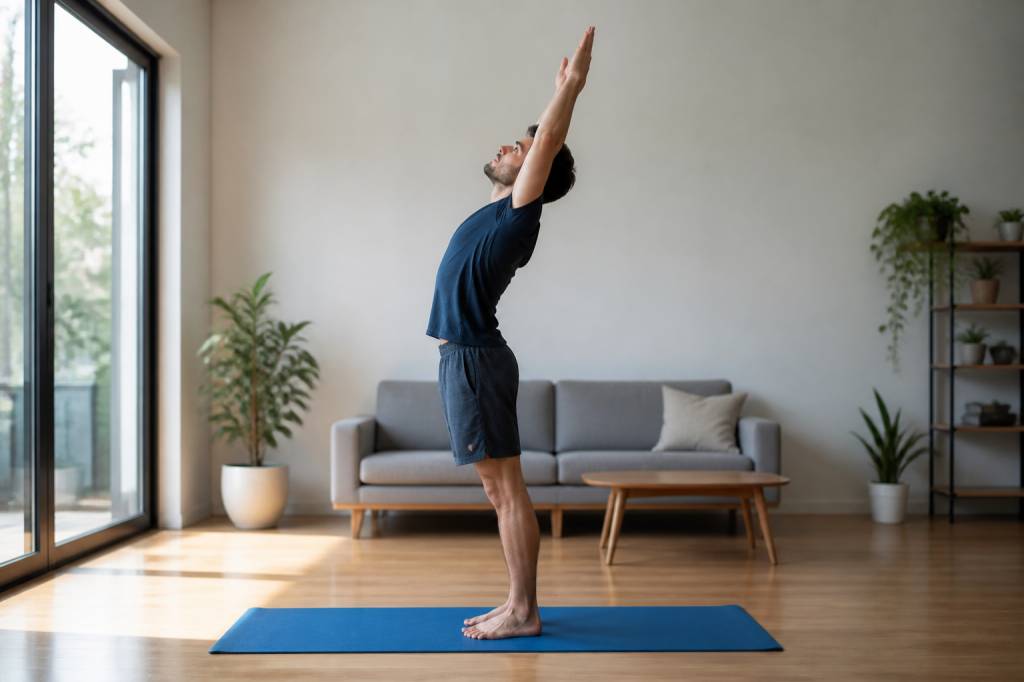
Can stretching your spine really make you taller? It is a tempting question, especially when you wake up feeling slightly taller than you did the night before. And here is the charming little secret: you probably are. Most people are a little taller in the morning because the spinal discs rehydrate and expand while we sleep. During the day, gravity gently compresses them again.
Before you imagine yourself stretching into a professional basketball career, however, let us separate fact from fantasy. Spinal stretching cannot permanently lengthen the bones of an adult skeleton. Once the growth plates have closed, no exercise, hanging routine, or miracle posture trick can add several inches to your height. What stretching can do is improve posture, relieve stiffness, reduce the appearance of compression, and help you stand at your full natural height.
For teenagers who are still growing, healthy movement, sleep, nutrition, and good posture support normal development. But stretching does not force the body to grow beyond its genetic potential. The aim, then, is simple and useful: move better, stand taller, and care for your spine safely.
What happens to your spine during the day?
Your spine is not a rigid pole. It is a beautifully engineered column made of vertebrae, joints, muscles, ligaments, and soft spinal discs. These discs sit between the vertebrae and act like small cushions. They contain a large amount of water, which allows them to absorb shock when you walk, sit, run, or carry your shopping home like a determined Mediterranean uncle.
While you are lying down at night, your spine is no longer bearing your full body weight. The discs gradually absorb fluid and become slightly thicker. This is why most people measure a little taller in the morning than in the evening. Over the course of the day, standing and sitting compress the spine again.
This change is temporary, usually around one to two centimetres, although it varies from person to person. Gentle stretching may help you feel less compressed and improve your alignment, but it does not permanently enlarge the vertebrae or spinal discs.
Can stretching permanently increase your height?
For adults, the honest answer is no. Height comes primarily from the length of the long bones in your legs and the vertebrae in your spine. During childhood and adolescence, bones lengthen through areas called growth plates. When those plates close, usually after puberty, stretching cannot restart the process.
That does not make stretching pointless. Far from it. A person with rounded shoulders, a forward head, or an exaggerated slouch may appear shorter than their actual measured height. Improving posture can make a visible difference. You may not grow new centimetres, but you can stop hiding the centimetres you already have.
Think of it as polishing a beautiful pair of elevator shoes. You are not changing the shoe’s size; you are allowing it to look its best. Your posture works in much the same way.
Safe spinal stretches for better posture
The following exercises are gentle options for most healthy adults. Move slowly, breathe normally, and stop if you feel sharp pain, numbness, tingling, dizziness, or weakness. A mild stretch is acceptable. Pain is your body sending a strongly worded letter, and it is wise to read it.
Cat-cow mobility stretch
This classic movement gently takes your spine through flexion and extension. It is excellent after a long day at a desk or a journey in a cramped train seat.
- Begin on your hands and knees, with your wrists under your shoulders and knees under your hips.
- As you inhale, gently lift your chest and tailbone while allowing your abdomen to soften.
- As you exhale, slowly round your back and draw your chin slightly toward your chest.
- Move smoothly between the two positions for six to ten repetitions.
Do not force your neck backward during the “cow” position. The movement should come from the whole spine, not from dramatically throwing your head toward the ceiling.
Child’s pose
Child’s pose creates a comfortable lengthening sensation through the back and hips. It can be particularly soothing when your lower back feels tired.
- Kneel on the floor and sit your hips gently toward your heels.
- Reach your arms forward, or rest them alongside your body if that feels better.
- Allow your forehead to move toward the floor or rest it on a cushion.
- Breathe slowly for 20 to 30 seconds, repeating two or three times.
If your knees are uncomfortable, place a folded blanket underneath them. Flexibility should feel inviting, not like an audition for a circus.
Standing side stretch
This simple exercise opens the sides of the torso and encourages you to lengthen through the crown of your head.
- Stand with your feet about hip-width apart.
- Interlace your fingers and reach your hands overhead, keeping your shoulders relaxed.
- Lean gently to the right without twisting your torso forward.
- Hold for 15 to 20 seconds, then repeat on the left.
- Complete two rounds per side.
Keep both feet grounded. Avoid collapsing into your waist or pushing the ribs forward.
Thoracic extension over a chair
Many people spend hours with their upper back rounded over a laptop or phone. This movement focuses on the thoracic spine, the middle section of your back.
- Sit on a firm chair with your feet flat on the floor.
- Place your hands behind your head, keeping your elbows comfortably open.
- Lean the upper part of your back gently over the top edge of the chair.
- Look forward or slightly upward, without compressing your neck.
- Repeat five to eight times with controlled breathing.
Choose a stable chair and avoid using one with wheels. Your spine deserves mobility; your living-room furniture does not need an unexpected adventure.
Hip flexor stretch
Tight hip flexors can contribute to an exaggerated lower-back arch or a forward-tilted pelvis. Improving hip mobility may help you stand more upright.
- Step your right foot forward into a comfortable split stance, with your left knee resting on the floor.
- Keep your torso upright and gently tighten your abdomen.
- Shift your hips forward a small amount until you feel a stretch at the front of the left hip.
- Hold for 20 to 30 seconds, then switch sides.
Do not push the hips aggressively forward. The movement should be small and controlled, with no pinching in the lower back.
What about hanging from a bar?
Hanging exercises are often advertised as a way to “decompress” the spine and gain height. A relaxed hang may create a temporary feeling of length through the back, and it can challenge your grip and shoulder muscles. However, there is no reliable evidence that hanging permanently increases adult height.
If you are healthy and wish to try it, use caution:
- Use a secure pull-up bar that is properly installed.
- Begin with your feet lightly touching the floor or a step for support.
- Start with 10 to 20 seconds rather than forcing a long hold.
- Keep the shoulders active instead of allowing them to jerk upward.
- Stop immediately if you feel shoulder pain, numbness, tingling, or dizziness.
People with shoulder instability, serious back conditions, osteoporosis, uncontrolled high blood pressure, or recent surgery should ask a healthcare professional before attempting hanging or traction exercises. Home inversion devices deserve even more caution. Being upside down does not make you taller, but it can make your blood pressure and balance rather unhappy.
A simple ten-minute routine
You do not need an elaborate stretching studio, silk trousers, or a soundtrack featuring dramatic violins. A consistent routine is more valuable than an impressive one performed once.
- Cat-cow: six to ten slow repetitions.
- Child’s pose: 30 seconds.
- Thoracic extension over a chair: six repetitions.
- Standing side stretch: 20 seconds per side.
- Hip flexor stretch: 20 to 30 seconds per side.
- Chin tucks: eight gentle repetitions.
For chin tucks, sit or stand tall and draw your head straight backward, as if trying to make a small double chin. Do not look down. This strengthens awareness of a neutral neck position and can help counter the forward-head posture common among phone users.
Perform the routine once a day, or divide it into short sessions during the day. If you work at a desk, stand up every 30 to 60 minutes, walk for a few minutes, and reset your posture. The best stretch is often the one you remember to do.
Posture habits that help you look taller
Stretching works best when supported by daily habits. Imagine a string gently lifting the top of your head. Keep your chin level, shoulders relaxed, ribs stacked over your pelvis, and weight balanced across both feet. This is not military stiffness; it is comfortable alignment.
Adjust your workspace so the screen is near eye level. Keep your feet supported and avoid curling over your keyboard. When using a phone, bring it closer to your face instead of dropping your head toward your chest. Your neck is not a permanent phone stand, despite what modern life seems to believe.
Strength also matters. Exercises for the upper back, abdomen, glutes, and deep neck muscles can help you maintain good alignment. Rows, bird dogs, bridges, and planks are useful options when performed with proper technique. A physiotherapist or qualified trainer can help you choose suitable exercises, particularly if you have recurring pain.
Sleep, nutrition, and natural growth
If you are still growing, stretching is only one small piece of the picture. The body needs adequate sleep, enough calories, protein, calcium, vitamin D, and a varied diet to support healthy development. Teenagers generally need more sleep than adults, even if homework, screens, and late-night conversations strongly disagree.
Regular physical activity is beneficial for bones, muscles, coordination, and overall health. Swimming, basketball, walking, strength training with appropriate supervision, and mobility work can all be excellent choices. None of them can guarantee extra height, but they can help your body develop and function well.
Be suspicious of pills, powders, stretching machines, and online programs promising dramatic permanent growth after puberty. If a product claims to add several inches without surgery, it is probably stretching the truth more enthusiastically than your spine.
When should you seek medical advice?
Speak with a doctor or physiotherapist if back pain is severe, persistent, or getting worse. Professional guidance is also important if stretching causes pain travelling down a leg or arm, numbness, weakness, loss of balance, or changes in bladder or bowel control. Sudden pain after a fall or accident deserves prompt attention.
Parents may wish to consult a pediatrician if a child appears to be growing much more slowly than expected, has significant pain, or shows a major change in posture. Growth patterns vary, but concerns are best assessed by a healthcare professional rather than by internet height calculators.
Standing tall, safely and naturally
Spinal stretching is not a secret route to permanent adult height. It is something more practical: a way to move with less stiffness, support healthier posture, and reveal the height you already possess. With gentle mobility work, sensible strengthening, quality sleep, and regular movement, you can carry yourself with greater confidence.
And if you want an immediate style boost, well-fitted elevator shoes can add discreet height while good posture ensures the result looks natural. The shoes may lift you from the ground, but the confidence comes from how you move. Stretch gently, stand comfortably, and let your spine enjoy a little daily freedom.