
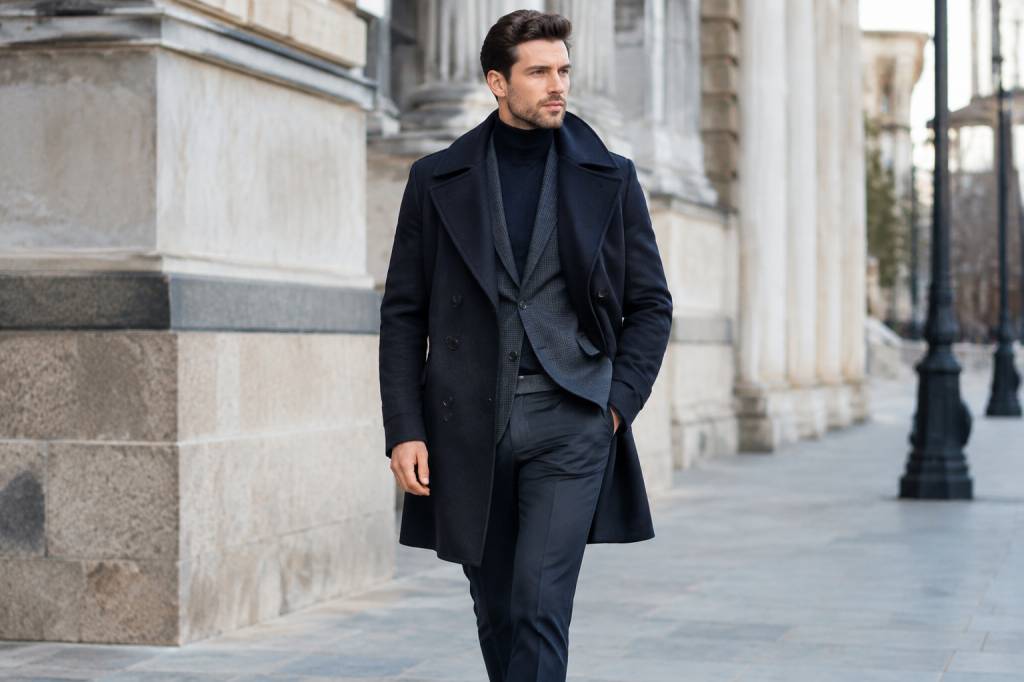
A peacoat over a blazer is one of those combinations that looks as if it took no effort at all—which, naturally, is why getting it right takes a little thought. Done well, it gives you warmth, structure, and the relaxed confidence of a man who knows his way around a winter wardrobe. Done badly, it can make you feel like you borrowed your coat from a larger cousin.
The good news is that this classic layered look is easier to master than it appears. A few sensible choices about fit, fabric, color, and proportion will help your blazer sit comfortably beneath your coat, rather than fight for room. Think of the blazer as the polished foundation and the peacoat as the handsome finishing touch. Here is how to bring the two together without losing your shape—or your sense of humor.
Why the combination works
A blazer sharpens an outfit. A peacoat brings warmth and a little naval history. Together, they strike a useful balance between formal and casual: smart enough for dinner or the office, but not so dressed up that you look ready to deliver a speech to Parliament.
The peacoat’s double-breasted front, broad lapels, and structured shoulders naturally complement a blazer’s clean lines. Both pieces have a tailored character, so they look as though they belong together even when they are not part of a matching suit. The trick is to let one piece lead. Usually, that means choosing a simple blazer and letting the peacoat provide the visual weight.
This pairing is especially useful in changeable weather. You can wear the blazer indoors, then add the coat for your walk to work, a weekend stroll, or that chilly evening when the restaurant terrace seemed like a charming idea at lunchtime.
Start with the right fit
Fit matters more than brand names or fashionable details. A peacoat should have enough room through the chest and shoulders to accommodate your blazer, but it should not hang like a tent. When the coat is buttoned, you should be able to move your arms comfortably and take a full breath. If the buttons look strained, the coat is too tight for this combination.
Pay attention to the shoulder line. The coat’s shoulder seam should sit close to your natural shoulder, without pulling sharply when you move. Too much excess fabric creates a drooping silhouette; too little turns every hug into a negotiation with the buttons. Try the coat on over the actual blazer you plan to wear, not over a thin T-shirt in a warm shop. Your future winter self will thank you.
The blazer should also be neat beneath the coat. Avoid overly padded shoulders or an especially bulky chest if your peacoat is slim. A softly constructed blazer often layers more comfortably and keeps your outline clean. If you already own a substantial, structured blazer, look for a peacoat with a little more room rather than forcing the two pieces together.
Choose lengths that work together
Traditional peacoats usually fall around the hip or upper thigh. That length pairs naturally with most blazers and keeps the outfit looking balanced. A very short coat can leave too much of the blazer exposed, while a long, heavy coat may overwhelm a lightweight jacket.
Ideally, the blazer should stay mostly covered when the peacoat is worn. A small glimpse of the blazer hem is not a disaster, but a long strip of jacket hanging below the coat can make the layers look accidental. Check the proportions in a full-length mirror, and remember to look from the side as well as the front. The side view is where many a fine outfit quietly loses its argument.
For a flattering line, keep the layers relatively close to the body without making them restrictive. If you are on the shorter side, a peacoat that ends near the hip or upper thigh can help preserve a clear vertical line. Pair it with trousers in a similar color family and shoes with a sleek profile. A discreet pair of elevator shoes can add height without changing the character of the outfit, provided the trousers break cleanly over them and the shoes do not look bulky.
Build a comfortable layer beneath the coat
The peacoat-and-blazer combination already provides two substantial layers, so the shirt or knitwear beneath them should be chosen with care. A fine-gauge crew-neck sweater, merino turtleneck, or crisp button-down shirt can add warmth without crowding the blazer. Chunky cables and thick hoodies may be wonderful on their own, but under a tailored jacket they can create unwanted bulk around the arms and chest.
For a classic city look, try a white or pale blue shirt, a navy blazer, and a charcoal or camel peacoat. For a softer weekend version, wear a fine gray sweater beneath a textured blazer and finish with dark denim. If you prefer a turtleneck, choose one that lies smoothly under the blazer collar. It gives the outfit a refined, slightly European feel—without requiring you to own a villa overlooking the sea.
Think about temperature, too. If you will spend most of the day indoors, a lightweight shirt and blazer may be enough beneath the coat. If you are walking outdoors for hours, a thin thermal layer can provide warmth without changing the visible shape of the outfit.
Get the colors talking
Navy is the natural starting point for a peacoat. It is versatile, traditional, and easy to wear with gray, brown, olive, and denim. A navy peacoat over a charcoal blazer is a dependable combination, while a navy blazer beneath a camel coat creates a little more contrast and warmth.
Try these straightforward pairings:
-
Navy peacoat, gray blazer, white shirt: a crisp choice for the office or dinner.
-
Camel peacoat, navy blazer, light blue shirt: polished but less predictable than an all-navy outfit.
-
Charcoal peacoat, brown or olive blazer, cream knit: a relaxed combination with plenty of texture.
-
Black peacoat, dark gray blazer, black trousers: sleek and restrained, especially for evening.
You do not need every shade to match exactly. In fact, matching navy to navy can look flat if the colors are nearly—but not quite—the same. Let one piece be clearly lighter, darker, or more textured. A subtle difference looks intentional; an almost-match can look like a wardrobe accident caused by poor lighting.
Use texture to add interest
Because both garments are structured, texture helps keep the outfit from feeling too uniform. A wool peacoat over a flannel blazer is a natural winter pairing. A smooth cotton blazer beneath a brushed wool coat feels a little lighter and more relaxed. Herringbone, subtle checks, and Donegal flecks can all work, provided you do not pile several bold patterns on top of each other.
A useful rule is to make one pattern the star. If your blazer has a visible check, choose a plain peacoat and a simple shirt. If the coat has a strong texture, keep the blazer and shirt quieter. The aim is not to dress like a walking fabric sample book. It is to give the eye one or two details worth noticing.
Texture can also soften a formal outfit. A knitted tie, brushed scarf, or suede shoe adds a more relaxed note without taking away the smart shape. Choose accessories that belong to the same season: wool, leather, and cashmere usually make more sense here than shiny summer fabrics.
Mind the buttons, lapels, and collar
A peacoat’s broad lapels can compete with a blazer’s lapels if both are especially wide. They do not need to match perfectly, but keeping their proportions in the same general family makes the layers look calmer. A medium-lapel blazer is an easy partner for most traditional peacoats.
When the weather allows, wear the coat open to reveal the blazer and create a vertical line through the outfit. In colder conditions, button it up without pulling the fabric tight. You usually do not need to fasten every button; the right choice depends on the coat’s cut and the weather. Let the lapels sit naturally rather than folding them into a shape they clearly did not agree to.
A scarf should sit comfortably over the blazer and beneath the coat, not form a bulky knot that pushes everything toward your chin. A simple drape or a neat single wrap is often enough. If you wear a tie, keep it tucked inside the coat so it does not flap dramatically in the wind like a tiny flag of surrender.
Finish with trousers and shoes
The lower half should support the same balance as the layers above. Wool trousers make the outfit more formal; dark, clean denim makes it more casual. Chinos can sit happily in the middle. Avoid overly wide trousers if your coat is already broad, unless a relaxed silhouette is very much your intention.
For footwear, leather boots are a natural winter choice. Chelsea boots look neat and streamlined; lace-up boots bring a sturdier feel. Dress shoes also work for office settings, while clean leather sneakers can make the outfit more casual. Match the formality of the shoes to the occasion, and keep them in good condition. A fine coat cannot rescue shoes that appear to have crossed a muddy field without stopping for discussion.
Proportion is especially helpful if you want to look taller. A similar color relationship between trousers and shoes reduces visual breaks, while a clean trouser hem prevents fabric from bunching over the footwear. Elevator shoes can be a practical addition for men who want a subtle lift, but comfort and a natural stride come first. The best-looking pair is the one you can walk in confidently.
Three easy outfits to try
For work: Wear a charcoal blazer over a pale blue shirt, with navy wool trousers and a navy peacoat. Add dark brown leather boots and a simple scarf. This is polished without looking as though you spent the morning rehearsing your reflection.
For a weekend lunch: Choose a textured brown blazer, a fine cream sweater, dark jeans, and a camel peacoat. Finish with suede boots if the weather is dry, or leather boots if the pavement has other plans.
For an evening out: Combine a black or charcoal blazer with a black knit and dark trousers, then add a deep navy peacoat. Keep accessories minimal and choose sleek shoes. The result is sharp, warm, and quietly confident.
Common mistakes to avoid
-
Choosing a coat that is too tight: The blazer should not wrinkle or pull beneath it.
-
Adding too much bulk: Thick sweaters, padded jackets, and heavy scarves can crowd the silhouette.
-
Mixing too many patterns: Let one patterned piece stand out and keep the rest simple.
-
Ignoring the hem: Check that the blazer does not hang conspicuously below the peacoat.
-
Overdoing the formality: A tie, pocket square, polished shoes, patterned scarf, and bold coat can all compete. Choose a few details, not the entire shop window.
Wear it with confidence
The peacoat over a blazer is a classic because it solves a real problem elegantly: how to stay warm without giving up a sharp silhouette. Begin with a comfortable fit, keep the layers smooth, and choose colors that complement rather than compete. After that, make the outfit your own with a textured scarf, a favorite pair of boots, or a carefully chosen knit.
Most importantly, move in the clothes before you leave the house. Sit down, button the coat, reach for your keys, and take a few steps. If nothing pulls, bunches, or demands constant adjustment, you are ready. Then head out into the cold looking as though winter was your idea all along.