
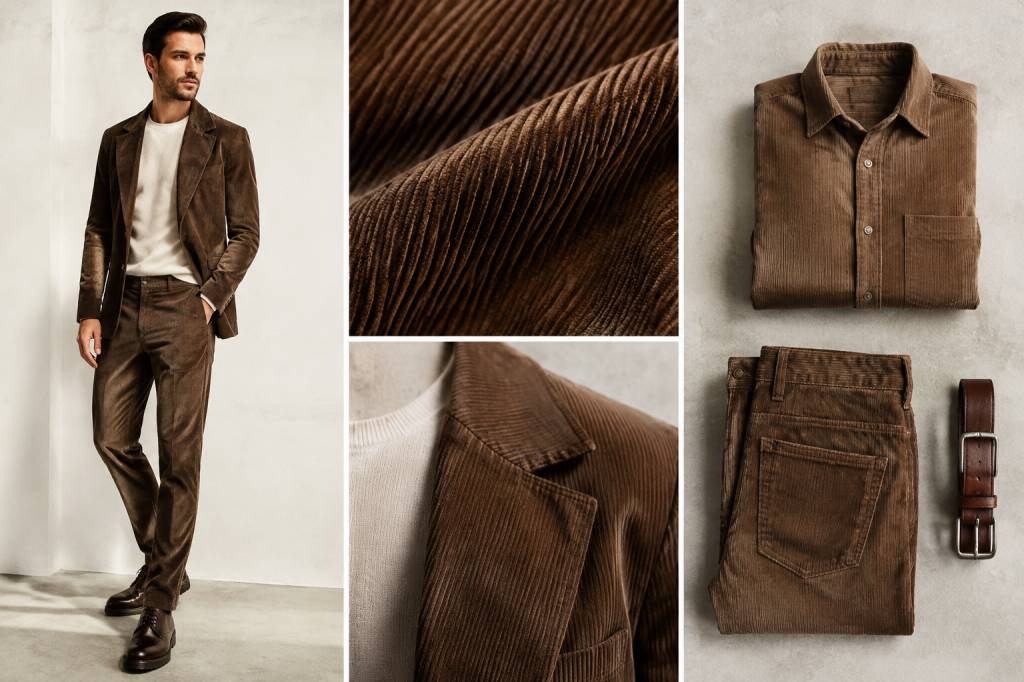
Some fabrics announce themselves from across the room. Pincord prefers a quieter introduction: a soft texture, a subtle stripe, and the sort of old-school charm that makes a simple outfit feel considered. It is a close cousin of corduroy, but with much finer ridges—and that small difference gives it a surprisingly versatile place in a man’s wardrobe.
I first noticed pincord on a jacket in a little shop where the owner seemed to know every garment’s life story. He called it “corduroy for people who don’t want to look like they’re heading to a country estate.” He was joking, naturally, but he had a point. Pincord has the warmth and texture of corduroy without quite as much visual weight.
So what exactly is pincord, how should you wear it, and can it help create a sharper-looking silhouette? Let’s take a closer look.
What is pincord fabric?
Pincord is a type of corduroy made with very narrow, closely spaced ridges. Those raised lines are called wales. Standard corduroy comes in different wale sizes, while pincord is at the finer end of the scale: the ridges are slim, delicate, and often easiest to appreciate when you are standing close.
The fabric is usually made from cotton, though you may also find cotton blends. Its construction creates a soft, slightly plush surface with a gentle vertical texture. Depending on the weave and finish, pincord can feel light enough for a shirt or substantial enough for trousers and a jacket.
The name is sometimes written as “pin cord” or used interchangeably with “pinwale corduroy.” Retailers are not always perfectly consistent with labels, so look at the fabric itself. If you see very fine, close-set ribs, you are probably looking at pincord.
How is pincord different from regular corduroy?
The main difference is the width of the ridges. Broad-wale corduroy has thick, obvious ribs and a bold, distinctly retro look. Pincord has much finer ribs, giving it a smoother, more refined appearance from a distance.
That makes pincord particularly easy to dress up. A chunky corduroy jacket can dominate an outfit; a pincord overshirt or pair of trousers usually plays more quietly with the other pieces. It still adds texture, but it does not insist on being the main character.
Both fabrics are soft and comfortable, and both can work beautifully in cooler weather. Pincord, however, often feels less bulky and can be easier to layer. Think of regular corduroy as the expressive cousin at dinner and pincord as the one who tells a good story without interrupting anyone.
Why pincord deserves a place in your wardrobe
Texture is one of the simplest ways to make an outfit more interesting without adding loud colours or complicated patterns. A pincord shirt with plain dark jeans, for example, gives you visual depth while keeping the overall look relaxed.
It is also a useful in-between fabric. It feels more substantial than a smooth cotton shirt, but generally less rugged than heavy corduroy. That makes it a natural choice for autumn and winter, and for those mild days when a wool coat feels like too much commitment.
There is another advantage: pincord is easy to pair with familiar wardrobe staples. Denim, wool, cotton twill, knitwear and leather can all work alongside it. You do not need to build an outfit around the fabric. You simply let it add a little character.
How to style a pincord shirt
A pincord shirt is one of the easiest ways to try the fabric. Wear it buttoned with chinos for a smart-casual look, or leave it open over a plain T-shirt when the afternoon calls for something less formal.
For an uncomplicated combination, choose an olive, navy, rust or cream shirt and pair it with dark denim. Keep the T-shirt underneath simple: white, grey and navy are reliable choices. If the shirt has a strong colour, let it do the talking rather than introducing another busy pattern.
You can also wear a pincord shirt as a light overshirt. Leave it unbuttoned over a fine-gauge sweater or a clean crew-neck tee. The fine ribs add texture, while the open front creates a vertical line through the outfit. That line can help your silhouette look longer and more streamlined, especially when the layers underneath are close in colour.
-
For a relaxed weekend, wear a tan pincord shirt with a white T-shirt, dark jeans and simple leather trainers.
-
For a smart-casual dinner, button a navy pincord shirt and pair it with grey trousers and suede shoes.
-
For a layered autumn look, wear an olive overshirt over a charcoal knit and keep the trousers dark and uncomplicated.
How to wear pincord trousers
Pincord trousers have more personality than plain chinos, but they are usually less demanding than corduroy with wide ribs. Start with a straight or gently tapered cut. A clean fit lets the fabric’s texture show without creating unnecessary bulk around the legs.
For a balanced outfit, pair coloured pincord trousers with a simple top. Navy trousers work well with a cream sweater or a pale blue shirt. Brown or rust trousers look good with charcoal, ecru and dark green. If you choose a strong colour, keep the rest of the palette calm.
Pay attention to the break at the hem. A neat length keeps the trousers looking deliberate; excess fabric pooling over your shoes can make the lower half appear heavier. If you like a cuff, keep it modest. With textured trousers, a small, tidy detail is often more effective than a dramatic turn-up.
And what about footwear? Leather boots, suede loafers and simple trainers can all work, depending on the occasion. A shoe with a clean shape helps the outfit feel balanced. If you wear elevator shoes, choose a style with a natural-looking profile that sits comfortably with the trouser hem. The aim is a confident silhouette, not a shoe that announces its engineering to the entire café.
Can you wear a pincord jacket?
Absolutely. A pincord jacket offers a softer alternative to a smooth cotton blazer. It works especially well in unstructured styles, where the fabric’s relaxed character feels intentional rather than overly formal.
Try a navy or brown pincord jacket with a fine knit, an Oxford shirt or a plain T-shirt. Pair it with wool trousers for a more polished outfit, or dark jeans for a relaxed evening look. The key is contrast: because the jacket already has texture, keep the other pieces relatively smooth.
If you wear a full pincord suit, make sure the cut is modern and the fit is excellent. A matching jacket and trousers in fine cord can look distinctive, but a loose or dated silhouette may tip the outfit into costume territory. A little vintage influence is charming; looking as if you borrowed your uncle’s entire wardrobe is a separate matter.
Colours and patterns that work well
Traditional pincord shades include earthy browns, olive, rust, navy and cream. These colours suit the fabric’s autumnal feel and pair easily with neutral basics. If you want something more modern, try charcoal, muted blue or a soft burgundy.
Because the ribs already create a subtle pattern, pincord usually looks best alongside plain or understated pieces. You can still mix patterns, but keep their scale different. A fine-striped pincord shirt, for example, is easier to wear with a solid jacket than with another tightly striped layer.
When combining colours, consider using one darker piece to anchor the outfit. A light pincord shirt over dark trousers creates a clear contrast, while a tonal outfit—such as olive with dark green—can feel elegant and visually continuous. Either approach works; the choice depends on whether you want contrast or a quieter, lengthening line.
Fit and proportion matter
Texture can add visual volume, so fit matters. Pincord is generally finer than standard corduroy, but a loose shirt or oversized jacket can still overwhelm a smaller frame. Choose clothes that follow your shape without pulling across the chest or restricting movement.
If you want to look taller, think in terms of clean lines and balanced proportions rather than trying to disguise your height. A pincord overshirt worn open can create a vertical line. Wearing similar shades on top and bottom can also make the outfit feel more continuous. A high rise on trousers may help lengthen the appearance of the legs, provided the fit is comfortable and the proportions suit you.
Keep the outfit’s visual weight in mind, too. If you wear a substantial pincord jacket, try slimmer trousers and a streamlined shoe. If the trousers are the textured statement, choose a simpler top. It is the same principle as good conversation: everyone gets a moment, but nobody needs to shout.
How to care for pincord
Always check the care label first, especially if the garment includes wool or a blended fabric. Many cotton pincord pieces can be machine-washed, but cooler water and a gentle cycle are kinder to the fibres and colour. Turn the garment inside out before washing to protect the ridged surface.
Avoid unnecessary heat in the dryer, which can shrink cotton and flatten texture. Air-drying is often the safer choice. If ironing is needed, use a low setting and press the garment inside out or through a cloth. Pressing directly onto the raised ribs may leave shiny marks or squash the pile.
For light creases, hanging the garment in a steamy bathroom or using a garment steamer can be gentler than a hot iron. Brush away dust with a soft clothes brush, moving in the direction of the fabric’s pile. It is a small ritual, but then good clothes deserve a little attention.
Common pincord styling mistakes
-
Too much texture at once: Pairing pincord with chunky corduroy, a heavy patterned knit and a textured coat can make an outfit feel crowded. Choose one or two textured pieces and let the rest stay simple.
-
A poor trouser length: Too much fabric at the ankle can bunch up and interrupt the line. Aim for a clean hem that works with your shoes.
-
Overly tight layers: A shirt worn as an overshirt needs a little room. If it strains over a sweater, it is not layering; it is a negotiation.
-
Ignoring the season: Pincord often suits cool-weather outfits, but lighter versions can work in milder conditions. Check the fabric’s weight instead of relying on the name alone.
Is pincord right for you?
If you like clothes with character but prefer subtle details to bold statements, pincord is worth trying. It gives familiar pieces—shirts, trousers and jackets—a little more warmth and personality, without making them difficult to style.
Start with one item, perhaps a shirt in navy or olive, and wear it with pieces you already own. Notice how the fine ridges catch the light and add depth to an otherwise simple outfit. That is pincord’s quiet trick: it makes getting dressed feel more considered, while asking very little of you in return.