
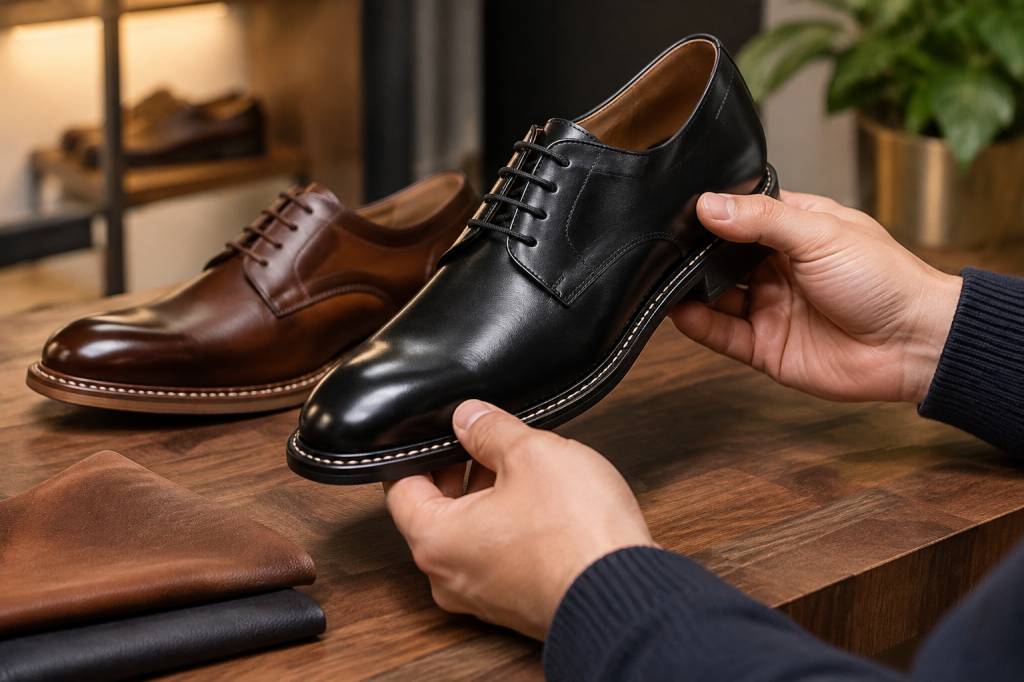
A good pair of shoes can change the way you walk into a room. It can sharpen an outfit, support you through a long day, and—if you choose elevator shoes—add a little height without announcing the secret to the whole neighborhood. But before you fall for polished leather or an impressive-looking sole, take a closer look at how the shoe is made. The stitching may tell you a lot about how it will wear, how it can be repaired, and how comfortable it may become.
Sewn shoes are often praised as durable, high-quality footwear. That praise can be deserved, but the word “sewn” is not a magic spell. Different construction methods suit different feet, budgets, and occasions. Here is how to understand the main options and choose a pair that feels good long after the first glance.
What makes a shoe “sewn”?
In a sewn shoe, stitching joins important parts of the shoe’s upper and sole, or connects the upper to an intermediate layer called a welt. The visible thread can be decorative, functional, or both. What matters is where the stitches run and what they hold together.
That distinction is worth remembering when you are shopping. A row of stitches around a shoe can make it look substantial, but it does not automatically prove that the sole can be replaced. Some shoes have decorative stitching on a construction that is otherwise glued together. If repairability matters to you, ask the retailer what construction method is used and whether the sole can be resoled.
Think of stitching as one clue, not the entire report card. Materials, fit, finishing, and the quality of the workmanship all play their part. Even the finest construction cannot rescue a shoe that pinches your toes.
Get to know the main construction methods
Several sewn constructions are common in men’s shoes. Each has its own character, advantages, and trade-offs.
-
Goodyear welt: A strip of leather or other material, called a welt, is stitched to the upper and insole. The outsole is then attached to the welt. This construction is valued for its durability and repairability: a skilled cobbler can often replace the outsole without rebuilding the whole shoe. Goodyear-welted shoes can feel firm at first and may take time to soften.
-
Blake stitch: The outsole is stitched directly through the insole and upper. Blake shoes are often flexible, sleek, and less bulky than traditional welted shoes. They can be resoled, though the repair may require a specialist machine. Their relatively close-fitting profile works well with many dress trousers.
-
Stitchdown: The edges of the upper are turned outward and stitched to the sole. This creates a distinctive look and is often used in sturdy boots. Depending on the design and materials, stitchdown shoes can be robust and repairable, but they may feel substantial on the foot.
-
Moccasin construction: In many moccasin-style shoes, a piece of leather wraps under the foot and is stitched to the upper. This can create a soft, flexible feel, though the exact durability depends on the sole and how the shoe is made. A casual loafer and a rugged driving shoe may both use moccasin-inspired construction but behave very differently.
There is no universal winner. A pair of sturdy welted boots may be perfect for years of cool-weather wear, while a light Blake-stitched shoe may suit a city commute and a tailored suit. Choose for your actual life, not for the construction method that sounds most impressive at a dinner party.
Check the stitching, but look beyond it
Examine the seams closely. Stitches should be reasonably even, secure, and free from loose ends. Look for gaps, fraying, or sections that appear to have been skipped. On a welted shoe, inspect the line where the welt meets the upper and sole. Small variations can happen in handmade work, but careless or unraveling stitching is a warning sign.
Then look at the rest of the shoe. Is the leather reasonably even in texture? Are the edges cleanly finished? Does the sole sit flat, without a visible gap? Are both shoes similar in shape and finish? A beautiful stitch line cannot compensate for a crooked heel or a sole that is already separating.
Do not assume that a higher price guarantees better workmanship. Some expensive shoes are made with excellent materials and careful construction; others ask you to pay for the name on the box. Ask specific questions, check the return policy, and read reviews that discuss wear over time rather than just first impressions.
Choose materials that fit your routine
For leather uppers, consider both the type and the finish. Full-grain leather retains the outer surface of the hide and can develop an attractive patina with care. It may feel firm initially, depending on the leather and the shoe’s design. Softer leathers can feel comfortable sooner, but softness alone does not tell you how well a shoe will hold its shape.
Suede offers a relaxed texture and can be a smart choice for casual outfits. It needs brushing and protection from heavy rain, but it is not as fragile as its reputation suggests. Smooth leather is often easier to wipe clean and works naturally in more formal settings.
The sole matters just as much. Leather soles can look elegant and may feel pleasantly flexible once worn in, but they can be slippery on wet pavement and are not everyone’s first choice for all-day walking. Rubber soles generally provide more grip and weather resistance. Some shoes combine the two, using rubber sections or a thin rubber layer over leather.
For elevator shoes, pay special attention to the entire sole and heel rather than judging only by the shoe’s outside profile. Internal lifts can alter how your weight sits in the shoe. Look for a design that feels stable, has a supportive heel area, and leaves enough room for your toes. A few extra centimeters are not worth a wobbly stride.
Comfort starts with fit
A well-made shoe should feel secure without squeezing. Try shoes on near the end of the day, when your feet may be a little larger. Wear the socks you expect to use with them, and fit both feet: many people have one foot slightly bigger than the other.
Walk around on a clean indoor surface. Your heel should not slip excessively, and your toes should have room to spread. The shoe should hold your foot comfortably through the middle, without pressure across the instep. A stiff new sole may soften with wear; a painfully narrow toe box is unlikely to become a different shape because you wish it very hard.
Pay attention to width as well as length. If the shoe feels tight on the sides, going up a size may leave too much space in front without solving the real problem. Try a different width, last, or model. The “last” is the form around which the shoe is made, and it influences the shape and fit more than many shoppers realize.
If you wear orthotics, ask whether the footbed is removable and whether the shoe has enough depth. For elevator shoes, check this especially carefully: the lift occupies space inside the shoe, and a model that is too shallow can press the toes or make the heel feel unstable.
Do not mistake a break-in period for a bad fit
Some leather shoes need a little time to become more flexible. That does not mean you should accept blisters as a rite of passage. A gentle break-in is one thing; persistent pain, numbness, or sharp pressure is another.
Start with short walks at home or during an easy day. Wear the shoes for an hour or two, then let your feet—and the shoes—rest. Increase the time gradually. A shoe tree can help maintain the shape after wear, while leather conditioner may keep dry leather supple. Use products suited to the material; suede, for example, needs a brush and protector rather than ordinary polish.
If discomfort remains in one specific spot, a cobbler may be able to make a small adjustment. But do not count on stretching a shoe dramatically or reshaping a badly fitting pair. The best break-in plan begins with a shoe that already feels promising.
Match construction to how you will wear the shoes
Before choosing, picture an ordinary week. Do you walk several miles on pavement? Spend hours standing? Need one pair for office meetings and dinner? Wear your shoes mostly for short occasions? The answers point toward different priorities.
-
For frequent walking: Prioritize a secure fit, cushioning or a supportive footbed, and a sole with reliable grip. A flexible Blake-stitched style or a well-designed rubber-soled shoe may suit you better than a very rigid formal shoe.
-
For years of regular wear: Consider a repairable construction, durable upper materials, and a shape that works with several outfits. A replaceable sole can make a good pair more economical over time, provided the upper remains in sound condition.
-
For wet weather: Look for practical tread and materials suited to rain. Leather can be protected, but soaking a dress shoe repeatedly is hard on the upper and the sole. Rotate shoes and allow them to dry naturally.
-
For a dressy look: A sleek profile and neat finishing may matter more than a chunky, rugged sole. Blake construction often offers a streamlined appearance, while many welted styles give a more substantial shape.
-
For discreet added height: Try the shoes on with your usual trousers and walk on a flat surface. Check that the lift feels natural and that your foot does not slide forward. Comfort and balance should lead the decision; height is the bonus, not the whole story.
Care for sewn shoes so they last
Even durable shoes need a little attention. Alternate between pairs when possible, giving each pair time to air out. If shoes become wet, remove excess water gently and let them dry at room temperature, away from radiators or direct heat. Stuffing them with paper can help absorb moisture, but replace the paper as it becomes damp.
Use shoe trees to help leather shoes keep their shape and to reduce creasing. Brush off dust regularly, and clean and condition smooth leather when it looks dry. For suede, use a suede brush and address marks with products designed for the material. Keep an eye on the heel and outsole: replacing a worn heel early can prevent damage to the rest of the shoe.
When the sole wears down, ask a reputable cobbler whether the shoe can be repaired. Resoling is not automatically worthwhile in every case. The upper, lining, insole, and overall shape must still be in good condition. A well-made shoe with a comfortable fit may earn another life; a tired shoe with a worn-out interior may be ready for retirement.
A quick checklist before you buy
-
Ask what construction method is used and whether the outsole can be replaced.
-
Inspect the stitching, sole attachment, heel, and finishing for obvious flaws.
-
Choose materials and sole types suited to your weather, wardrobe, and routine.
-
Try both shoes on, with your usual socks, and check length, width, instep, and heel hold.
-
For elevator shoes, make sure the internal lift feels stable and leaves adequate toe room.
-
Check the return policy and resist buying a pair that hurts simply because it looks handsome.
The right sewn shoe is not necessarily the most expensive or the most traditional. It is the pair whose construction suits your needs, whose fit makes you forget about your feet, and whose materials can handle the life you actually lead. Take your time, ask what the stitches are doing, and walk around before you decide. Your feet will tell you more than the box ever could—and they are wonderfully honest critics.