
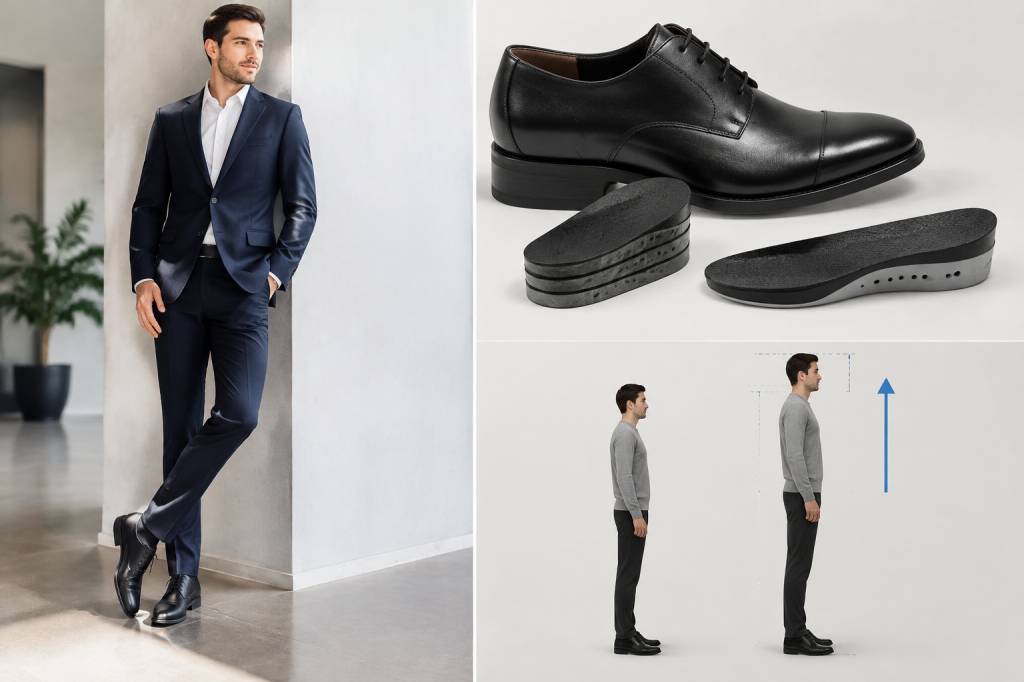
There is something wonderfully simple about wanting to look a little taller. Perhaps you have an important meeting, a first date, a wedding, or simply a pair of trousers that seem to behave better when you gain a few extra centimeters. Whatever the reason, shoe lifts offer a discreet way to increase height without changing your wardrobe, your hairstyle, or your relationship with the mirror.
But how do shoe lifts actually work? Are they comfortable? Can anyone wear them? And how do you choose the right pair without walking like a charming Mediterranean sailor on a stormy deck?
Let’s take a practical look at height-increasing shoe lifts, how they are designed, what to consider before buying, and how to wear them naturally.
What are shoe lifts?
Shoe lifts are inserts placed inside your shoes to raise the heel and create additional height. They are also called height insoles, elevator insoles, or shoe elevators. Unlike elevator shoes, which are specially constructed with hidden height inside the sole, shoe lifts can be placed into many pairs of ordinary footwear.
The principle is straightforward: the insert gently elevates your heel, while the front of your foot remains lower. This creates a subtle lift from the inside of the shoe. Depending on the model, shoe lifts can add anywhere from approximately 1 to 3 inches, or around 2.5 to 7.5 centimeters.
That may not sound dramatic on paper, but a few centimeters can make a surprisingly noticeable difference. Your trousers may fall more neatly, your posture may appear more upright, and you may feel more confident when entering a room. Sometimes the mind notices the extra height before anyone else does—and that is perfectly fine. Confidence has a way of standing taller than the body.
How do shoe lifts increase height?
The mechanics are similar to wearing shoes with a raised heel. A shoe lift supports the heel at a higher position than the toes, increasing your overall standing height. The lift is hidden inside the shoe, so the visual effect remains discreet.
Most height inserts feature a sloped design. The heel section is thicker, while the front gradually becomes thinner. This slope is important because it helps distribute the elevation more naturally than a completely flat block placed under the heel.
Some models are made from soft foam, while others use firmer materials such as silicone, gel, cork, or layered high-density foam. The best design depends on your footwear, how much height you want, and how long you plan to wear the inserts.
- Soft foam lifts: Lightweight and comfortable for casual, everyday use.
- Gel or silicone lifts: Cushioned and often useful for absorbing impact.
- Firm foam lifts: More stable and better suited to moderate height increases.
- Layered lifts: Adjustable models that allow you to add or remove sections.
- Full-length insoles: Support more of the foot and may feel more natural for longer wear.
The lift does not lengthen your bones or produce permanent growth. It simply changes your footwear geometry. This is an important distinction: shoe lifts can make you look taller while you are wearing them, but they do not alter your actual adult height.
Shoe lifts versus elevator shoes
Shoe lifts and elevator shoes both create extra height, but they do so in different ways.
With shoe lifts, the height-increasing insert is added to an existing shoe. This makes them affordable, flexible, and easy to experiment with. You can move one pair of lifts between sneakers, boots, or casual shoes, provided the footwear has enough internal space.
Elevator shoes are designed from the beginning with hidden internal construction. Their raised sole is integrated into the shoe, which usually provides better stability, more balanced proportions, and a more natural walking experience. Because the shoe is built around the lift, it can often offer greater height without placing excessive pressure under the heel.
- Shoe lifts are ideal if: you want an inexpensive introduction to extra height or prefer to use your existing shoes.
- Elevator shoes are ideal if: you want a polished appearance, consistent comfort, and a built-in solution for regular use.
I often compare the two to tailoring a jacket. A shoe lift is like adjusting a garment you already own: clever, useful, and sometimes exactly what you need. An elevator shoe is made with the alteration in mind from the very first stitch.
How much height should you add?
This is where enthusiasm needs a small handshake with common sense. The tallest insert is not automatically the best insert.
For most people, a lift of around 1 to 2 inches offers the best balance between comfort, stability, and natural movement. A 2.5-inch lift may work for some shoes and some wearers, but it requires more room inside the shoe and may feel less stable if the design is not supportive.
Adding too much height too quickly can create several problems. Your heel may slip, your toes may be pushed forward, and your ankle may feel strained. Walking can also become less natural, especially on stairs or uneven ground. No one wants to look taller while moving like a cautious flamingo.
If you are new to height inserts, begin with a modest increase. Wear them at home for short periods, then gradually extend the time. This allows your feet and posture to adjust.
- About 0.5 to 1 inch: A discreet boost with minimal adjustment.
- About 1 to 1.5 inches: A popular range for daily wear.
- About 1.5 to 2 inches: Noticeable height, but still manageable in suitable footwear.
- Above 2 inches: Better approached carefully, preferably with purpose-built elevator shoes.
Choosing the right shoe lifts
The right pair should do more than add height. It should fit your shoe, support your foot, and allow you to walk naturally. Before buying, consider the following points.
Check the shoe’s internal space
Your shoes need enough room to accommodate the insert. Boots and high-top sneakers are often suitable because they provide extra ankle support and more vertical space. Low-cut dress shoes can be more difficult, particularly if they already fit snugly.
If the shoe becomes too tight after inserting the lift, do not force it. Pressure on the toes can lead to discomfort, blisters, and a very long afternoon. In some cases, removing the original removable insole creates enough room. However, only do this if the shoe remains comfortable and supportive.
Look for a secure heel cup
A good heel cup helps keep your foot centered and reduces slipping. Some lifts include textured surfaces, adhesive strips, or non-slip materials. These features are especially useful in smooth leather shoes, where an insert may otherwise slide backward or sideways.
The lift should sit firmly inside the shoe. If it moves every time you take a step, it is not the correct model or the shoe is not compatible.
Consider cushioning and firmness
Soft materials feel pleasant at first, but they may compress over time. Very firm inserts can provide better stability but may feel less forgiving on hard floors. If you spend hours standing or walking, cushioning becomes particularly important.
For occasional use, a soft foam or gel lift may be perfectly adequate. For regular wear, look for a supportive design that combines cushioning with a stable base.
Choose breathable materials
Your feet produce heat, especially inside closed shoes. Breathable fabric covers and moisture-resistant materials can make a significant difference. Some inserts include perforations or ventilation channels to reduce heat and perspiration.
A small amount of moisture is normal, but an insert that traps heat all day can quickly become less attractive than the extra height. Style should never require tropical conditions inside your shoes.
Which shoes work best with height lifts?
Not every shoe is a good candidate. The best options usually have a closed heel, enough volume inside, and a secure fit around the ankle or instep.
- Ankle boots: Excellent support and enough height for many lift designs.
- High-top sneakers: Comfortable, casual, and useful for beginners.
- Work boots: Often roomy and stable, provided the insert does not interfere with the original footbed.
- Dress boots: A stylish option for adding height with a polished appearance.
- Loafers: Possible with low-profile lifts, but fit must be checked carefully.
- Low-cut dress shoes: Usually suitable only for subtle lifts, as excessive height may cause heel slippage.
Open sandals and loose slip-on shoes are generally poor choices. They do not hold the heel securely, and the lift may become visible or shift while walking. A discreet insert is only discreet when the shoe cooperates.
How to wear shoe lifts comfortably
Once you have chosen a suitable pair, give yourself time to adjust. Place the lift inside the shoe and stand still for a few minutes. Check whether your heel remains secure and whether your toes feel cramped.
Next, walk around your home. Pay attention to your balance, stride, and ankle position. You should be able to walk without consciously thinking about every step. If you feel unstable, lower the height or try a different shoe.
For the first few outings, wear the lifts for one or two hours rather than an entire day. Gradual use helps your feet adapt to the altered angle. Carrying a spare pair of ordinary shoes can also be sensible during your first experiments, particularly if you have a long commute or an important event.
Keep the following habits in mind:
- Use lifts in shoes that already fit properly.
- Do not stack multiple inserts unless the manufacturer specifically allows it.
- Replace worn or compressed lifts when they lose their shape.
- Keep the inserts clean and dry.
- Stop wearing them if you experience persistent pain, numbness, or unusual pressure.
Can shoe lifts improve posture?
A modest lift may encourage some people to stand more upright, especially when combined with well-fitting shoes and good body awareness. However, shoe lifts are not posture-correction devices. They should not be used to compensate for significant foot, ankle, knee, or back problems.
If you have existing pain or a medical condition, consult a qualified healthcare professional before using height inserts regularly. A podiatrist or physiotherapist can offer advice suited to your feet and gait.
The goal is to feel comfortable and balanced—not to force your body into a new position. Height should be a pleasant detail, never a daily battle.
Styling tips for a natural taller appearance
Shoe lifts work best when they are part of a balanced outfit. Extra height becomes more convincing when the rest of your clothing supports clean, vertical lines.
Choose trousers with a neat, modern break rather than excessively loose fabric pooling around the shoes. Monochromatic outfits can create a continuous visual line, while jackets that fit close to the shoulders help maintain balanced proportions.
Boots and shoes with a slightly elongated shape can also complement additional height. Avoid very bulky footwear if the lift already raises your heel significantly, as the combination may look heavy.
Above all, choose shoes that match your personal style. A discreet pair of dark leather elevator shoes may suit a formal wardrobe, while height inserts inside clean white high-top sneakers can work beautifully with casual clothing. The best result is one that looks like you—only with a little extra architecture beneath the feet.
Are shoe lifts worth trying?
For many men, shoe lifts are a practical way to experiment with additional height. They are relatively affordable, easy to use, and available in several materials and designs. They can be particularly useful for special occasions or for discovering whether elevator footwear suits your lifestyle.
The key is to begin modestly, choose the right shoes, and prioritize comfort over dramatic numbers on the packaging. A well-fitted 1.5-inch lift will usually serve you better than an ambitious insert that turns every staircase into a negotiation.
Height is only one part of personal style, but it can influence how clothing fits and how you carry yourself. With the right pair of shoe lifts, a comfortable shoe, and a little patience, you can add a discreet boost while keeping your walk natural and your confidence firmly on solid ground.