
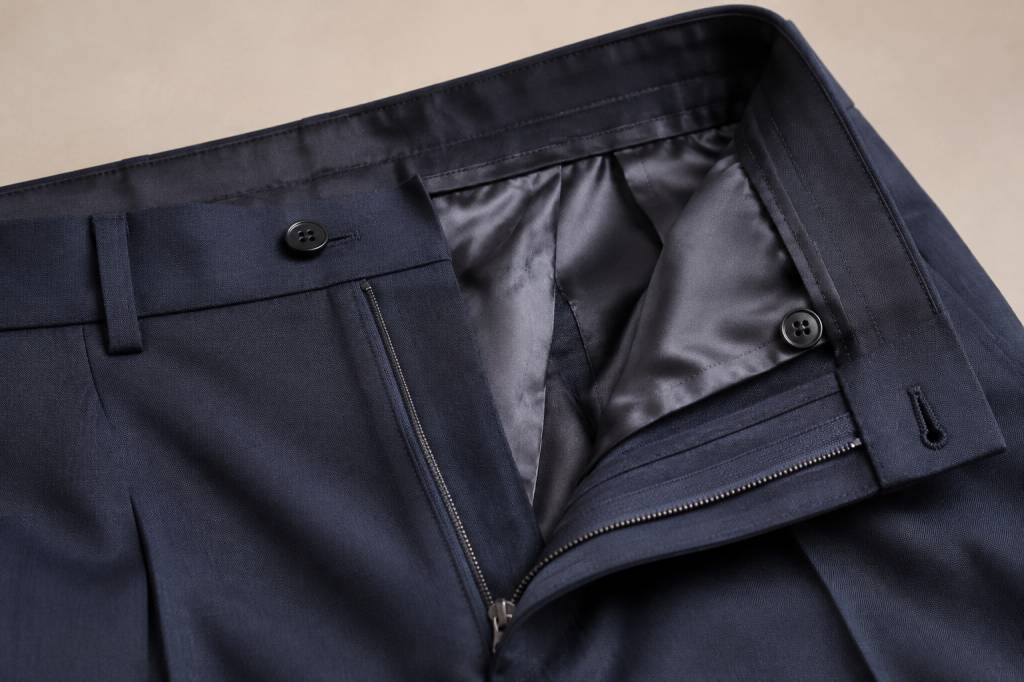
There is a small detail inside a pair of suit trousers that rarely gets a compliment at a dinner party. It is not the fabric, the crease, or even the fit. It is the lining. Hidden from view, it can make the difference between trousers that glide on comfortably and trousers that cling, wrinkle, or feel like they have their own ideas about where your legs should go.
So what is suit pants lining, exactly? Why do some trousers have it while others do not? And should you care when choosing your next suit? Let’s take a closer look at this quiet piece of tailoring—and give it the attention it deserves.
What Is Suit Pants Lining?
A lining is a layer of fabric sewn to the inside of a garment. In suit trousers, it is usually attached to the front of each leg, beginning around the waistband or upper thigh and ending at, or just above, the knee. This is often called a knee lining or partial lining.
Unlike the outer fabric, the lining is not meant to be seen when you are standing normally. Its job is practical: it creates a smooth surface between your body and the trouser cloth. When you sit down, cross your legs, or pull your trousers on in a hurry, that extra layer helps the fabric move more easily.
Not every pair of suit pants is lined in the same way. Some have lining only in the front, some extend it farther down the legs, and others have no separate leg lining at all. The choice depends on the garment’s design, the fabric, the climate it is intended for, and the maker’s preferences.
Why Are Suit Trousers Lined?
The simplest answer is comfort. But, as with a good espresso, the simple answer is only the beginning.
Suit cloth can catch against skin, socks, or the fabric of your underwear. A lining gives the trousers a smoother interior, helping them slide into place and move with you. This is especially useful if the outer cloth is textured, relatively coarse, or made from a material that tends to cling.
A lining can also help reduce friction. When you walk, the fabric of your trousers brushes against your legs. Without a smooth inner layer, that repeated contact may encourage the cloth to ride up, twist, or wear more quickly in high-friction areas. A lining does not make trousers indestructible, but it can help the outer fabric handle everyday movement more gracefully.
There is a visual benefit, too. A lining can help the front of the trousers hang more smoothly, making the fabric less likely to reveal every crease, seam, or pocket outline. It is a little like good lighting in a fitting room: no one should notice it, but the overall impression is better.
The Difference Between Lined and Unlined Trousers
Lined trousers generally feel smoother against the body and can be easier to put on. Unlined trousers are often lighter and may feel cooler, especially in warm weather. Neither option is automatically superior. The right one depends on how and where you plan to wear them.
Imagine two pairs of trousers in the same wool fabric. The lined pair may feel more polished and comfortable over a long day at the office. The unlined pair may feel breezier on a summer commute. If you live somewhere warm, spend plenty of time outdoors, or simply dislike extra layers, unlined trousers may be appealing. If you value ease of movement and a smoother feel, lining could be the better companion.
Keep in mind that “lined” does not always mean “hot.” A lightweight lining in a breathable fabric can feel quite comfortable. Conversely, unlined trousers made from a heavy or tightly woven cloth may still feel warm. Fabric, fit, and weather all play a part; the label alone does not tell the whole story.
Common Types of Trouser Lining
When people talk about lined suit pants, they are often talking about how much of the leg is covered, as well as what the lining is made from.
-
Front knee lining: The most familiar option. It usually covers the front of the upper legs down to around the knees, where it helps with comfort and smooth movement while keeping the lower leg relatively light.
-
Extended lining: In some trousers, the lining continues farther down the leg. This offers more coverage, though it may add warmth and weight.
-
Full lining: A separate lining runs through most or all of the trouser legs. It can create a smooth, finished interior, but it is less common in lightweight or warm-weather styles.
-
No leg lining: The trousers have no separate lining in the legs. This can make them feel airy and light, although the inside seams and the outer cloth are more directly in contact with you.
The lining itself can be made from a range of materials. Polyester is common because it is durable and affordable. Viscose can feel smoother and more breathable, while cupro is often chosen for its soft handle and elegant drape. Cotton linings may feel natural, but they can crease more readily. The best choice depends on the quality of the fabric, the purpose of the trousers, and your own comfort.
How Lining Affects Fit and Movement
A lining can improve how trousers move, but it cannot rescue a poor fit. If the seat pulls, the waistband digs in, or the thighs feel tight, the problem is likely the cut or size—not a missing layer of fabric.
That said, lining can change the way trousers feel when you put them on and wear them. A smooth inner surface can help the cloth pass over your legs instead of catching. This matters if you wear dress socks, if your skin is dry, or if you have trousers made from a fabric with a little texture. Anyone who has tried to pull on wool trousers over bare legs on a dry winter morning knows that fabric can occasionally become a stubborn character.
During a fitting, walk around, sit down, and stand up again. Notice whether the trousers stay in place and whether the lining pulls or twists. A comfortable pair should move with you without demanding constant adjustment. If the lining bunches behind the knees or feels tight across the thighs, ask a tailor to check the fit and construction.
Does Lining Make Trousers Last Longer?
It can help protect the outer fabric from some everyday friction, particularly around the upper legs. By creating a barrier between your body and the cloth, lining may reduce direct rubbing and help the trousers maintain a smoother appearance. It can also make the garment feel more substantial and finished.
But lining is not a guarantee of a longer life. Its own seams and fabric can wear out, and a heavy or poorly fitted lining may cause discomfort. The quality of the outer cloth, the way the trousers are made, and how often you wear and clean them all matter. Rotating between pairs is still one of the simplest ways to give each pair time to rest.
Care matters, too. Follow the garment’s care label rather than guessing. Some suit trousers need professional dry cleaning; others may be suitable for gentler care. Frequent cleaning can affect both the outer fabric and the lining, so avoid sending a pair to the cleaner simply because it has been worn once. Airing trousers after wear and brushing away light dust can often help keep them fresh.
Choosing Lining for the Season
Think about the weather and the way you will wear the trousers. For cold months, lined trousers can provide a smoother, more comfortable layer. If you commute in winter or wear a suit for long days indoors and outdoors, that extra coverage may be welcome.
For summer, a lightweight lining or an unlined construction can feel more comfortable. Linen and tropical-weight wool are popular warm-weather fabrics partly because they are designed to feel lighter and breathe well. Pairing them with a heavy lining would be a little like wearing a winter scarf to the beach: technically possible, but probably not the best use of your afternoon.
Consider the setting as well. If the trousers are part of a formal suit you wear occasionally, a lining may give them a more structured, polished feel. If you want relaxed trousers for a warm office or frequent travel, a lighter construction may suit your routine better.
What to Check When Buying Suit Pants
You do not need to become a textile detective, but a few simple checks can make shopping easier. Turn the trousers inside out if possible, and look at how the lining is attached. Neat stitching, smooth seams, and a lining that lies flat are good signs. Feel the fabric: does it glide comfortably, or does it seem stiff and scratchy?
-
Check how far the lining extends and whether that coverage suits the climate.
-
Move around in the trousers rather than judging them while standing still.
-
Look for puckering, loose threads, or lining that twists around the leg.
-
Ask what the lining is made from if comfort or breathability is important to you.
-
Pay attention to the overall fit. A lining cannot compensate for trousers that are too tight or too loose.
If you are buying online, product descriptions may mention “knee-lined,” “partially lined,” or “unlined.” These terms can help, but photographs do not always show the full construction. When in doubt, check the brand’s sizing and product details or ask customer service. A quick question now is easier than discovering an unexpected extra layer on a warm day.
Can a Tailor Add or Remove Trouser Lining?
Sometimes. A skilled tailor may be able to replace a worn lining or alter its coverage, depending on the construction of the trousers. Replacing a damaged lining can be a sensible way to extend the life of a pair you otherwise love. If the lining has torn, do not assume the trousers themselves are finished.
Removing lining is a more complicated decision. It may reduce warmth, but it can also change the way the trousers hang and expose seams that were not designed to be seen. Before asking for alterations, have a tailor inspect the garment. They can tell you whether the change is practical and whether it might affect the fit.
And if the lining feels uncomfortable, describe exactly what is happening. Does it cling? Bunch? Feel too warm? A tailor may be able to suggest a lighter replacement or identify a fit issue that is making the lining pull. Specific details lead to better solutions than the rather mysterious instruction, “Make these feel nicer.”
A Small Detail Worth Noticing
Suit pants lining is not the headline act of a well-dressed outfit. The jacket, shoes, and overall fit may draw the eye first. Yet the lining quietly affects how trousers feel, move, and wear throughout the day.
When you are choosing a pair, think beyond what you see in the mirror. Consider the season, your daily routine, and how the trousers feel when you sit and walk. A well-made lining should not steal the show. It should simply make getting dressed feel easier—and let you focus on more important matters, like arriving on time or choosing the right shoes.