
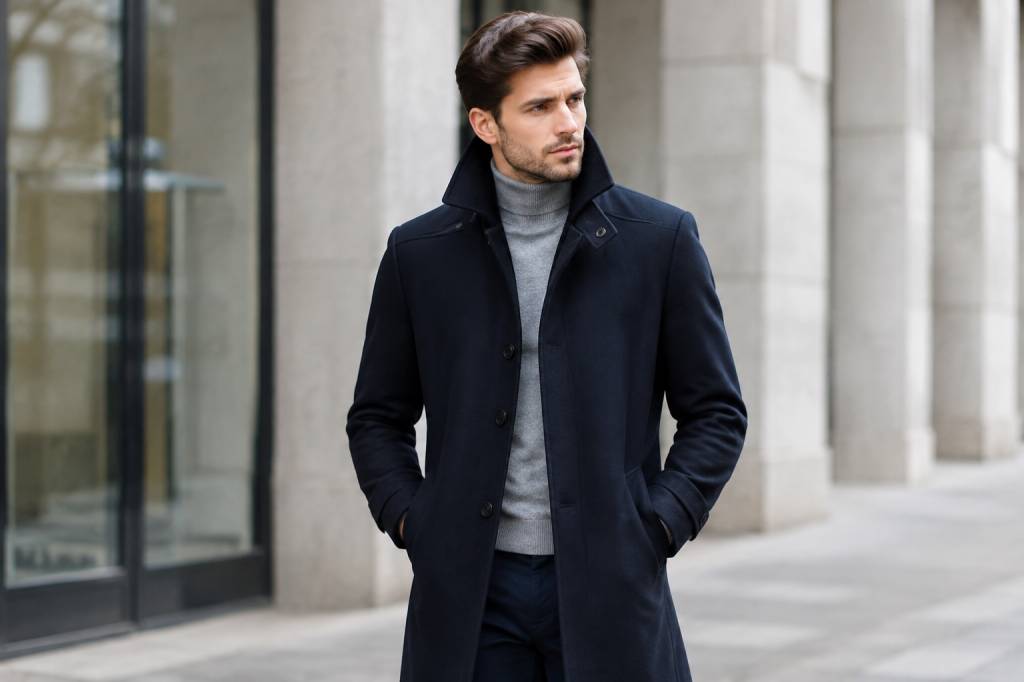
On a cold evening, a coat can look handsome and still let the wind sneak straight down your collar. That is where a small, often overlooked detail earns its keep: the throat latch. It may be no bigger than a strap and a button, but fastened properly, it can turn a breezy walk into a comfortable one—and give your coat a pleasingly old-school character.
I first noticed one on a vintage military-style coat in a shop window. The coat had a strong collar, broad shoulders, and a little fastening at the neck that seemed almost decorative. Then the weather changed, I tried it on, and understood the point. Some design details are not merely there to look charming. They have a job to do.
What Is a Throat Latch?
A throat latch is a small strap, tab, or fastening positioned near the top of a coat, usually at the collar. It connects one side of the collar to the other, or secures the collar close to the neck. Depending on the design, it may fasten with a button, buckle, snap, or hook.
Its main purpose is practical: to help close the opening at the throat and keep cold air out. On some coats, the collar can be turned up and held in place with the latch. On others, the latch simply brings the collar edges together when the coat is worn fully closed.
You may also hear related terms such as “throat tab” or “collar tab.” Clothing terminology is not always as tidy as a freshly pressed lapel, so labels can vary by brand and garment. The feature to look for is a short fastening near the collar that allows the neck of the coat to close more securely.
Why Do Coats Have One?
The throat latch has practical roots. Outerwear designed for cold, windy conditions needed to protect more than the chest. A coat might have a strong body, substantial buttons, and a high collar, but if the collar gaped open, the wind still had an invitation.
Fastening the latch helps create a closer barrier around the neck. That can be useful on a brisk commute, during a walk along the coast, or while waiting for a taxi that appears to be taking a scenic tour of the city. It is not a substitute for a scarf in severe weather, but it can make a noticeable difference.
Today, the detail appears on a range of styles, including military-inspired coats, peacoats, trench coats, duffle coats, and some heavier wool overcoats. Not every coat with a high collar has a throat latch, and not every latch is intended to be used every day. Sometimes it is a functional feature; sometimes it contributes more to the design than to the warmth.
How to Wear a Throat Latch Coat
The simplest approach is to treat the latch as an option rather than a rule. Leave it undone when the weather is mild or when you want the coat to sit more casually. Fasten it when the temperature drops, the wind picks up, or you want the collar to hold its shape.
Before closing it, stand naturally and check that the collar rests comfortably. You should be able to move your head without feeling as though the coat is politely trying to keep you from looking left. If the fastening pulls, digs in, or bunches the collar, loosen it or leave it open. A coat should protect you, not conduct an interview with your neck.
Here is a useful routine when putting the coat on:
-
Set the collar in the position you want, either turned up or lying naturally.
-
Fasten the main buttons or front closure first, if the coat has one.
-
Bring the throat latch across without twisting or stretching it.
-
Check that the collar sits evenly and that the coat still allows comfortable movement.
-
Undo the latch indoors or when you no longer need the extra protection.
That last step matters. A fully fastened collar can look purposeful outdoors, but wearing it tightly closed in a warm restaurant may make the coat seem stiff—and you may start negotiating with your own body for a little breathing room.
Three Easy Outfit Ideas
For a polished city look: Wear a dark wool coat with a throat latch over a fine-knit sweater, a collared shirt, and tailored trousers. Choose leather boots or neat dress shoes to keep the outfit refined. Fasten the latch outside, then undo it once you are indoors. The result feels considered without looking as though you are dressed for a costume drama.
For a relaxed weekend: Pair a textured coat with a crew-neck knit, dark jeans, and simple boots. Leave the latch open unless the weather calls for it. This lets the coat’s collar frame the outfit without making the whole look too formal. A little texture—wool, denim, leather—does more for the outfit than adding three extra accessories.
For a sharp, streamlined silhouette: Choose a coat that fits neatly at the shoulders and falls cleanly through the body. Wear it over similarly simple layers, such as a monochrome sweater and trousers. A well-proportioned coat can make the overall line look longer and more balanced. If you like a little extra height, a discreet pair of elevator shoes can work naturally with the outfit; the goal is a cohesive look, not a mysterious change in altitude.
Choosing the Right Fit
A throat latch cannot rescue a coat that fits poorly. Start with the shoulders: the seams should sit close to your natural shoulder line, without pulling or drooping dramatically. You should be able to move your arms comfortably, especially if you plan to wear the coat over a blazer or thick sweater.
Next, consider the collar. With the latch undone, it should lie neatly rather than flaring away from your neck. When fastened, it should close without forcing the fabric into wrinkles. If the collar feels tight even when the latch is open, the coat may be too small in the neck or upper chest. A tailor can sometimes adjust a simple issue, but a coat that is fundamentally undersized is better left on the hanger.
Length and overall proportions matter, too. A longer coat can feel elegant and offer more coverage, while a shorter cut may suit a casual wardrobe or a more compact frame. Try the coat with the clothes and shoes you expect to wear with it. A mirror check in your usual outfit is far more useful than imagining a perfect look with garments you never actually reach for.
Details That Make a Difference
Look closely at how the latch is made. A sturdy button or well-finished buckle should feel secure without being difficult to use. The strap should lie flat and match the character of the coat. On a rugged wool coat, a substantial tab may look right; on a sleek dress overcoat, a slim, discreet fastening may be more harmonious.
Also check whether the latch is fixed or removable. Some designs have a strap that can be tucked away or detached, giving you more flexibility. If the fastening is decorative and does not actually hold the collar closed, judge it as part of the coat’s appearance rather than expecting it to block the wind.
Color and hardware influence the mood. Dark buttons and understated stitching tend to feel classic. Contrast stitching, a visible buckle, or a military-inspired silhouette makes the detail more noticeable. Neither choice is automatically better. Ask yourself whether you want the latch to blend in or become a small point of interest.
Common Styling Mistakes to Avoid
-
Pulling the collar too tight: The latch should secure the collar, not compress your neck. Comfort comes first.
-
Leaving it fastened in every setting: Indoors, an open collar often looks more relaxed and feels much more comfortable.
-
Overloading the outfit: A coat with strong military details already has character. Keep the rest of the look simple if you want the coat to stand out.
-
Ignoring the layers underneath: A coat that fits over a thin shirt may feel restrictive over a chunky knit. Try it with realistic layers before buying.
-
Assuming every latch is functional: Check the construction. Some are primarily decorative, and some are designed to work only with the collar in a particular position.
How to Care for the Latch and Collar
A little care keeps this small feature looking intentional. Fasten and undo the latch gently rather than tugging at the strap or button. Repeated force can stretch the fabric around the fastening or loosen the stitching. If a button starts to wobble, have it secured before it goes missing during the first serious cold snap of the year.
Brush wool coats with a clothing brush to remove surface dust, and follow the care label for cleaning. Avoid storing the coat with the collar crushed under heavy garments. If the collar has lost its shape, hang the coat properly and let it settle; use a professional cleaner or tailor if it needs more attention. The latch should help the collar sit neatly, but it cannot replace good care.
Is a Throat Latch Coat Right for You?
If you like classic outerwear, appreciate practical details, or simply want a little extra protection around the neck, a throat latch coat is worth considering. It offers flexibility: wear it open for an easy, everyday appearance, or fasten it when the weather turns sharp. That small change can make the same coat feel more casual one moment and more purposeful the next.
The best version is not necessarily the most dramatic one. Choose a coat that fits your shoulders, works with the layers you actually wear, and feels comfortable both open and fastened. Then let the latch do its quiet work. There is something satisfying about a detail that looks handsome, keeps out the wind, and asks for no attention at all—rather like a good pair of shoes, only closer to your chin.