
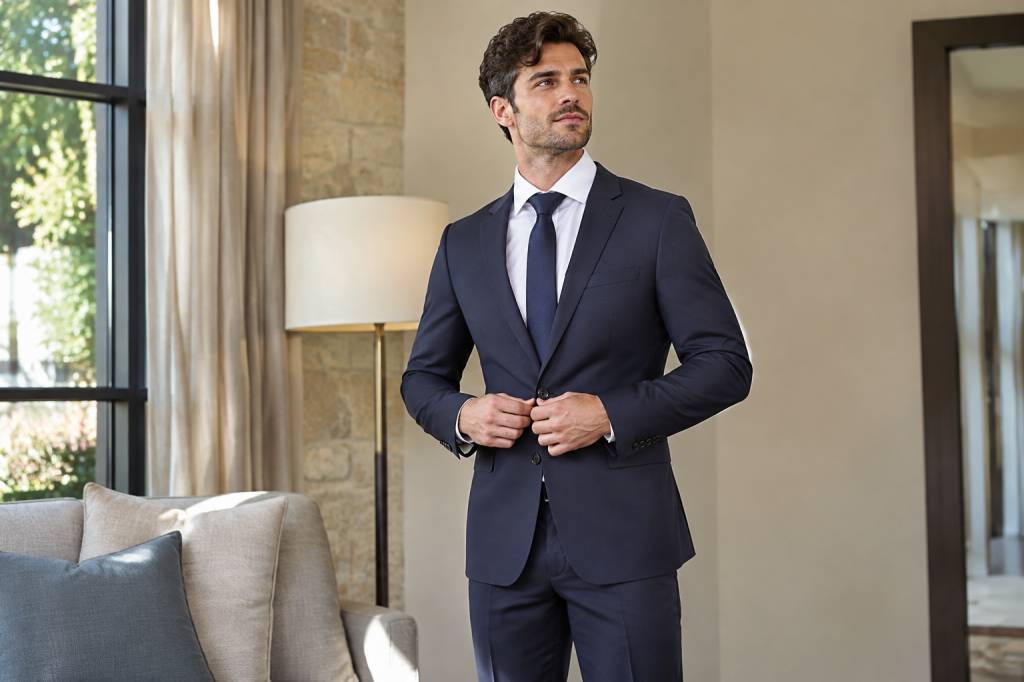
There is a particular kind of morning panic that begins with a mirror and ends with a tie dangling several inches above the waistband. You have the shirt, the jacket, the polished shoes—and somehow your tie looks as if it has shrunk overnight. Before you blame the laundry, take a breath. A tie that is too short is a common styling problem, and there are several ways to fix it without turning your outfit into a fashion emergency.
Whether you are already dressed for a meeting or planning tomorrow’s look, the right solution depends on why the tie is short. It may be tied with the wrong knot, adjusted incorrectly, or simply too short for your height or build. Here’s how to make it look longer, improve its proportions, and avoid the problem next time.
First, check how short it really is
A properly tied necktie usually ends around the middle of your belt buckle. It does not need to hit one exact point on every man, but it should look intentional: not floating above the waistband and not hanging halfway down your thighs. Think of the belt buckle as a useful landmark, not a strict ruler.
Stand naturally in front of a mirror, with your jacket open. Check the front blade—the wider end of the tie. If it falls just above the buckle, the difference may be barely noticeable. If there is a clear gap between the tie and your trousers, the tie will appear short, especially when your shirt and jacket create strong horizontal lines around your waist.
Also check the back blade. A short-looking front end is sometimes caused by a long tail hanging too low behind it, making the knot sit higher than you intended. The two ends do not need to match perfectly, but the narrow end should not distract from the front. A quick adjustment may solve more than you think.
Retie it with a smaller knot
The simplest fix is often the best: untie the knot and start again. A large knot uses more fabric, leaving less length for the front blade. If you are wearing a thick tie or have a substantial collar, a bulky knot can make the problem worse.
Try a Four-in-Hand knot. It is compact, slightly asymmetrical, and works well with most shirts and tie fabrics. Because it uses less material than larger knots, it can give you a little extra length at the front. That small difference can be enough to bring the tip closer to your belt buckle.
When you retie, begin with the wide end lower than you think it should be. The exact starting position depends on your height, the tie’s length, and the thickness of the fabric, so there is no universal measurement. Make a loose knot first, check the result, and tighten it gradually. It is easier to adjust a loose knot than to wrestle with a tight one while your collar is already buttoned.
If you usually tie a Windsor knot, consider switching to a Half-Windsor or Four-in-Hand when length is limited. A full Windsor makes a broad, formal knot, but it consumes more tie. It can be handsome beneath a spread collar; it is less helpful when the front blade is already struggling to reach your waist.
Adjust the starting position before tying
Many men begin with both ends of the tie at similar lengths, then wonder why the finished result is short. In most knots, the wide end needs to start considerably lower than the narrow end. The ideal difference varies, so treat your first attempt as a fitting rather than a final performance.
Loosen the knot and slide the tie back down around your collar. Hold the narrow end steady, then lower the wide end before you begin tying. If the finished tie still stops too high, start the wide end lower next time. If it drops past the buckle, raise it slightly. A small change at the beginning can make a surprisingly large difference at the end.
Here’s a useful trick: take a quick photo of yourself when you get the tie length right. It gives you a visual reference for where the wide end should sit before you tie. No measuring tape, no complicated formula—just your own successful result saved for another rushed morning.
Choose a collar and knot that work together
Your collar affects how much attention the knot receives. A very wide-spread collar tends to look best with a fuller knot. A narrow collar can pair well with a smaller one. If a bulky knot is eating up valuable fabric, a more compact collar-and-knot combination may improve the overall balance.
This is not a reason to abandon a shirt you like. Instead, consider the whole picture. A smaller knot under a moderate-spread collar can look refined and deliberate, while a large knot under a narrow collar may seem crowded. The aim is not merely to make the tie longer; it is to make the proportions look natural.
Fabric matters, too. Thick wool, textured knit, and heavily lined ties often create bigger knots than smooth, lightweight silk. When you know a particular tie runs short, pair it with a thinner shirt collar and a compact knot. Your tie does not need to be the most dramatic object in the room. Ideally, it should simply make the rest of the outfit look more put together.
Use a tie bar carefully
A tie bar cannot add fabric, but it can help a short tie look more controlled. Clip it horizontally across both blades and the shirt placket, usually around the middle of your chest. It keeps the tie in place and prevents the front blade from swinging away from your body, which can make it appear even shorter.
Keep the tie bar modest in width. A good rule is to choose one that covers roughly two-thirds to three-quarters of the tie, rather than extending to its edges. Place it at a practical height, not right beneath the knot or down beside your belt. It should look like a finishing detail, not a tiny metal fence.
Remember that a tie bar is a styling aid, not a lengthening device. If the tie ends well above your waistband, clipping it in place will only make the shortness more orderly. It can help a nearly correct tie sit neatly; it cannot rescue a tie that is dramatically too short.
Make a short tie less noticeable
Sometimes you cannot retie. Perhaps you are already at the office, or the knot is holding together a morning that has gone off the rails. In that case, use the clothes around the tie to soften the visual effect.
-
Button your jacket. A closed jacket hides part of the tie and creates a cleaner vertical line. This works best if the tie is only a little short and the jacket fits comfortably.
-
Wear a waistcoat. A well-fitting waistcoat can cover the gap between the tie and your waistband. Keep it smooth and properly buttoned; a waistcoat that pulls or bunches creates a new problem.
-
Choose a low-contrast combination. If your tie, shirt, and trousers are extremely different in color, the tie’s endpoint becomes more noticeable. Similar tones can make the transition less abrupt.
-
Check your posture and jacket fit. Stand naturally rather than pulling your stomach in or hunching forward. A jacket that is too tight across the waist may draw attention to the area where the tie ends.
These are temporary styling solutions, not substitutes for the right tie length. A waistcoat should look like part of the outfit, not a curtain brought in to hide a mistake. If the tie is several inches short, changing the tie is usually the more elegant answer.
Can you add length to a tie?
If the tie matters to you—a favorite vintage piece, perhaps, or one with a pattern you cannot find again—a tailor may be able to help. Some ties can be let out, repaired, or altered, depending on their construction and how much fabric is available. The result is not guaranteed, so bring the tie to an experienced alterations professional before attempting anything at home.
Tie extenders and similar accessories may also be available, but check how they attach and whether they are designed for your type of tie. A poorly fitted extension can create an uncomfortable lump beneath the shirt or make the knot sit oddly. If you try one, wear it at home first and inspect the result from the front, side, and back.
Do not sew extra fabric onto the end yourself unless you are comfortable with the risk. A mismatched patch or bulky seam can be more obvious than a slightly short tie. In many cases, putting the money toward a well-proportioned replacement is the more sensible choice.
Buy the right length next time
Standard ties work for many men, but not for everyone. If you are tall, broad through the chest, or prefer a knot that uses more fabric, a standard-length tie may consistently finish too high. Look for extra-long ties, which are made to provide more material for tying and a better final drop.
Before buying, check the tie’s stated length and compare it with a tie that already fits you well. The overall length is useful, but your knot preference matters just as much. A man who ties a compact Four-in-Hand may need less fabric than someone who favors a full Windsor.
Pay attention to width and fabric, too. A very wide, thick tie may be harder to manage if you need every bit of length. A medium-width tie in a lighter fabric is often easier to knot neatly and can suit a range of shirt collars. If you shop online, review the dimensions rather than relying only on labels such as “regular” or “long.”
Check your proportions from head to toe
Clothing is a conversation between details. A short tie can look more conspicuous when paired with a long jacket, a low-rise waist, or trousers that sit unusually low. You do not need to rebuild your wardrobe, but looking at the outfit as a whole helps you understand what feels off.
For a balanced appearance, let the tie end near the waistband, keep the shirt tucked smoothly, and make sure the jacket’s length suits your frame. If you are interested in looking taller, clean vertical lines can help: a well-fitted jacket, trousers with a neat break, and shoes that complement the outfit. The goal is not to disguise who you are; it is to make every part of your style work together.
That is one reason I always notice the shoes first. A polished pair can give an outfit confidence from the ground up, but even excellent shoes cannot persuade a tie to grow another three inches. Style is full of small negotiations, and sometimes the most handsome solution is simply choosing the right length.
A quick checklist before you leave
-
Does the wide end reach around the middle of your belt buckle?
-
Is the knot compact enough for the tie fabric and your collar?
-
Does the narrow end stay neatly behind the wide blade?
-
Does the tie sit close to your shirt, without twisting or swinging?
-
Does the whole outfit look balanced with your jacket and trousers?
If the answer to most of these is yes, you are ready to go. If not, give yourself two minutes to retie before reaching for a clever cover-up. A small knot, a better starting position, or a longer tie can turn a frustrating morning into a polished one. And if your tie still seems determined to stop short, remember: the mirror is not judging you. It is simply asking for a better fit.