




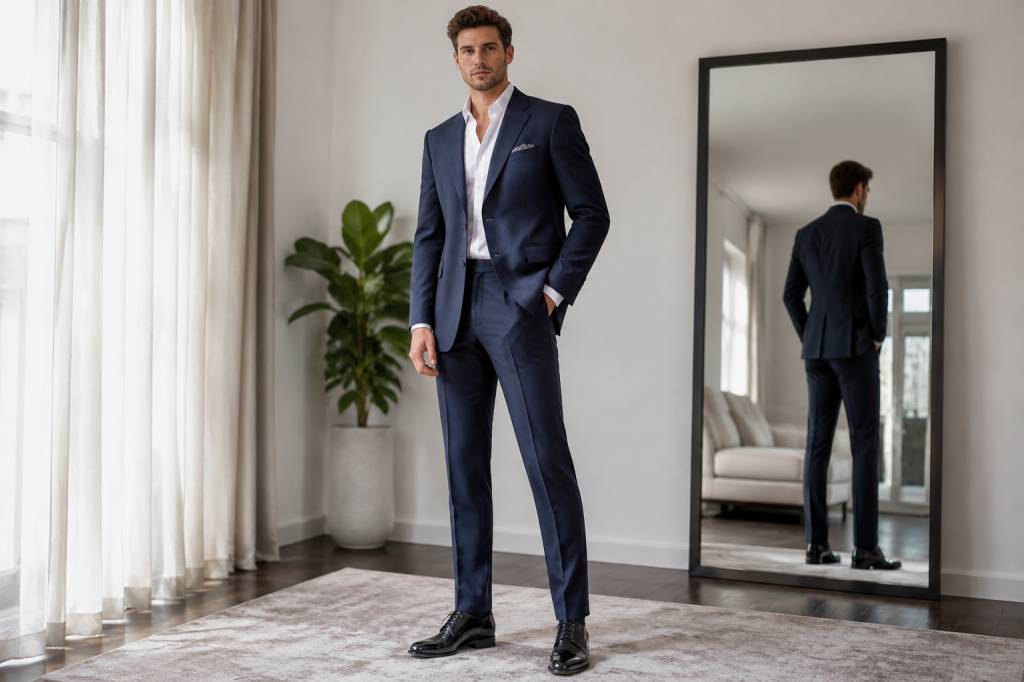
A tuxedo is one of those rare outfits that can make an ordinary evening feel like a scene from a film. But the magic is in the details: the lapels, the shirt, the shoes—and, often overlooked, the trouser hem. Get the length wrong and even a beautiful tuxedo can look borrowed. Get it right and the whole silhouette feels effortless.
So, should tuxedo pants have cuffs? How much break should they have? And what happens if you plan to wear height-increasing shoes? Let’s take a closer look. A few small decisions at the hem can make a surprisingly big difference.
Should tuxedo pants have cuffs?
For a traditional black-tie look, tuxedo trousers are usually worn without cuffs. The clean, uninterrupted line is formal, elegant, and easy to pair with the satin stripe running down the outer leg. Cuffs—also known as turn-ups—add visual weight at the ankle and create a slightly more relaxed, less conventional effect.
That doesn’t mean cuffs are forbidden. A carefully chosen cuff can look sharp on a modern tuxedo, particularly for a less traditional event or a personal style that leans toward vintage tailoring. But if the invitation says “black tie” and you want to play it safe, go with a plain hem. It’s the timeless choice, and timeless choices are rather handy when photographs live on long after the party.
There is also a practical consideration: cuffs need enough fabric to turn up, and the extra material can make the lower leg look heavier. On a slim or shorter frame, that can visually shorten the leg. A plain hem generally creates a cleaner vertical line, which is one reason it remains the standard for formal evening trousers.
What is the right tuxedo pant length?
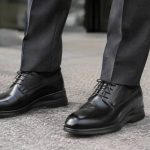
The right length depends on your shoes, the cut of the trousers, and the look you want. The classic rule is a slight break: the front of the trouser leg rests lightly on the shoe, creating a small crease in the fabric. The back hem should sit around the top of the heel without dragging on the ground.
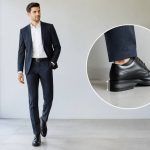
For a more contemporary, streamlined appearance, choose little or no break. The hem ends just above the shoe, with the trouser leg falling cleanly rather than bunching. This works especially well with a slim fit and polished formal shoes. It also gives the satin side stripe a long, uninterrupted appearance.
A full break, where the fabric folds noticeably over the shoe, is generally less successful with tuxedo trousers. It can make the ankle look crowded and the overall outfit seem less precise. A tuxedo should feel composed, not as though the trousers arrived a few minutes before you did.
- No break: A neat, modern line with the hem sitting just above the shoe.
- Slight break: A classic formal look with one small crease at the front.
- Full break: A deeper fold over the shoe, usually best avoided for a sharp black-tie outfit.
How the trouser cut affects the hem
Length cannot be judged in isolation. A narrow trouser opening sits differently from a wide one, and a slim leg can look too short if it rises far above the shoe. A wider leg may need a little more length to fall gracefully. The goal is balance: the trouser should meet the shoe without swallowing it or leaving an awkward gap.
When you stand naturally, look at the fabric from the front and the side. It should fall smoothly from the knee to the hem, without twisting or bunching. The side stripe should remain straight. If the stripe curves around the ankle, the trousers may be too long, too narrow, or both.
Fit also matters above the ankle. Tuxedo trousers should sit securely at your natural waist or at the position intended by their cut. If they are too low, the rise can pull and the hem may appear shorter at the front. If they are too loose, fabric can pool around the shoes. A tailor can adjust the waist and seat as well as the length, so don’t assume the hem is the only part that needs attention.
Try them on with the shoes you will wear
This is the tailoring appointment rule that saves the most headaches: bring the actual shoes. A trouser hem can look perfect with ordinary dress shoes and suddenly sit too high when you switch to a shoe with a different heel or sole. The difference may be small, but formalwear is a game of small differences.
Stand in your natural posture, with your feet comfortably apart. Walk a few steps, sit down, and stand again. Trousers rise when you move, so a hem that looks just right while you are standing still may expose too much sock once you take a seat. That is not necessarily a problem—some movement is normal—but you should know what to expect before the event.
If you wear elevator shoes, the same principle applies. Their added height is built into the shoe, but their shape and heel can affect how the trousers fall. Bring the exact pair to your fitting and tell your tailor what you will be wearing. The best result comes when the trouser length is adjusted for the shoes, not guessed at from memory.
A note on elevator shoes and proportion
Many men choose elevator shoes because they want a little extra height without changing the appearance of their outfit. In a tuxedo, a well-designed pair can sit naturally beneath the trouser leg, helping the whole look feel balanced. The key is choosing a formal style with a shape that works with your trousers, rather than trying to hide an unsuitable shoe beneath too much fabric.
For a clean silhouette, keep the hem close to the shoe without letting it drag. A very long trouser leg can bunch over the heel and make the foot look bulky. A hem that is too short, on the other hand, may reveal more of the shoe than you intend. Try the full outfit together: jacket, trousers, shirt, and shoes. The mirror is a more honest adviser when it sees the entire ensemble.
And remember, height is only one part of presence. Good posture, a comfortable fit, and a jacket that sits properly on the shoulders often do more for your appearance than an extra inch alone. The most convincing style is the one that looks like it belongs to you.
How to get the hem measured
If you’re visiting a tailor, wear the shoes and any belt or braces you plan to use. The trousers should sit at their intended waist position before the tailor marks the hem. Ask for the length you want in plain language: no break, a slight break, or a more traditional longer finish.
It helps to check the trousers from several angles. The front hem may need to be slightly shorter than the back so it clears the shoe neatly while still covering the back of the heel. This is a common tailoring detail, not a mistake. The exact adjustment depends on the trouser shape and how the fabric falls on your body.
Before leaving, try the trousers on again after the alteration. Walk, sit, and look at the hem with the jacket on. If the trousers are part of a complete tuxedo, the final check should be made with the full outfit. A great hem is not just a measurement; it is the way the fabric behaves when you move.
Can you cuff tuxedo pants yourself?
If the trousers have extra fabric and you know how to sew, a basic temporary adjustment may be possible. But formal trousers are not the best place to experiment with a rushed home alteration. A crooked hem, uneven turn-up, or visible stitching can catch the eye precisely because the rest of the outfit is so polished.
For a permanent alteration, a professional tailor is usually worth the cost. Ask whether the trousers have enough allowance for the change you want. Some ready-to-wear trousers have very little extra fabric inside, which limits how much the length can be adjusted. If cuffs are being added, check that the tailor can create a neat, even turn-up without interfering with the satin stripe or the shape of the leg.
Temporary fashion tape can help in an emergency, but treat it as a short-term fix rather than a tailoring solution. Test it on an inconspicuous area first, and avoid anything that could leave a mark on delicate formal fabric. On the evening itself, your attention belongs on the conversation, not on wondering whether your hem is negotiating with gravity.
Common tuxedo hem mistakes
- Choosing the length before choosing the shoes: Different shoes can change how the trousers sit.
- Letting the fabric pool: Excess length creates folds that make a formal outfit look untidy.
- Going too short: A high hem can disrupt the line of the trousers, especially when you sit.
- Adding cuffs without considering proportion: Turn-ups add visual weight and may not suit every frame or trouser cut.
- Ignoring the back hem: The trousers should fall neatly behind the shoe without dragging on the floor.
- Skipping the movement test: A fitting should include walking and sitting, not just standing like a shop mannequin.
A simple fitting checklist
Before the event, put on the tuxedo with the shirt, belt or braces, and shoes you intend to wear. Check the trousers in good light and move around naturally. Ask yourself:
- Does the hem create a clean line at the front?
- Is there a small break, or no break, rather than a deep fold?
- Does the back of the hem clear the floor?
- Do the trousers still look balanced when you sit down?
- Does the leg fall smoothly, with the side stripe straight?
- Do the shoes feel comfortable and look appropriate with the full outfit?
When the answers are yes, stop adjusting and enjoy the evening. The perfect tuxedo trouser hem rarely announces itself. It simply makes everything else look more deliberate: the polished shoes, the clean trouser line, the confident stance. No fuss, no fabric puddles—just a man dressed for the occasion, ready to make an entrance.