
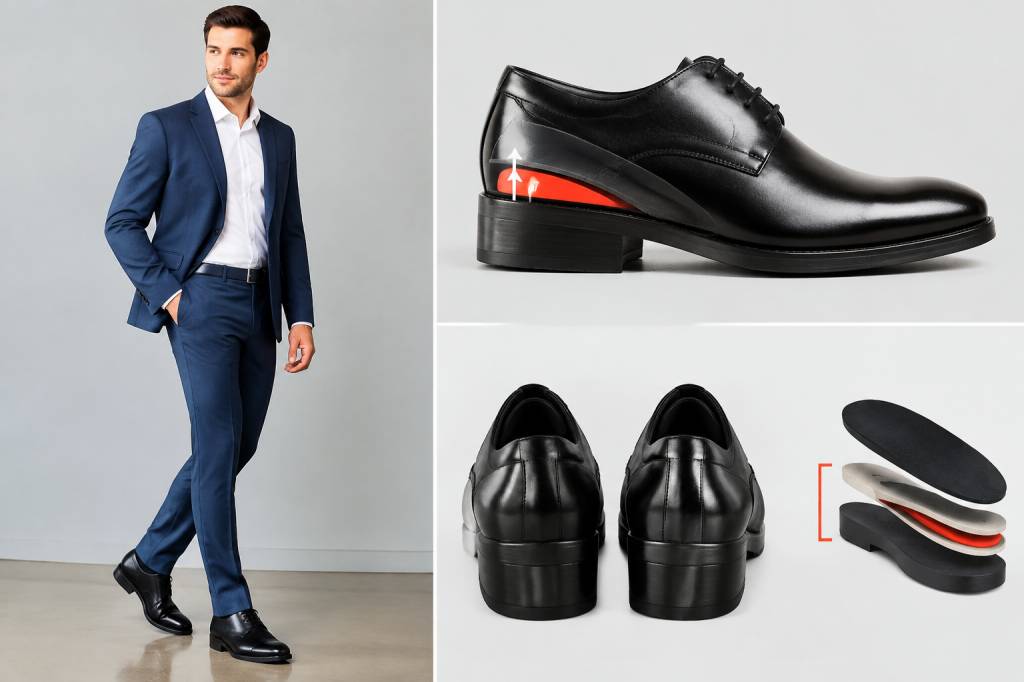
Height has always played a curious role in men’s fashion. It can influence the way a suit falls, how trousers break over the shoes, and even how confidently a man walks into a room. But while genetics may decide much of our natural height, style offers a few clever ways to change the visual impression. This is where elevator shoes enter the story.
So, what are elevator shoes? In simple terms, they are specially designed men’s shoes with concealed lifts built inside the heels and soles. These internal inserts raise the wearer’s height while keeping the shoes looking like ordinary, well-crafted footwear from the outside. No obvious platform, no theatrical high heel, and certainly no need to walk as if you are balancing on a pair of furniture legs.
Elevator shoes are made for men who would like to appear taller while maintaining a natural, elegant appearance. They combine traditional footwear design with discreet height enhancement, making them suitable for business meetings, weddings, dates, formal occasions, and everyday wear.
How do elevator shoes work?
The secret is hidden inside the shoe. Unlike conventional footwear, elevator shoes contain an internal lift positioned beneath the heel and sometimes extending toward the middle of the foot. This raises the wearer gradually, rather than placing all the extra height beneath the heel in an obvious way.
A well-designed pair distributes the lift carefully. The result is a more natural posture and a comfortable walking experience. The shoe’s exterior may look like a classic Oxford, Derby, loafer, boot, or sneaker, but the interior construction is different.
The lift can be made from materials such as lightweight foam, rubber, or other supportive compounds. Premium designs often use layered materials to balance softness, stability, and durability. The exact construction varies from brand to brand, but the principle remains the same: the extra height is built into the shoe rather than placed visibly underneath it.
Most elevator shoes add between approximately 2 and 5 inches of apparent height, although the exact amount depends on the model and the wearer’s comfort preferences. A moderate lift is often the easiest to wear throughout the day, especially for someone buying elevator shoes for the first time.
Are elevator shoes different from ordinary platform shoes?
Yes, and the difference is important. Platform shoes usually have a visibly thick sole beneath the entire foot. They can be fashionable, but the additional height is often easy to notice. Elevator shoes, on the other hand, are designed to conceal the lift within the shoe.
Imagine looking at a polished black Oxford. From the outside, you see a clean silhouette, a traditional heel, and a proportion that works naturally with tailored trousers. Inside, however, the shoe contains carefully engineered support that gives the wearer extra height. It is rather like a discreet tailor working behind the scenes: nobody sees the adjustments, but everyone notices the improved result.
Elevator shoes are also different from high-heeled shoes. A high heel may raise the heel dramatically while leaving the front of the foot much lower. This changes the angle of the foot and can feel unstable if the design is not well made. Elevator shoes generally use a gradual internal slope, which creates a more balanced position.
Why do men wear elevator shoes?
Every man has his own reason. Some want to feel more confident during important social situations. Others enjoy the way a little extra height improves the proportions of their clothing. For some, it is simply a matter of personal preference, just like choosing a particular haircut, jacket cut, or watch.
Height can influence first impressions, although it is certainly not the only quality that matters. A confident attitude, good manners, and a well-fitted wardrobe will always carry considerable weight. Still, when a pair of shoes helps a man feel more comfortable in his appearance, that psychological benefit can be meaningful.
Elevator shoes may be especially appealing for:
- Men who want a discreet boost in height for formal or professional occasions.
- Anyone looking to create a more balanced silhouette with tailored clothing.
- Shorter men who prefer the visual effect of additional height without wearing visibly raised footwear.
- Men attending weddings, interviews, presentations, or important social events.
- Fashion-conscious shoppers who appreciate traditional shoe design with modern construction.
There is no need to treat the choice as a dramatic secret. Men have been using clothing and accessories to enhance their appearance for centuries. A well-cut jacket broadens the shoulders, dark colours streamline the body, and vertical patterns lengthen the silhouette. Elevator shoes are simply another tool in that style wardrobe.
What do elevator shoes look like?
Modern elevator shoes come in a wide range of designs. The most popular styles include classic leather shoes, business Oxfords, elegant Derbies, monk straps, loafers, ankle boots, Chelsea boots, and casual sneakers.
For the office, a black or dark brown Oxford can work beautifully with a suit. Its clean lines create a polished appearance, while the hidden lift provides additional height. A Derby offers a slightly more relaxed look and pairs well with trousers, chinos, or smart-casual outfits.
For weekends, elevator sneakers can provide a more contemporary option. These may feature leather, suede, mesh, or textile uppers, depending on the season and design. They are useful when you want extra height without looking as though you are dressed for a board meeting at breakfast.
Boots are another excellent choice. Their higher ankle structure gives designers more room to incorporate internal lifts, and the style naturally suits thicker soles. A sleek Chelsea boot can add height while maintaining a sharp, minimalist silhouette. A casual lace-up boot works well with jeans and a heavier autumn wardrobe.
How much taller can elevator shoes make you?
The answer depends on the pair you choose. Many elevator shoes provide around 2 to 3 inches of additional height. Others are designed to offer more, sometimes approaching 4 or 5 inches. However, the tallest option is not automatically the best option.
Comfort and natural movement should come first. If the lift is too high for your foot, you may feel pressure beneath the toes, reduced stability, or tension in the ankles and calves. A moderate increase often looks more natural and feels easier to wear for several hours.
It is also worth considering proportion. The shoe should work with your body shape, clothing, and personal style. A subtle lift can create an elegant, harmonious effect. An exaggerated lift may attract attention to the shoe and make the overall appearance less balanced.
For a first pair, many men find that a lift of approximately 2 to 3 inches is a sensible starting point. Once you understand how the shoes feel and how they fit into your wardrobe, you can decide whether a different height is suitable.
Are elevator shoes comfortable?
They can be, provided they are well made and correctly fitted. Comfort depends on several elements: the quality of the internal lift, the shape of the shoe, the cushioning, the flexibility of the sole, and the relationship between the shoe and your foot.
A good pair should not feel like a secret battle taking place beneath your socks. Your heel should remain secure, your toes should have enough room, and your foot should not slide forward while walking. The internal lift should support the foot instead of forcing it into an awkward angle.
When buying elevator shoes, look for:
- A gradual internal lift rather than an abrupt, steep angle.
- A cushioned insole that supports the heel and arch.
- A firm but flexible outsole for stable walking.
- A roomy toe box that does not squeeze the toes.
- Breathable materials, especially if you plan to wear the shoes for long periods.
- Accurate sizing information and, ideally, a clear return policy.
It is wise to wear a new pair at home for short periods before taking them to a full-day event. Begin with thirty minutes, then gradually increase the time. Your feet will appreciate this gentle introduction, and you will quickly discover whether the fit is truly right.
How should elevator shoes fit?
Fit is even more important with elevator shoes than with ordinary footwear. Because the shoe contains an internal lift, there is less room for an incorrect size to hide. A shoe that is too loose may allow the heel to move, while one that is too tight can create pressure and discomfort.
Your heel should sit securely inside the shoe without rubbing. Your toes should be able to move slightly, and the widest part of your foot should align with the widest part of the shoe. When standing, there should generally be a small amount of space between your longest toe and the front of the shoe.
Do not assume that the same size fits every brand. Shoe shapes vary considerably. One manufacturer’s size 10 may feel different from another manufacturer’s size 10, particularly when comparing European, American, and British sizing systems.
If you have wider feet, pay close attention to the shoe’s width information. A stylish pair is not a good purchase if it leaves your feet feeling like passengers squeezed into an overcrowded Mediterranean train.
Can you wear elevator shoes every day?
Many men do wear them daily, especially when they choose a moderate lift and a comfortable design. However, it is sensible to rotate your footwear. Wearing the same pair every day can accelerate wear and prevent the materials from drying properly between uses.
Rotating two or three pairs allows each pair to rest and air out. It also gives you more styling options. A formal pair may suit the office, a sneaker may work for casual outings, and a boot can complete an autumn or winter wardrobe.
As with any shoe, inspect the soles, stitching, heel, and interior regularly. If the internal lift begins to compress or the shoe loses its stability, it may be time for repair or replacement. Quality footwear rewards care, but even the finest shoes cannot negotiate with time forever.
How to style elevator shoes naturally
The easiest approach is to choose shoes that complement your existing wardrobe. Classic colours such as black, dark brown, navy, and tan are versatile and easy to coordinate.
With a suit, match the formality of the shoe to the occasion. A polished Oxford or Derby is usually the safest choice. Make sure your trousers have the correct length: trousers that are too long may bunch around the shoes, while trousers that are too short can expose the shoe and make the lift more noticeable.
For smart-casual outfits, try elevator loafers with chinos and a fitted shirt. Boots can be paired with dark denim, a wool coat, or a structured overshirt. With sneakers, keep the rest of the outfit clean and modern. Slim or straight-leg trousers usually create a more balanced line than extremely wide trousers.
Good posture is just as important as the shoes themselves. Stand tall, keep your shoulders relaxed, and walk naturally. The aim is not to announce, “I have gained three inches!” The aim is for people to notice a more confident and composed presence without knowing precisely why.
Are elevator shoes a good choice for you?
Elevator shoes are a practical option if you want extra height combined with a discreet, conventional appearance. They do not change your bones or permanently increase your height, but they can create an immediate visual boost and help clothing sit differently on the body.
Choose them for the right reasons: because you like the style, because they make you feel confident, or because you enjoy experimenting with menswear. Do not feel pressured to wear them every day or to select the highest lift available. The best pair is the one that looks natural, feels stable, and suits your lifestyle.
In the end, elevator shoes are more than hidden lifts inside a handsome pair of shoes. They are a meeting point between design, engineering, and personal style. When chosen carefully, they add height without sacrificing elegance—and sometimes, just sometimes, they give a man that extra spring in his step when he walks through the door.