
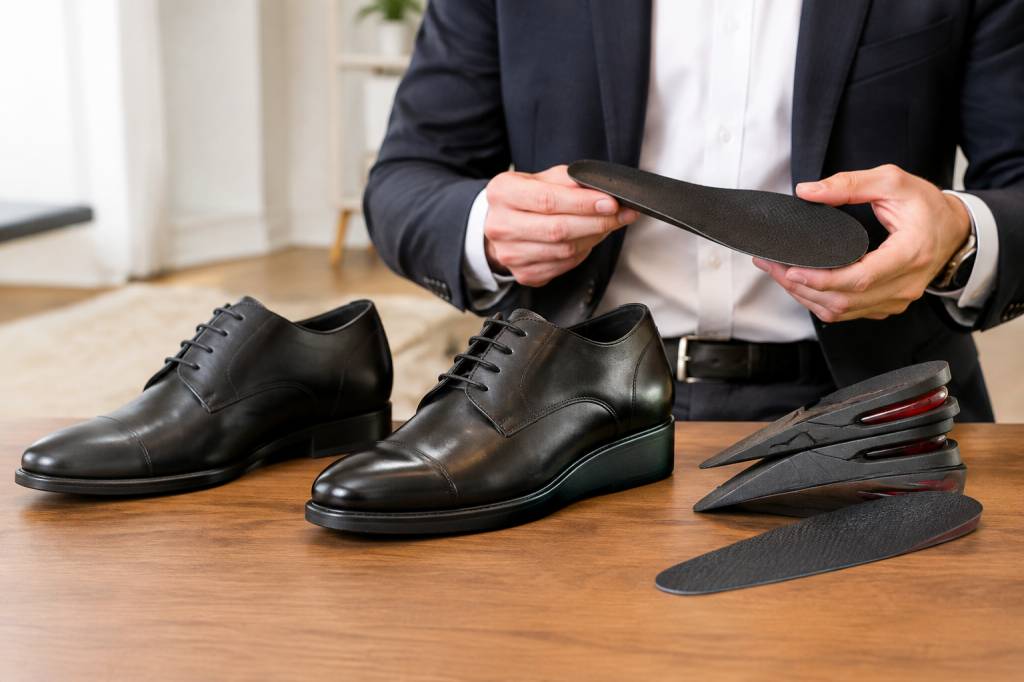
There is a certain magic in standing a little taller. Your shoulders relax, your posture improves, and suddenly that well-cut jacket seems to know exactly what it is doing. This is where shoe lifts—and the shoes designed to contain them—enter the story.
But what are lifts for shoes, exactly? Are they simple inserts hidden inside your footwear, or are elevator shoes something more sophisticated? The short answer is: both exist, but they are not quite the same thing. In this guide, we will explore how shoe lifts work, what elevator shoes are, how much height they can add, and how to choose a pair that feels natural rather than theatrical.
What are lifts for shoes?
Shoe lifts are raised inserts placed inside a shoe to increase the wearer’s height. They are also called height-increasing insoles, heel lifts, or elevator inserts. Traditionally, a lift is made from materials such as foam, silicone, leather, cork, or layered rubber. It sits beneath the heel, sometimes extending toward the middle of the foot for better support.
The principle is wonderfully simple: raise the heel, raise the body. Yet the design matters. A very thick insert placed inside an ordinary shoe can make the foot feel cramped, push the heel out of the shoe, or create an awkward walking pattern. Anyone who has tried to force a large insole into a slim dress shoe knows this little drama. The shoe says “elegance,” while the foot says “emergency.”
High-quality lifts are shaped to follow the natural contours of the foot. They are often tapered gradually rather than forming a sudden block under the heel. This makes the extra height less noticeable and helps the wearer maintain a more comfortable stride.
What are elevator shoes?
Elevator shoes are specially designed shoes with built-in height-increasing components. Unlike a removable lift, the internal wedge is integrated into the construction of the shoe. The added height is hidden inside the heel and sole, allowing the exterior to look like a conventional men’s shoe, boot, sneaker, or loafer.
That internal construction is the major difference. An elevator shoe is designed around the extra height from the beginning. The upper, heel counter, insole, outsole, and footbed are all developed to work together. This usually creates a more stable and natural result than adding a thick insert to a regular pair of shoes.
From the outside, a well-made pair should not announce its secret. There is no need for an exaggerated heel or a costume-like silhouette. The best designs rely on familiar shapes: sleek leather derbies, polished loafers, refined Chelsea boots, casual sneakers, and even comfortable walking shoes.
In other words, elevator shoes are not “ordinary shoes with something hidden inside.” They are purpose-built footwear designed to provide additional height while preserving balance, comfort, and style.
How do shoe lifts work?
A shoe lift changes the angle at which the foot rests inside the shoe. The heel is elevated, while the front of the foot remains closer to its original position. In many elevator shoes, this elevation is distributed through an internal wedge rather than concentrated at one small point.
The result can be a modest increase in standing height. Depending on the model, elevator shoes may add approximately 2 to 4 inches, or around 5 to 10 centimeters. Some designs provide less for a very discreet effect, while others are built for a more noticeable boost. The ideal amount depends on your proportions, your comfort, and the type of shoe.
More height is not automatically better. A dramatic lift can affect walking comfort and place additional pressure on the ball of the foot. For everyday wear, a moderate increase often feels more natural and versatile. A discreet 2-inch boost can work beautifully with office tailoring, while a taller design may be better suited to special occasions when you want a stronger visual effect.
Removable lifts versus built-in elevator shoes
Both options have their place. A removable lift is affordable, flexible, and easy to move from one pair of shoes to another—provided the shoes have enough internal space. Elevator shoes offer better integration, stability, and style consistency.
- Removable shoe lifts: These are separate inserts that can be placed inside suitable footwear. They are useful for experimenting with additional height or for occasional use.
- Built-in elevator shoes: These contain an internal height-raising structure designed specifically for the shoe. They generally provide better balance and a more secure fit.
- Half-length lifts: These raise only the heel and may be useful in certain footwear, but they can feel less stable if the elevation is too steep.
- Full-length lifts: These extend farther beneath the foot and distribute pressure more evenly, often making them more comfortable for longer wear.
If you are curious and want to test the idea, a small removable lift may be a reasonable first step. However, if you plan to wear height-increasing shoes regularly, a purpose-built elevator shoe is usually the smarter investment.
Are elevator shoes comfortable?
Comfort depends on three things: construction, fit, and the amount of height added. A well-designed elevator shoe should feel secure without squeezing the toes or allowing the heel to slip. The internal wedge should support the foot rather than forcing it into an extreme position.
Materials also make a difference. Breathable leather can adapt to the foot over time, while cushioned insoles and shock-absorbing outsoles help reduce fatigue. A rounded or gently almond-shaped toe box is usually more comfortable than an overly narrow pointed design, particularly if you intend to wear the shoes for several hours.
There is also an adjustment period. If you have never worn elevator shoes, begin by wearing them at home for short periods. Walk on different surfaces, climb a few stairs, and notice how your stride feels. Your body may need time to become familiar with the altered foot position. This is not a sign that the shoes are wrong; it is simply the foot learning a new chapter of the story.
Do not ignore discomfort, however. Persistent pressure, numbness, heel slipping, or pain in the knees and lower back are warnings that the fit or design may not be suitable. Height should make you feel more confident, not as though you are negotiating a peace treaty with your footwear.
How to choose the right height
The most suitable height depends on your lifestyle and the impression you want to create. For daily office wear, a moderate lift usually blends naturally with formal clothing. For casual outfits, sneakers or boots with a subtle internal increase can add height without changing your personal style.
Consider these practical guidelines:
- Choose a discreet lift for everyday use. Around 1.5 to 2.5 inches is often versatile and easy to wear.
- Consider a higher lift for special events. Formal dinners, weddings, and photographs may justify a more pronounced increase.
- Match the height to the shoe style. A boot can often accommodate more internal structure than a slim loafer.
- Think about your proportions. The goal is a balanced silhouette, not simply the largest possible number.
- Prioritize stability. A secure stride is more impressive than an ambitious lift that makes every step uncertain.
Many men begin with the question, “How many inches can I gain?” A better question is, “How much height can I wear comfortably and naturally?” The second question usually leads to a more satisfying purchase.
Can people tell that you are wearing elevator shoes?
With a well-made pair, most people will not notice. They may notice that you look taller, that your trousers fall more cleanly, or that your posture appears more confident. They are unlikely to inspect your shoes like forensic investigators at a crime scene.
The key is choosing a design with a normal exterior profile. Look for a heel that does not appear excessively raised, a toe shape that suits the style, and proportions that match your wardrobe. Trousers should have the correct length: too short, and the shoe may attract attention; too long, and the fabric can bunch around the ankle.
Your posture matters as well. Elevator shoes cannot replace natural movement. Stand comfortably, keep your shoulders relaxed, and walk at your usual pace. Trying to appear taller by stiffening your body often has the opposite effect. Confidence is most convincing when it looks effortless.
Elevator shoes and men’s style
Height-increasing shoes can work with almost any modern wardrobe. For a business look, black or dark brown leather derbies pair neatly with tailored trousers and a structured jacket. A pair of elevator loafers can bring a sophisticated Mediterranean touch to chinos, a linen shirt, and an evening blazer.
Boots are particularly practical because their higher shaft provides additional ankle support. Chelsea boots, lace-up boots, and refined dress boots can all conceal internal height elegantly. For weekends, minimalist elevator sneakers work well with dark denim, tapered trousers, or relaxed chinos.
Colour is worth considering. Darker shoes often create a longer visual line, especially when worn with trousers in a similar shade. Monochromatic outfits can also make the silhouette appear more streamlined. This does not mean every outfit must become a black-and-navy opera. Texture, contrast, and thoughtful tailoring still bring personality.
How to care for elevator shoes
Because elevator shoes contain additional internal structure, proper care is important. Allow them to rest and air out between wears, particularly after a long day. Use a shoe tree in leather styles to help preserve the shape and absorb moisture.
- Clean leather regularly with a suitable cream or conditioner.
- Keep suede away from heavy rain and use a protective spray.
- Do not place damp shoes directly beside a radiator or strong heat source.
- Rotate between two or more pairs when possible.
- Replace worn insoles or consult a specialist if the internal support changes shape.
Good maintenance protects both the appearance and the comfort of the shoe. A beautiful pair should age like a well-loved leather jacket, not like a forgotten sandwich in the back of a car.
Are shoe lifts right for you?
Shoe lifts and elevator shoes are useful for men who want additional height, a more balanced silhouette, or a subtle confidence boost. They can be especially helpful for formal occasions, professional settings, photographs, and moments when you want your clothes to sit with greater presence.
They are not a medical treatment, and they do not permanently increase adult height. Their effect lasts while you wear them. That may sound obvious, but it is worth saying clearly: elevator shoes enhance your appearance in the moment; they do not change your skeletal structure.
The best approach is to see them as one element of personal style. A good haircut, well-fitted clothing, upright posture, and shoes that suit your personality all work together. The lift is simply the discreet little architect hidden beneath the foot.
Whether you choose a removable insert or a fully integrated elevator shoe, begin with comfort and proportion. Try different heights, walk naturally, and select a design that fits the life you actually live. When the shoe feels secure and the style feels like you, the extra height becomes almost secondary. You are not pretending to be someone else—you are presenting your best version with a little more altitude.