
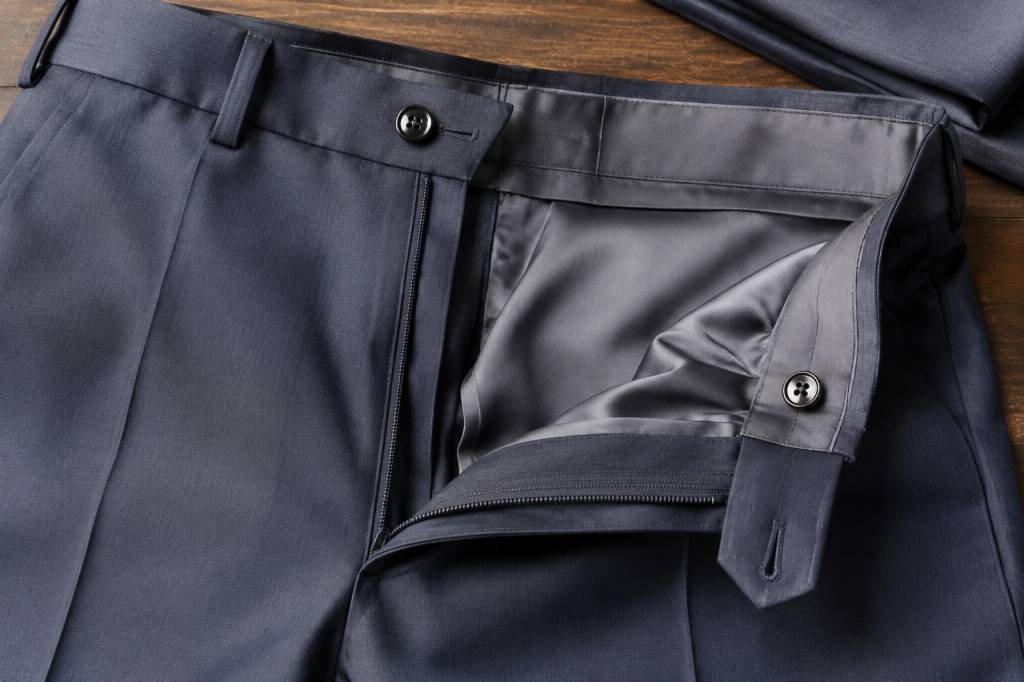
A suit can look impeccable on the hanger, yet feel uncomfortable the moment you sit down. Sometimes the culprit is not the cut, the fabric, or even the tailor’s mysterious “just one more fitting.” It may be something quieter: the lining inside your trousers.
Trouser lining rarely gets the spotlight. It is hidden from view, after all, and no one has ever walked into a room and announced, “Beautiful lining!” But this discreet layer can make a real difference to comfort, fit, durability, and the way your trousers fall. If you have ever wondered why one pair feels smooth and easy while another clings to your legs like it has a personal grudge, lining may be part of the answer.
What is suit trouser lining?
Trouser lining is a layer of fabric sewn inside the trousers. It usually sits behind the outer cloth, between the fabric and your skin. Depending on the design, lining may cover the entire inside of each leg or only part of it.
Unlike the visible suit fabric, lining is chosen mainly for how it feels and performs. It can help trousers slide over your underwear, reduce friction, and provide a smoother surface against the leg. It may also give the garment a little extra structure and help protect the outer cloth from wear.
There is no single lining style for every pair of suit trousers. Some are lined from the waistband to the hem; others have a partial lining that ends around the knee or upper thigh. Many lightweight or warm-weather trousers have no lining at all. Each choice changes the feel of the garment, so it is worth knowing what you are buying.
Why do trousers need lining?
The simplest answer is comfort. Suit fabrics such as wool can feel rough or clingy against bare skin, especially when you are moving through a busy day. A lining creates a smoother inner surface, making it easier for the trousers to move as you walk, sit, and climb stairs.
It can also help the trousers keep their shape. A well-constructed lining supports the outer fabric and can help it hang more cleanly. That matters because the way trousers drape affects the entire silhouette. A sharp crease and an elegant line do not happen by magic, though a good tailor can sometimes make it look that way.
Finally, lining acts as a modest barrier between your body and the suit fabric. It can reduce direct contact with sweat and friction, which may help the outer cloth stay fresh and last longer. It will not make your trousers invincible, but it can take some of the daily wear and tear.
Full lining, partial lining, and unlined trousers
Full lining usually extends along most or all of the leg. It gives the smoothest feel and can be especially useful when the outer fabric is coarse, textured, or prone to catching. It is also common in more substantial suit trousers intended for cooler weather or formal wear.
Partial lining covers only a section, often the upper thigh or down to the knee. This can provide comfort where friction is greatest while keeping the lower leg lighter and cooler. It is a practical middle ground for people who want some of the benefits of lining without the extra warmth of a fully lined pair.
Unlined trousers have no additional inner layer. They are generally lighter and more breathable, which makes them appealing in hot weather. They can also feel less bulky. The trade-off is that the outer fabric sits directly against your underwear or skin, so the texture and quality of the cloth matter more.
There is no universal winner. A fully lined pair may feel luxurious in winter and unnecessarily warm in July. An unlined pair may be a pleasure on a sunny afternoon but less comfortable if the wool is scratchy. Think about when and where you will wear the trousers, not just how they look under shop lighting.
How lining affects comfort and movement
Imagine getting dressed on a warm morning. You pull on your trousers, reach for your coffee, and discover that the fabric is already clinging to your legs. A smooth lining can help the trousers glide over the body rather than catching at every step.
This is particularly noticeable if you wear long underwear, have hair on your legs, or spend much of the day sitting. When the inner surface is smooth, the trousers are less likely to tug or bunch as you move. That little improvement can make an eight-hour workday feel considerably less like a negotiation with your wardrobe.
Fit still matters more than lining. If trousers are too tight through the thigh or seat, no inner layer will rescue them. But when the cut is right, a suitable lining can make movement feel easier and the overall fit feel more polished.
Does lining make trousers warmer?
Usually, yes. A lining adds another layer between you and the outside air, so fully lined trousers tend to feel warmer than unlined ones made from a similar outer fabric. The difference depends on the lining material, how much of the leg it covers, and how substantial the suit cloth is.
That extra warmth can be welcome on a cold commute or at an evening event in winter. In summer, however, it may feel like you have brought your own personal microclimate to the office. If you live somewhere warm or walk a lot, consider lightweight cloth and partial or no lining.
Do not assume that every lining is heavy. Thin, breathable materials can make trousers feel smooth without adding a great deal of heat. If temperature is a concern, check the fabric composition and ask how far the lining extends down the leg.
Common lining fabrics
Lining fabric affects how the trousers feel, breathe, and wear over time. The label may not be the most exciting part of shopping, but it can tell you something useful about what is happening inside the garment.
-
Polyester: Often durable, smooth, and relatively affordable. It can be less breathable than natural fibres, so it may feel warm in hot weather.
-
Viscose: Usually soft and comfortable, with a smoother, more breathable feel than many basic synthetic linings. It can be a good choice for everyday wear.
-
Cupro: A silky-feeling, breathable material often used in higher-quality garments. It tends to feel cool and smooth, though it may cost more.
-
Acetate: Lightweight and smooth, but it may be less hard-wearing than some alternatives. Gentle care can help it last.
These are general tendencies, not strict rules. The quality of the weave and construction matters too. A good lining should lie flat, feel comfortable, and be sewn securely. If it twists, pulls, or develops holes quickly, the problem may be workmanship rather than the fibre name on the label.
How lining influences the way trousers look
Most people will never see the lining, but they may notice its effect. A lining can help the outer fabric hang more smoothly and reduce the chance of it catching on your legs. That can create a cleaner drape, especially in trousers made from textured or slightly heavier cloth.
Still, lining is not a magic tailor. It will not fix a waistband that gaps, a rise that feels wrong, or hems that drag across the ground. A balanced silhouette begins with the correct cut and length. If your trousers bunch heavily at the ankle, the answer may be a hem adjustment—not a more luxurious layer hidden inside.
For men who like a longer, cleaner line, small details work together: the right rise, a sensible break at the shoe, and trousers that do not cling to the leg. The lining can support that polished impression, but fit and proportion remain the leading actors.
When should you choose lined trousers?
Consider lined trousers if you want extra comfort, wear your suit for long periods, or find that the outer fabric feels rough against your skin. They can be a sensible choice for cooler seasons, formal occasions, and heavier wool suits.
Unlined or partially lined trousers may suit you better if you live in a hot climate, travel frequently, or prefer a lightweight feel. They are also worth considering for summer suits and casual tailoring, where breathability and ease matter more than a substantial finish.
Before buying, ask yourself a few practical questions:
-
Will I wear these trousers mostly in warm or cool weather?
-
Do I tend to feel hot when sitting indoors for long periods?
-
Does the outer fabric feel comfortable against my skin?
-
Do I want a smoother, more substantial feel or the lightest possible construction?
-
Will these be everyday work trousers or occasional formalwear?
Your answers will be more useful than choosing based on a vague idea that “lined means better.” Better for what? A winter wedding, perhaps. A humid summer commute, probably not.
What to check when trying on a suit
When you try on trousers, walk around, sit down, and stand up again. Do not simply admire the mirror from a respectful distance. Notice whether the fabric pulls across your thighs, catches behind your knees, or feels warm after a few minutes.
Check the lining for smooth seams and a comfortable finish. It should not twist around the leg or pull tight when you bend. If you can feel a rough edge or a bulky seam, it may become more irritating over time. A small discomfort in a fitting room has a remarkable talent for becoming a full-scale complaint after lunch.
Also look at where the lining ends. If it stops at the knee, that is not automatically a flaw; it may be a deliberate way to balance comfort and breathability. Just make sure the transition does not feel awkward or bunch when you move.
Caring for lined suit trousers
Always follow the care label. Many suit trousers need professional dry cleaning, but frequent cleaning can gradually affect both the outer cloth and the lining. Brush away dust, air the trousers after wearing them, and deal with small marks promptly according to the garment’s care instructions.
Use a proper trouser hanger so the fabric can hang naturally. If the lining becomes loose or torn, a tailor may be able to repair it without replacing the whole garment. Catching a small seam problem early is usually simpler—and less expensive—than waiting until the lining has split dramatically on the way to an important meeting.
Suit trouser lining is easy to overlook because it does its best work out of sight. Yet it can shape how comfortable your trousers feel, how they move with you, and how well they stand up to regular wear. Choose full, partial, or no lining according to the season, fabric, and way you live. The best pair is not the one with the most layers; it is the one that lets you get on with your day looking sharp and feeling at ease.