
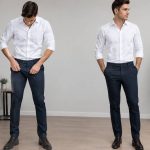






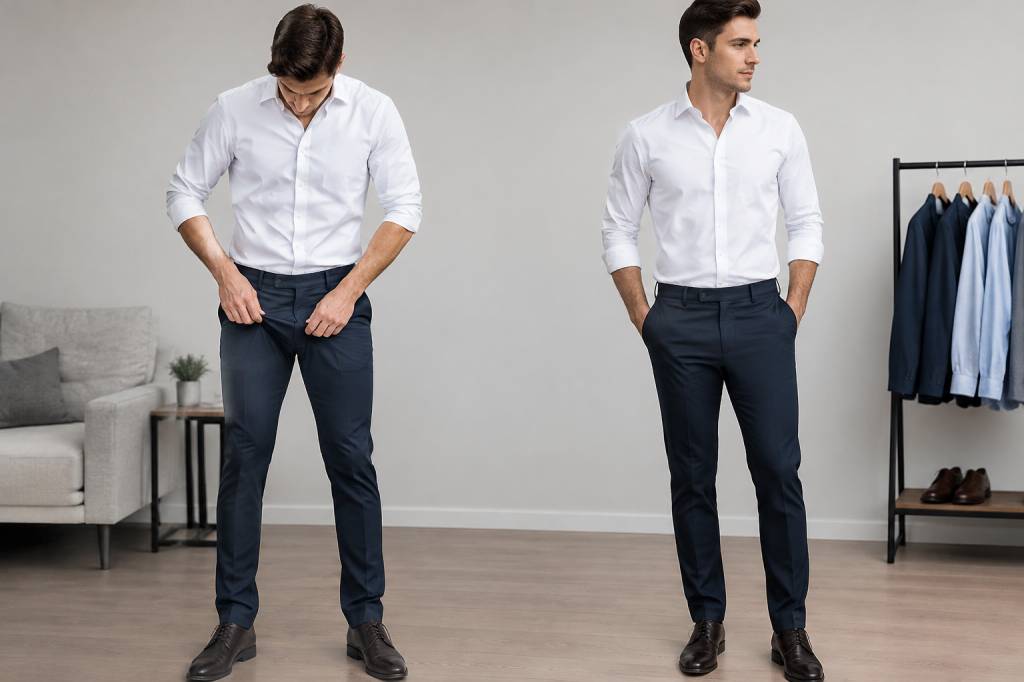
You put on a fresh pair of trousers, take a few steps, and immediately feel the fabric tugging where it shouldn’t. Sitting down makes it worse. The fit may look fine in the mirror, but the crotch feels tight, restrictive, or awkward with every move. It is a small clothing problem with a talent for ruining a good outfit.
The good news: tightness in the crotch usually has a clear cause, and there are practical ways to fix it. Sometimes the trousers are simply the wrong cut. Sometimes a tailor can make a useful adjustment. And sometimes the best solution is to choose a different size or style. Here’s how to work out what’s going on.
What does “tight in the crotch” actually mean?
The crotch area is where the front and back parts of your trousers meet, between the legs. It includes the rise—the distance from the waistband down to the crotch seam—and the fabric around the upper thighs. When this area is too tight, you might feel pulling, pinching, or pressure when walking, sitting, or bending.
Look at the trousers as well as how they feel. Horizontal wrinkles across the crotch can point to a lack of room. Diagonal lines pulling toward the thighs may indicate that the legs are too narrow. If the fabric is strained around the front, the rise or front fit may be the issue. One clue is not a perfect diagnosis, but the combination of movement and visible tension can tell you a lot.
Why are your trousers tight in the crotch?
The rise is too short
The rise is the measurement from the crotch seam to the top of the waistband. If it is too short for your body, the trousers may feel as though they are being pulled upward between your legs. You might also notice the waistband sliding down at the back or the fabric pulling when you sit.
People with longer torsos or a higher rise preference may find that low-rise trousers are especially uncomfortable. A pair can fit around the waist and still have too little room in the rise. Waist size alone does not tell the whole story.
The thighs are too narrow
Sometimes the rise is fine, but the upper legs are cut too slim. This is common with skinny and very slim-fit styles, especially if you have muscular thighs. The fabric has to stretch or pull when you walk, squat, or sit, creating discomfort near the crotch seam.
Here’s a useful test: stand with your feet shoulder-width apart, then take a few steps and sit down. If the tension is mostly around the upper thighs, try a roomier leg cut before assuming you need a different rise.
The trousers are too small overall
A tight waistband can pull the entire garment upward and inward, making the crotch feel restrictive too. The same can happen if the hips or seat are too snug. Even when you can fasten the trousers, that doesn’t necessarily mean they fit well. Clothes should let you move without requiring the optimism of a contortionist.
Weight changes, different brands, and changes in garment sizing can all affect fit. A size that worked in one cut or label may not work in another.
The cut does not suit your build
Two pairs marked with the same waist size can fit very differently. One may have a shallow rise and narrow thighs; another may offer more room through the seat and upper leg. Body shape matters, and so does the intended cut of the trousers.
If you have a fuller seat, strong thighs, or a longer torso, a standard slim fit may not leave enough space in the places you need it. That isn’t a flaw in your body. It simply means the pattern was designed with a different shape in mind.
The fabric has little stretch
Rigid denim, tightly woven cotton, and some dress trouser fabrics do not give much as you move. A pair that feels only slightly close while standing may become uncomfortable after an hour at your desk or a long walk across town. Fabrics with a small amount of elastane can provide extra ease, although stretch cannot rescue a garment that is fundamentally too small.
The trousers are sitting at the wrong height
Some trousers are designed to sit lower on the hips, while others are meant to rest closer to the natural waist. Wearing them higher or lower than intended can change how the crotch feels and how the legs hang. A belt that is too tight can also pull the waistband out of position.
How to tell which fit problem you have
Before buying a new pair or visiting a tailor, notice when the discomfort starts and where you feel it. Try the trousers with the waistband fastened comfortably—not cinched—and check the fit both standing and sitting.
-
If the waistband pulls down at the back or the crotch feels lifted, the rise may be too short.
-
If the fabric strains around your upper thighs when you walk, the leg may be too slim.
-
If the waistband, seat, and crotch all feel tight, try a larger size or a different cut.
-
If the fit is comfortable standing but restrictive when seated, look for more room through the rise, seat, or thighs.
-
If the trousers feel tight only when the waistband is fastened, check whether the waist is too small or the belt is pulling too firmly.
Movement is the real fitting room test. A mirror shows how trousers look; a chair tells you whether you can live in them.
How to fix trousers that are too tight in the crotch
Try a different cut or rise
If the trousers are uncomfortable from the first try-on, start by testing another fit. A straight or athletic cut often gives more room through the thighs than a slim cut. If you feel pulled upward, compare a regular-rise or higher-rise style with the pair you have now.
Do not focus only on the number on the label. Try a couple of sizes and cuts, then sit, walk, and bend in each pair. A comfortable fit that looks sharp is better than a fashionable fit that makes you plan your day around available chairs.
Choose a larger size when the whole garment is tight
If the waist, seat, and thighs all feel restricted, sizing up may solve the problem. A tailor can often take in a slightly loose waistband or adjust the leg, but adding fabric to a pair that is too small is much less straightforward. Start with enough room where you need it; tailoring can refine the fit afterward.
Ask a tailor about the seams
A tailor may be able to release some extra fabric from the crotch or inner-thigh seams, depending on how the trousers were made and how much seam allowance remains. The adjustment is usually limited. It cannot transform a very tight pair into a completely different pattern, and the result depends on the fabric and construction.
Bring the trousers to a fitting and explain exactly when they feel restrictive: walking, sitting, or both. A good tailor can inspect the seams and tell you what is realistic before doing the work. If the rise itself is too short, that may be harder to fix than a small amount of tightness through the thigh.
Check the waistband and belt
If you wear a belt, fasten it only enough to keep the trousers in place. Pulling the waist too tight can distort the fit and increase tension elsewhere. If the waistband itself is too small, a tailor may be able to let it out slightly, but there needs to be extra fabric available.
Be cautious with stretching tricks
You may come across advice to soak trousers, pull the fabric by hand, or wear them while damp. These methods are unpredictable. They may distort the shape, affect the colour, or stretch one area unevenly—and they will not add meaningful rise to a garment that was cut too short.
For jeans that are only mildly snug, wearing them around the house may soften the fabric a little. Treat this as a comfort adjustment, not a repair. If you feel pinching or strong pulling, stop trying to break them in and reassess the fit.
How to avoid the problem when shopping
When trying on trousers, check more than the waistband. Stand naturally, walk several steps, sit down, and lift each knee. The fabric should move with you without digging in or pulling hard at the seam. Look for visible strain across the crotch and upper thighs, not just a flattering silhouette from the front.
Pay attention to the rise measurement when it is available, and compare it with a pair you already find comfortable. If you shop online, check the brand’s size chart and return policy. Measurements vary between labels, so “my usual size” is a starting point—not a promise.
Also consider what you will wear with the trousers. A slim cut may look sleek with a lightweight shirt, but it can feel restrictive during a long day. For commuting, travel, or hours at a desk, a little extra room can make a noticeable difference without looking baggy.
Can the right trousers improve your overall look?
Absolutely. Good fit is one of the quiet foundations of a polished outfit. Trousers that pull at the crotch can bunch, ride up, or interrupt the clean line of your legs. When the rise and thigh fit are right, the fabric hangs more naturally and your outfit looks more intentional.
That matters whether you are wearing sneakers, loafers, or elevator shoes. With height-increasing footwear, trousers that are too long or too tight can distract from the balanced silhouette you are aiming for. Choose a leg opening and hem length that work with your shoes, then make sure you can move comfortably. Style should help you stand tall—not have you standing still.
When it’s time to replace the pair
Some trousers are not worth saving. If the crotch seam is under constant strain, the fabric is thinning, or the garment remains uncomfortable after a reasonable fitting, replacing it may be the smarter choice. A pair that looks good only when you are standing perfectly still is not doing its job.
Think of comfort as part of good style, not a compromise with it. The best trousers let you sit through dinner, walk across the city, and get on with your day without needing constant adjustment. Find the rise and cut that suit your build, and the rest of the outfit suddenly feels easier too.