






A good pair of chinos can take you from a relaxed Sunday lunch to a work meeting without making a fuss. That is part of their charm: they look polished, but they are usually easier to live with than dress trousers. Still, after a coffee spill or a long day on the town, one question tends to appear: can you dry clean chinos?
The short answer is yes, but you usually do not need to. Most chinos can be washed at home, provided you follow the care label and treat the fabric with a little respect. Here is how to decide what your pair needs, clean it safely, and keep it looking sharp for seasons to come.
Can You Dry Clean Chinos?
Yes. Chinos can be dry cleaned, and professional cleaning may be a sensible choice for certain fabrics, stubborn stains, or trousers with delicate construction. But many everyday chinos are made from cotton or a cotton blend and are designed to be machine-washed. For those, dry cleaning every time is often unnecessary.
The first rule is simple: check the care label. It is the small voice inside the waistband that knows more about your trousers than the most confident laundry-room guess. A label marked “dry clean only” should be taken seriously, especially if the chinos are lined, heavily tailored, or made with delicate materials. If it says “machine wash,” home laundering is generally fine.
Some labels say “dry clean recommended.” That is not always the same as “dry clean only.” It means the manufacturer considers professional cleaning a good option, but you should still check the fabric and any other care instructions before deciding. When in doubt, ask a cleaner rather than conducting an ambitious experiment with your favorite pair.
When Is Dry Cleaning the Better Choice?
Professional cleaning can be useful when your chinos need more than an ordinary wash. Consider taking them to a cleaner if they are made from wool, silk, or a delicate blend; have structured details that might lose their shape; or carry a stain that could get worse with water. Dry cleaning can also help when you want a crisp finish for a special occasion.
It is particularly worth considering for tailored chinos. A slim, carefully fitted pair can look wonderfully neat, but repeated rough washing and hot drying may affect its shape. If the trousers have a sharp crease, a lining, or a more formal construction, professional cleaning may help preserve that refined appearance.
Before handing them over, point out any stains and explain what caused them. Oil, ink, wine, and grass do not all respond to the same treatment. A cleaner who knows what they are facing has a better chance of removing the mark without damaging the fabric.
Dry cleaning is not a magic reset button, though. It uses chemical solvents rather than a normal water wash, and it can be harder on some fabrics if done too often. Use it when it makes sense, not automatically after every wear.
How to Wash Everyday Chinos at Home
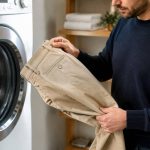
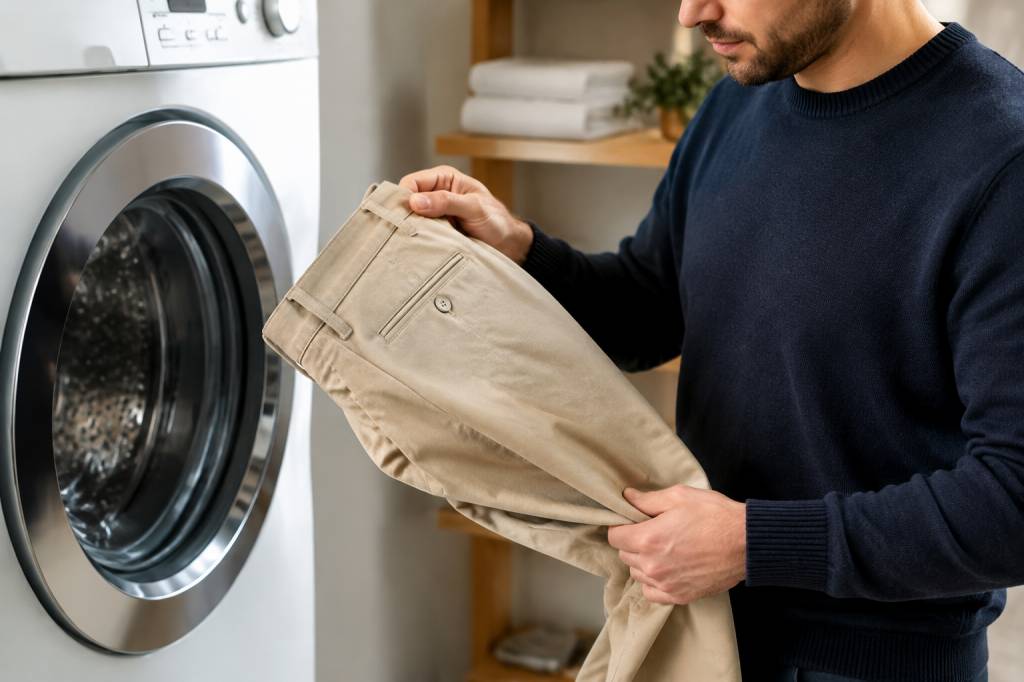
If the care label allows machine washing, a few simple habits can make a big difference. A gentle wash protects the color and fibers, while a little preparation helps prevent a small stain from becoming a permanent souvenir.
-
Check the pockets and remove belts, keys, and anything else that might damage the fabric.
-
Close zippers and fasten buttons to help the trousers keep their shape.
-
Turn the chinos inside out to reduce fading and surface friction.
-
Wash them with similar colors, especially the first time, in case the dye runs.
-
Choose cold water or the temperature recommended on the care label, with a gentle or normal cycle as appropriate.
-
Use a mild detergent and avoid adding too much. More soap does not mean more cleanliness; it can leave residue behind.
Try not to overload the washing machine. Chinos need room to move, and a packed drum can leave them poorly rinsed or unnecessarily creased. If you are washing a new, dark pair, washing it separately the first time is a wise precaution. Dark navy trousers and your favorite white shirt should not be introduced under those circumstances.
For a particularly delicate pair, hand washing may be gentler. Use cool water and a small amount of mild detergent, move the fabric around carefully, then rinse thoroughly. Avoid twisting the trousers like a wet towel; that can strain the seams and distort the shape.
How to Treat Stains Without Making Them Worse
Act promptly, but do not panic. Blot a fresh spill with a clean cloth rather than rubbing it. Rubbing can push the stain deeper into the fibers and spread it across a larger area—an impressive achievement, but not the kind you want from your laundry routine.
For ordinary dirt or food marks, dab the area with cool water and a little mild detergent, then rinse gently. Always test a stain remover on an inside seam or another hidden area first. Some products can lighten colored fabric, particularly on dark or richly dyed chinos.
Grease stains may need a product designed for oily marks. Follow its instructions carefully, and do not put the trousers in a hot dryer while the stain is still visible. Heat can set a stain, making removal much more difficult. If a stain persists after gentle treatment, take the chinos to a professional and tell them what caused it.
Drying Chinos the Right Way
Heat is one of the biggest risks to cotton chinos. A hot dryer can cause shrinkage, weaken fibers, and make the fabric feel less comfortable. If the care label permits tumble drying, use a low-heat setting and remove the trousers while they are still slightly damp.
Air drying is often the safer option. Smooth the chinos by hand, reshape the waistband and legs, then hang them from the waistband or lay them flat on a clean drying rack. Keep them away from direct, strong sunlight, which can fade the color over time.
Give the legs and seams a gentle tug while the fabric is damp to help them fall neatly. This small step can save you from wrestling with a stiff pair later. It also makes ironing easier, if ironing is needed at all.
Pressing and Ironing for a Clean Finish
Check the care label before reaching for the iron. Most cotton chinos can be pressed, but the recommended heat can vary with the fabric blend. Use the appropriate setting, and iron the trousers while they are slightly damp or with steam if the label allows it.
Turn the chinos inside out if you are concerned about shine, particularly on darker colors. Press rather than dragging the iron back and forth. If you want a crease, line up the seams carefully before pressing; if not, smooth the legs without creating one. There is no need to turn every pair of casual chinos into formal uniform.
A steamer can be a convenient alternative for light wrinkles. Hang the trousers securely and keep the steamer moving. It freshens the look without the direct pressure of an iron, though it will not remove every deep crease.
How Often Should You Clean Chinos?
Chinos do not necessarily need washing after every wear. If you wore them for a few hours in a clean office, they may only need airing. If you spent the afternoon walking through a crowded market on a warm day, they might need more attention. Use your eyes and nose, and be honest with both.
Washing less often helps preserve color and fabric. Between wears, hang the trousers somewhere ventilated and spot-clean small marks. If they need freshening, a short airing can be enough. Avoid excessive perfume or fabric spray to disguise odors; that tends to create a new scent rather than solve the old one.
Of course, practical limits apply. If the chinos are visibly dirty or smell unpleasant, it is time to wash them. The goal is not to win a contest for longest-worn trousers. It is to care for them sensibly.
Keeping the Fit and Color Looking Their Best
Good care is not only about cleanliness. It is also about how the trousers sit and how they work with the rest of your outfit. Shrinkage can turn a comfortable hem into an awkward one, while fading can make a once-versatile pair look tired.
To help prevent shrinkage, avoid hot water and high dryer temperatures. To limit fading, turn the trousers inside out, use a gentle detergent, and wash dark colors together. If your chinos have a little stretch, avoid high heat in particular, as it can damage the elastic fibers that help them keep their fit.
Fit matters from the waist to the hem. Chinos that sit neatly and break cleanly at the shoe tend to create a more balanced silhouette. If you like a little extra height, a well-proportioned pair of elevator shoes can work naturally with a slim or straight-leg chino. The key is a clean hem and a shoe shape that does not make the trouser leg bunch awkwardly. A sharp outfit is built from details, not from shouting about any one of them.
Common Chino-Care Mistakes to Avoid
-
Ignoring the care label because another pair survived the same wash.
-
Using hot water or high heat without checking whether the fabric can handle it.
-
Rubbing a stain aggressively instead of blotting and treating it gently.
-
Putting stained chinos in the dryer before checking whether the mark has disappeared.
-
Using bleach on colored fabric unless the label specifically permits it.
-
Dry cleaning every pair automatically, even when a simple home wash would do.
A Simple Rule for Better-Looking Chinos
So, can you dry clean chinos? Absolutely. But for most cotton pairs, it is an option rather than a requirement. Follow the care label, wash gently when home laundering is allowed, treat stains promptly, and keep heat under control.
Think of chinos as dependable companions: they do not demand elaborate rituals, just a little attention. Care for them well and they will reward you with years of easy, polished outfits—whether the day calls for a casual stroll, a dinner out, or a confident step into the room.