







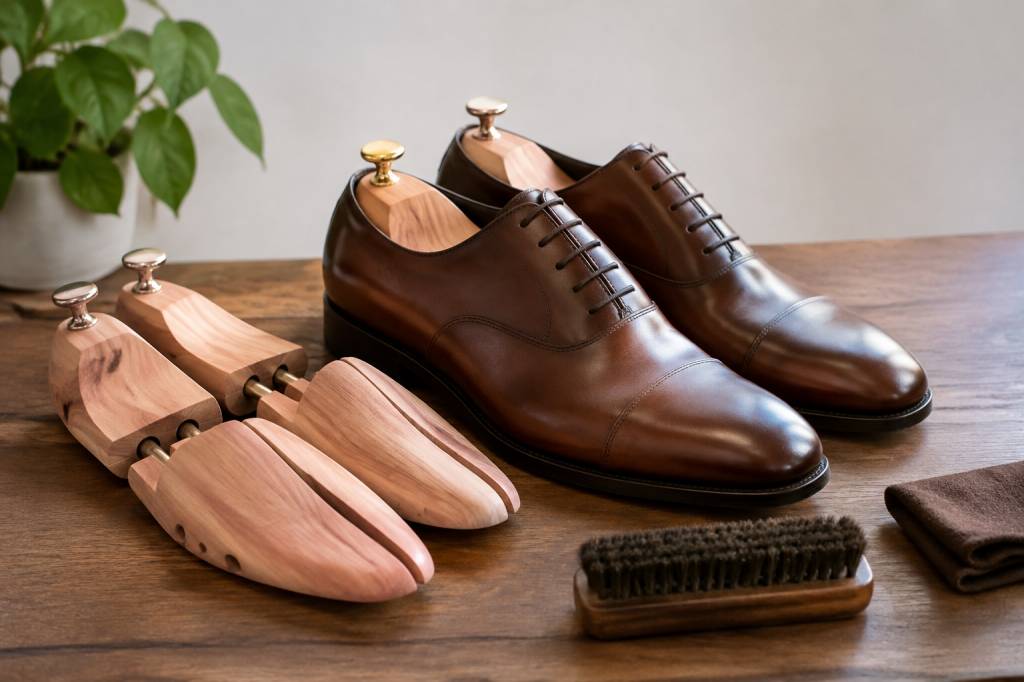
There is a small ritual I like after a long day in the city: I take off my shoes, set them neatly by the door, and let them breathe. It sounds simple, but leather has a memory. Give it a little care, and it will hold its shape, look better, and stay comfortable for far longer. One of the easiest ways to help is with a shoe tree.
Are shoe trees truly necessary, or are they just another handsome object taking up space in the closet? The honest answer: not every pair needs one, but quality leather shoes can benefit a great deal. Here’s what shoe trees do, how to choose them, and how to use them without turning shoe care into a second job.
What Is a Shoe Tree?
A shoe tree is an insert shaped roughly like the inside of a shoe. Most have a toe section and a heel section, connected by a spring, hinge, or adjustable mechanism. Once placed inside a shoe, the tree helps support its shape while it rests.
Shoe trees are most commonly made from wood or plastic. Wooden versions, especially cedar, are popular because they can absorb some moisture and help reduce odors. Plastic trees are lighter and often less expensive, making them useful for travel or occasional wear.
Think of a shoe tree as a gentle stand-in for your foot. It supports the shoe after you take it off, when the leather is most likely to soften and crease. It is not magic, and it will not make an old, misshapen shoe new again—but it can help a good pair age with dignity.
Are Shoe Trees Necessary?
For sneakers, canvas shoes, and inexpensive footwear, shoe trees are usually optional. Those shoes are designed to be more forgiving, and many do not need the same careful shaping as leather dress shoes.
For leather footwear, shoe trees are a worthwhile habit. This includes dress shoes, leather loafers, and many leather boots. The more often you wear a pair, the more useful it is to give it support between wears. If you have invested in well-made shoes, a shoe tree is a modest way to protect that investment.
They are especially helpful for shoes you wear to work, weddings, or other occasions when you want your outfit to look sharp from head to toe. A polished pair can complete a look beautifully; a pair with collapsed toes and deep, neglected creases can distract from even the finest suit. Style has a long memory, after all.
The Main Benefits of Using Shoe Trees
- They help preserve the shoe’s shape. A well-fitted shoe tree supports the toe box and helps prevent the front of the shoe from flattening or folding in on itself during storage.
- They can reduce the appearance of creases. Leather naturally creases as you walk. A shoe tree gently fills the shoe and helps smooth the leather as it rests. It will not erase every crease, nor should it: a few natural lines are part of a leather shoe’s character.
- Wood can help manage moisture. Feet perspire, and the inside of a shoe can stay damp after a full day of wear. Cedar may absorb some of that moisture and help keep the interior fresher. It is not a replacement for letting shoes air out.
- They can help with odors. A dry, ventilated shoe is generally less welcoming to unpleasant smells. Cedar’s aroma is a bonus, though it should not be treated as a cure for persistent odor or a hygiene issue.
- They encourage better shoe-care habits. Putting in a shoe tree is a simple signal that your shoes deserve a little attention. Add a quick wipe and a day of rest, and you already have a sensible care routine.
Here’s a small lesson I learned after wearing the same leather loafers on back-to-back days during a hectic week. By Friday, they felt less comfortable and looked tired around the toes. Giving them a full day to dry and rest made a noticeable difference. No grand intervention—just patience and a better routine.
Choosing the Right Shoe Tree
The best shoe tree is one that fits your shoe well. It should support the inside without stretching the leather or forcing the shoe into a shape it was never meant to have.
Look for a tree with a toe shape close to the shape of your footwear. A narrow dress shoe needs a different profile from a wide casual shoe. Some models are adjustable, which makes it easier to get a comfortable fit across different pairs.
For everyday leather shoes, cedar is a popular choice because it is sturdy and can absorb some moisture. Beech and other untreated woods can also work well. Plastic trees are light, easy to clean, and convenient for luggage, although they generally do not offer the same moisture-absorbing qualities as wood.
Spring-loaded designs are simple to use, but they should not put excessive pressure on the shoe. A split-toe or adjustable model often gives you more control over the fit. If you try a shoe tree and have to force it into place, stop. The shoe should not feel as though it is being challenged to a wrestling match.
If you are buying your first pair, take the shoes with you when possible or check the maker’s sizing guide. Shoe-tree sizing is not always identical to shoe sizing, and foot width and shoe shape matter too.
How to Use Shoe Trees Properly
Put the shoe tree in soon after taking off your shoes, while the leather is still warm from wear and the shoe is beginning to relax. Do not wait several days until the toe has already collapsed and expect the tree to perform miracles.
Insert the toe section first, then position the heel section carefully. The tree should sit securely, filling the shoe without pushing hard against the toe or heel. If the leather looks stretched or the shoe’s seams seem under tension, choose a smaller or more suitable model.
Leave the shoe trees in while the shoes rest and dry. If you have worn the pair for a full day, allow it to air out for around a day before wearing it again, when your schedule allows. Shoe trees help with shape and moisture, but they do not make a damp shoe instantly ready for tomorrow morning.
For shoes with laces, loosen them before inserting the tree. This makes the process easier and prevents unnecessary strain on the eyelets and upper. When removing the tree, pull it out gently rather than yanking on the heel of the shoe.
Common Shoe Tree Mistakes to Avoid
- Choosing a tree that is too large. Excessive pressure can stretch the upper, strain seams, or alter the fit. Support should feel gentle, not forceful.
- Using a wet or dirty shoe tree. Wipe it clean when needed and let it dry fully. A damp insert does not help a damp shoe.
- Expecting it to fix deep damage. Shoe trees help maintain shape; they cannot reverse severe creasing, cracked leather, or a shoe that has been stored badly for years.
- Putting shoes away while they are soaked. If your shoes are very wet, remove surface water with a cloth, let them dry naturally in a ventilated place, and keep them away from radiators and direct heat. Once they are no longer wet, use a shoe tree to support their shape.
- Leaving the same pair on rotation every day. Even with shoe trees, leather shoes benefit from rest. Alternating pairs gives them more time to dry and recover between wears.
Do Shoe Trees Work for Elevator Shoes?
They can, provided the shoe tree fits the shoe’s interior properly. Elevator shoes are designed with an internal height-increasing structure, so the shape and available space may differ from those of a standard dress shoe. Avoid forcing in a bulky or overly long tree, especially if it presses against the insole or hidden lift.
Choose a slim, well-fitting model and follow the manufacturer’s care guidance. If the shoe tree makes the shoe feel distorted or places pressure on the internal construction, do not use it in that pair. The goal is to preserve the shoe, not to challenge its engineering.
This is also a good reminder that height-enhancing footwear deserves the same thoughtful care as any other quality shoe. A clean, well-maintained pair looks more refined and helps you feel composed—whether you are heading to a meeting or arriving at dinner with the confidence of a man who knows his shoes are in excellent shape.
Simple Care Tips for Longer-Lasting Shoes
A shoe tree works best as part of a small, consistent routine. After wearing your shoes, brush away dust and wipe off light marks with a soft cloth. Use a leather conditioner or polish when appropriate for the shoe’s finish, and test unfamiliar products on a discreet area first.
Store leather shoes somewhere cool and dry, away from direct sunlight and heaters. If they get wet, let them dry slowly at room temperature. Newspaper can help absorb excess moisture in a pinch, but avoid packing the shoe so tightly that it loses its shape. Once the shoe is mostly dry, a correctly sized tree can provide gentle support.
Keep cedar shoe trees fresh by letting them air occasionally. If their scent fades, a light sanding may help restore the aroma, but check the maker’s instructions before doing so. There is no need to perfume your closet like a forest retreat; a clean, dry tree is already doing useful work.
So, Should You Buy a Pair?
If you own leather dress shoes or wear the same leather pair frequently, a good shoe tree is a smart purchase. Cedar is a dependable everyday choice, while plastic can be useful for travel or shoes that need only light shaping. Make sure the fit is gentle, and give your shoes time to rest between wears.
If most of your footwear is made from canvas or flexible synthetic materials, you may not need shoe trees at all. But for a beloved pair of leather shoes—the ones that make you stand a little taller when you catch your reflection in a shop window—a simple wooden insert can help keep them looking sharp for years.
Good style is rarely about one dramatic gesture. More often, it is a collection of small choices: a jacket that fits, shoes that are cared for, and the good sense to let leather rest after a long day. A shoe tree may be humble, but sometimes the quietest member of the wardrobe is the one doing the most work.