






Can exercise make you taller? It is one of those questions that has followed men from school lockers to tailor shops, usually whispered just before a photograph or a first date. The honest answer is simple: once the growth plates have closed, no workout can lengthen your adult bones. However, the right exercises can help you stand straighter, move better, and reveal the height you already have. In some cases, improved posture can make you look noticeably taller—without any mysterious stretching machine or heroic battle with gravity.
For children and teenagers, regular physical activity supports healthy bones, muscles, balance, and overall development. Genetics and nutrition remain the major influences on final height, but movement gives the body an excellent environment in which to grow. For adults, the goal changes: think less “adding inches to the skeleton” and more “removing the slouch that has been stealing them.”
What exercise can—and cannot—do for height
Height comes primarily from genetics, nutrition, hormones, sleep, and the growth plates at the ends of long bones. These plates gradually close during adolescence. After that process is complete, exercises such as hanging, swimming, or yoga cannot permanently lengthen the bones.
That does not make exercise useless for height. Far from it. Strong back muscles, flexible hips, a mobile spine, and a stable core can improve your posture dramatically. Someone who spends ten hours a day leaning toward a laptop may appear shorter simply because the head projects forward, the shoulders round, and the pelvis tilts out of position.
Posture is not a magic trick, but it is powerful. Stand with the crown of your head lifted, your chest relaxed, and your shoulders positioned naturally, and your silhouette becomes longer and more confident. Your trousers may not need altering, but your mirror might offer a more generous opinion.
Stretching exercises for a taller-looking posture
Stretching does not extend adult bones, but it can release stiffness and help your joints return to a healthier position. Perform these movements slowly and never force a stretch into pain. A little daily consistency will take you further than one dramatic session followed by six days of neglect.
- Wall chest stretch: Stand beside a wall with one forearm resting against it and the elbow approximately at shoulder height. Turn your torso gently away until you feel a stretch across the chest and front of the shoulder. Hold for 20 to 30 seconds on each side and repeat twice.
- Cat-cow mobility: Begin on your hands and knees. Slowly round your back while exhaling, then move into a gentle arch as you inhale. Keep the movement smooth rather than exaggerated. Complete eight to ten repetitions.
- Child’s pose: From a kneeling position, sit your hips toward your heels and extend your arms forward. Let your back relax while breathing steadily for 30 to 45 seconds. If your knees or hips feel uncomfortable, place a cushion beneath you.
- Hip-flexor stretch: Kneel with one foot forward and gently shift your hips toward that front foot. Keep your torso upright and avoid arching your lower back. Hold for 20 to 30 seconds per side. Tight hip flexors are common among people who sit for long periods.
- Standing side reach: Stand tall, raise one arm overhead, and lean gently to the opposite side without twisting forward. Hold for 15 to 20 seconds, then switch sides. This opens the sides of the torso and encourages a longer, more relaxed posture.
Try this sequence after work or before bed. The objective is not to fold yourself into a pretzel worthy of an Italian restaurant window display. The objective is to move with less tension and more control.
Strength exercises that support better posture
Flexibility alone is not enough. If your postural muscles are weak, your body will usually return to its familiar slouch. Strength training helps you maintain an upright position without constantly reminding yourself to “sit straight.”
- Glute bridges: Lie on your back with your knees bent and feet flat on the floor. Press through your feet, lift your hips, squeeze your glutes gently, and lower with control. Perform two or three sets of 12 to 15 repetitions. Strong glutes help stabilise the pelvis and support the lower back.
- Bird-dog: Start on hands and knees. Extend your right arm and left leg until they are roughly level with your body. Pause briefly, return to the starting position, and alternate sides. Complete eight to ten repetitions per side. Keep your hips steady—no need to perform an enthusiastic balancing act.
- Plank: Support yourself on your forearms and toes, or use your knees for an easier version. Keep your body in a straight line and brace your abdomen gently. Hold for 20 to 40 seconds, repeating two or three times. A strong core makes upright posture feel more natural.
- Resistance-band rows: Attach a resistance band securely at chest height. Pull the handles toward your ribs while drawing your shoulder blades gently together. Return slowly. Complete two or three sets of 12 repetitions. This movement strengthens the upper back, which often works overtime when the shoulders are rounded.
- Wall angels: Stand with your back against a wall, keeping the ribs relaxed. Bend your arms like a goalpost and slowly slide them upward and downward. Move only within a pain-free range. Perform eight to twelve repetitions.
These exercises target the muscles that keep your head, shoulders, spine, and pelvis aligned. They will not transform a man of average height into a basketball centre overnight, but they can make his presence considerably more impressive.
The best daily routine for standing taller
A useful posture routine does not need to occupy half your morning. Ten to fifteen minutes, performed consistently, can be enough to create noticeable improvements in comfort and body awareness.
- Begin with five slow cat-cow repetitions to mobilise the spine.
- Perform a chest stretch on both sides for 20 to 30 seconds.
- Complete ten glute bridges.
- Perform eight bird-dogs on each side.
- Hold a plank for 20 to 30 seconds, twice.
- Finish with a hip-flexor stretch on each side.
Do this routine four or five days per week. On other days, a brisk walk, swimming session, or light mobility practice can keep the body active without overwhelming it. If you are new to exercise, begin gently and add repetitions gradually. The most effective programme is the one you can still enjoy three months from now.
Can hanging make you taller?
Hanging from a pull-up bar can create a pleasant feeling of length through the shoulders and spine. It may temporarily reduce compression in the spine, particularly after a long day of sitting. That is why some people feel slightly taller in the morning than in the evening: the discs between the vertebrae naturally experience changes in fluid and pressure throughout the day.
Still, hanging does not permanently increase adult height. Think of it as a mobility exercise, not a height-growing ceremony. If you have healthy shoulders, try two or three gentle hangs of 10 to 20 seconds. Keep your feet lightly supported if a full hang feels too intense, and stop immediately if you experience shoulder, elbow, or back pain.
Yoga and Pilates for posture
Yoga and Pilates can be excellent choices for anyone who wants to look taller and move with greater ease. Their benefits come from improving spinal mobility, core strength, breathing, balance, and body awareness—not from lengthening the bones.
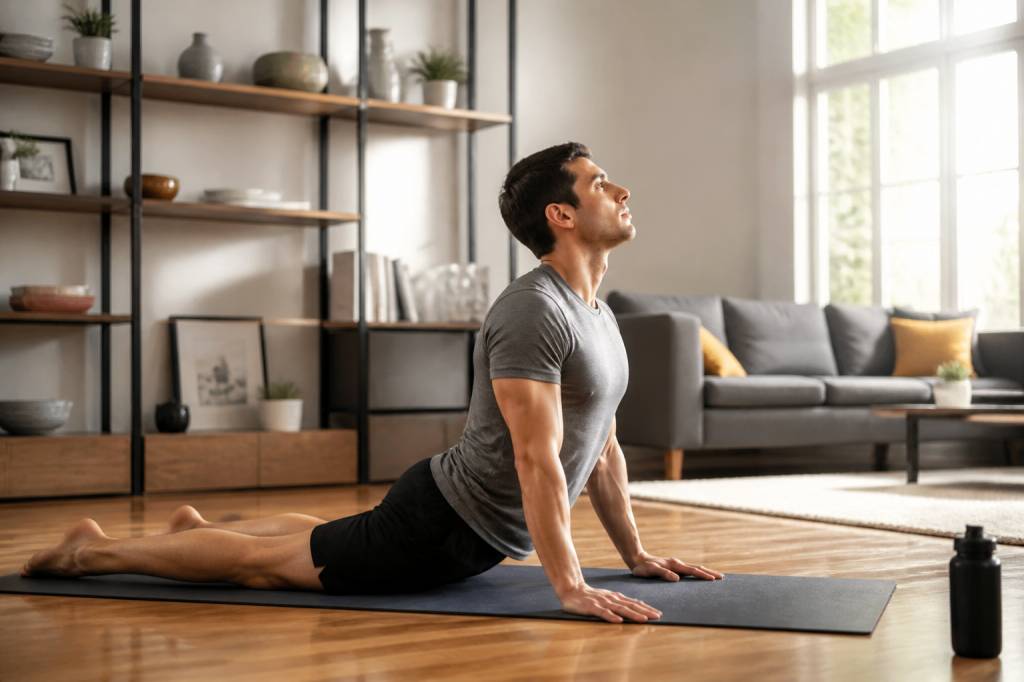
Useful yoga movements include mountain pose, cobra or sphinx pose, downward-facing dog, and a gentle low lunge. Pilates exercises such as the hundred, swimming, pelvic curls, and shoulder bridge can strengthen the core and improve control of the pelvis.
Mountain pose is particularly simple and surprisingly revealing. Stand with your feet grounded, knees relaxed, pelvis neutral, shoulders down, and the crown of your head reaching upward. Breathe slowly for five breaths. Many people discover that “standing naturally” had quietly become a synonym for leaning forward. A charming little betrayal by modern life.
Exercises for teenagers who are still growing
Young people should be encouraged to exercise for health, strength, coordination, and confidence. Activities such as running, jumping, football, basketball, swimming, climbing, dance, and strength training performed with proper technique can support strong bones and muscles.
Strength training does not automatically stunt growth when it is appropriately supervised. The important factors are correct form, age-appropriate resistance, gradual progression, and adult guidance. Teenagers should not chase maximum lifts or copy advanced programmes designed for professional athletes.
Sleep and nutrition matter just as much. Growing bodies need adequate protein, calcium, vitamin D, fruits, vegetables, and sufficient total energy. A teenager who trains intensely while sleeping four hours and skipping meals is not following a secret height strategy; he is simply making recovery more difficult.
Posture habits that quietly steal height
Your exercise routine will work better when your everyday habits stop undoing it. Consider the positions you repeat for hours, because the body is an excellent student of repetition.
- Raise your computer screen so the top is close to eye level.
- Keep both feet supported when sitting rather than folding one leg beneath you.
- Hold your phone closer to eye level instead of dropping your head toward your chest.
- Stand up and walk for two or three minutes every 30 to 60 minutes.
- Carry bags evenly or use a well-fitted backpack with both straps.
- Choose a mattress and pillow that allow your neck and spine to rest comfortably.
Imagine a string gently lifting the crown of your head. This cue is often more useful than forcing the chest forward. Good posture should feel tall but relaxed, not stiff, military, or as if you are waiting for a waiter to bring an enormous bill.
When to seek professional advice
Persistent back pain, numbness, weakness, dizziness, or pain during exercise deserves attention from a qualified healthcare professional. A physiotherapist can assess spinal alignment, muscle imbalances, mobility restrictions, and movement patterns, then create a programme suited to your body.
Parents should speak with a doctor if a child’s growth appears significantly slower than expected, stops suddenly, or differs greatly from family patterns. Height concerns can sometimes involve nutrition, hormones, or other health factors, and online exercises cannot replace proper medical evaluation.
How to look taller beyond exercise
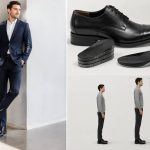
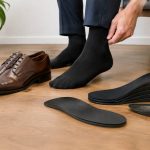
Posture is only one part of visual height. Clothing can reinforce the effect. Well-fitted trousers with a clean line, monochromatic outfits, subtle vertical patterns, and shoes with discreet internal lifts can create a more elongated silhouette. Elevator shoes are especially useful when you want additional height while keeping the appearance refined and natural.
The key is proportion. Oversized clothing can hide the shape of the body, while excessively tight pieces create a different kind of drama—usually one best reserved for opera. Choose garments that follow your frame, keep your posture open, and let your shoes complement rather than dominate the outfit.
Exercise cannot rewrite your genetic blueprint, but it can help you stand at your full potential. Stretch the areas that restrict you, strengthen the muscles that support you, move regularly, sleep well, and treat posture as a daily skill rather than a once-a-week punishment. When your body feels balanced, your clothes fit better, your walk becomes more assured, and you may discover that looking taller begins with something wonderfully simple: standing like you belong in the room.