



There is a small pleasure in putting on a pair of trousers that simply feels right. The fabric sits smoothly, your legs can move freely, and nothing clings when the day gets warm. Often, the secret is not a clever cut or an expensive label. It is the lining—or, more precisely, how much of it there is.
Half-lined pants offer a useful middle ground between fully lined trousers and unlined ones. They can make a pair of wool or dress trousers more comfortable without adding quite as much warmth or weight as a full lining. But what does “half-lined” mean in practice, and when should you choose it? Let’s take a closer look.
What are half-lined pants?
Half-lined pants are trousers with lining in only part of the garment, rather than from the waistband all the way down to the hem. In many styles, the lining covers the upper section of the legs and stops around the knee. It may also cover the front of the trousers while leaving the back unlined.
The exact construction can vary by maker or tailor, so “half-lined” does not always describe one identical arrangement. If you are ordering custom trousers, ask where the lining begins and ends. A tailor can show you a sample or explain how the lining will sit inside the garment.
The lining is a separate layer of lightweight fabric attached inside the trousers. It is not there to make the pants feel padded. Its job is to help the outer fabric glide over your skin or underlayers, reduce friction, and make the garment more comfortable to wear. Think of it as a discreet backstage assistant: you rarely notice it when it does its job well, but you would miss it if it were not there.
Why do trousers have a lining?
Some trouser fabrics feel smooth against the skin; others can be scratchy, clingy, or prone to catching on socks and leg hair. A lining creates a barrier between the outer cloth and your legs. It can also help trousers hang neatly, especially when the fabric is lightweight or has a textured weave.
In dress pants, lining may help the fabric move more easily as you walk or sit. It can reduce the feeling of wool rubbing against your skin and can make the trousers easier to put on over underwear or long socks. The difference may seem modest in a fitting room. After a full day of meetings, a commute, and an enthusiastic dash for the train, it can feel considerably less modest.
A lining can also provide extra coverage. With some thin or light-colored fabrics, it helps prevent pockets, underwear, or the outline of your legs from showing through. How much coverage it provides depends on the lining’s color, weight, and placement. It is not a substitute for choosing suitable fabric, but it can be a helpful part of the design.
Half-lined, fully lined, or unlined?
Each option has its place. Unlined trousers have no separate lining layer. They feel light and breathable, making them appealing in hot weather, but the outer fabric sits directly against your legs. Depending on the material, that may feel wonderfully easy or mildly irritating.
Fully lined trousers have lining through most or all of the legs. They can feel smooth and substantial, and they are often comfortable with fabrics that would otherwise feel rough. The trade-off is that extra fabric can make the trousers warmer and sometimes heavier.
Half-lined trousers fall between these two choices. They offer a smoother feel where it is often most useful while leaving part of the leg unlined for less bulk and more airflow. They are a practical compromise, not a magic solution to every climate or fabric problem.
- Unlined: Light and airy, but the outer cloth touches your legs.
- Half-lined: A balance of comfort, coverage, and reduced bulk.
- Fully lined: Smooth and protective, but potentially warmer.
When should you wear half-lined pants?
Half-lined trousers are especially useful when you want the polish of dress pants without the heavier feel of a full lining. They work well for office wear, dinners, weddings, and other occasions where you want to look put together but still need to move comfortably.
They can be a smart choice in mild or changeable weather. Imagine a spring morning that begins cool, turns pleasantly warm at lunchtime, and ends with a chilly walk home. A half lining can provide a little comfort against the fabric without making the trousers feel as enclosed as a fully lined pair might.
They are also worth considering when the outer material is slightly rough or prone to clinging. A half lining can make wool trousers more comfortable for someone who finds unlined wool irritating, while avoiding some of the warmth of a full lining. This is particularly helpful if you spend much of the day indoors.
For travel, the right answer depends on your plans and destination. Half-lined trousers can be comfortable for a long day of walking or sitting, but lining alone does not make a pair suitable for every journey. Choose a breathable outer fabric, a comfortable fit, and a weight appropriate to the climate. If you are heading to a tropical city in July, the fabric choice matters more than the romance of the word “lining.”
Are half-lined pants good for summer?
They can be, but the phrase “half-lined” should not be mistaken for “cool in every situation.” A half lining generally adds less warmth than a full one, yet the fabric, weave, color, fit, and weather all matter. Lightweight linen trousers with a partial lining may feel breezy. Heavy wool trousers with the same lining arrangement will not suddenly become beachwear.
For hot weather, look for lightweight, breathable materials such as linen, cotton, or an open-weave wool. A relaxed fit can help air circulate. If you are especially sensitive to heat, unlined trousers may be more comfortable, provided the fabric feels good against your skin and offers enough coverage.
One useful test is to try the trousers on and sit down. Do they feel comfortable at the knee and thigh? Does the fabric cling or pull when you stand? A dressing room cannot reproduce a whole summer afternoon, but it can reveal whether the basic construction suits you.
How half lining affects fit and movement
A lining should not make trousers feel tight. If the legs pull when you sit, the waistband digs in, or the fabric catches around your knees, the problem may be the cut or size rather than the lining itself. A well-made lining should lie smoothly and move with the garment.
Pay attention to where the lining ends. A lining that stops around the knee should finish neatly and should not create a noticeable ridge through the outer cloth. When walking, it should not ride up, twist, or bunch. If it does, ask a tailor to inspect the construction; the issue may be a poor fit, an awkward lining length, or simply a garment that needs adjustment.
Also check the rise and thigh. A pair of trousers can look sharp while standing still and become uncomfortable the moment you sit. Take a few steps, bend slightly, and sit down before deciding. Style is important, naturally, but trousers that demand you remain motionless are better suited to a shop window than a real life.
Choosing a fabric and lining
The outer fabric should guide your decision. Smooth, lightweight cloth may not need lining at all. Coarser wool, certain textured weaves, or fabrics that tend to cling can benefit from it. If you are choosing custom trousers, tell your tailor how and when you plan to wear them. “Mostly at the office, including a warm commute” is more useful than “something nice.”
Lining fabrics are often chosen for their lightness and smooth feel. Common options include polyester, viscose, and cupro. Their feel and breathability vary, so it is sensible to ask what the tailor uses and, if possible, touch a sample. A lining should complement the trousers, not make them feel like a portable sauna.
Color is a practical detail too. A lining close in shade to the outer fabric is less likely to show through a light or thin cloth. With custom trousers, you may have the option of choosing a contrasting lining for a small flash of personality. It is a private detail, like a good watch hidden under a cuff: no one needs to see it for you to enjoy it.
How to style half-lined trousers
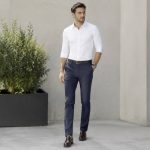
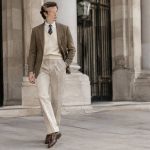
Half-lined pants do not require a special styling formula. Wear them as you would other well-fitting trousers. For a business-casual outfit, try wool trousers with a button-down shirt, a lightweight knit, or an unstructured blazer. For a relaxed weekend look, cotton trousers can work with a polo shirt or a simple overshirt.
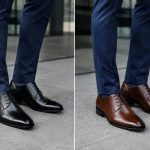
Shoes help set the mood. Loafers or clean leather sneakers can make tailored trousers feel less formal, while derbies or dress shoes bring a sharper finish. Pay attention to the hem: trousers should fall cleanly over the shoe without excessive bunching. A neat line from waist to hem can make the whole outfit look more intentional—and a little more elegant, without requiring a dramatic speech or a dramatic heel.
For a taller-looking silhouette, keep the outfit visually streamlined. A similar color family from top to bottom can create a longer, cleaner line, and a good trouser fit prevents excess fabric from interrupting it. The lining is hidden, of course, but comfort matters: when your trousers move well, you tend to stand and walk with more ease. Good style often begins with details nobody else can see.
Care tips for lined trousers
Always check the care label before washing or pressing. The outer fabric and lining may respond differently to heat or moisture, which is one reason many tailored trousers are best handled by a professional cleaner. If the care instructions allow home care, follow them carefully and avoid aggressive heat.
After wearing, let trousers air out before putting them away. Use a proper trouser hanger and avoid leaving them crumpled in a bag overnight. If the lining becomes twisted or starts to pull away at a seam, do not keep tugging at it. A tailor can usually assess whether a small repair will restore the trousers.
Between cleanings, spot-clean minor marks when appropriate and brush wool gently with a clothes brush. Frequent cleaning can wear down both fabric and lining, so care for them thoughtfully rather than sending them to the cleaners after every brief appearance.
What to check before you buy
Whether you are shopping off the rack or ordering a custom pair, take a moment to inspect the details. Ask where the lining ends, feel the fabric, and try the trousers while sitting as well as standing. A few practical questions can save you from discovering a fit problem halfway through an important dinner.
- Does the lining feel smooth and comfortable against your legs?
- Does it stop neatly, without a ridge or visible bunching?
- Are the trousers comfortable when you walk, bend, and sit?
- Is the outer fabric appropriate for the weather and occasion?
- Does the care label match the amount of maintenance you are willing to give them?
Half-lined pants are a thoughtful choice when you want some of the comfort and coverage of lining without the full weight of a lined garment. They are particularly useful for dress trousers, mild weather, and fabrics that feel better with a smooth layer between cloth and skin. The best pair is not necessarily the most elaborate one; it is the pair that feels comfortable, hangs well, and fits naturally into your day.