






Can stretching exercises make you taller? It is a wonderfully tempting question. Spend a few minutes stretching each morning, improve your posture, and perhaps discover a few extra inches hiding inside your body. If only height came with an instruction manual—and a particularly enthusiastic yoga mat.
The truth is a little more nuanced. Stretching cannot lengthen the bones of a fully grown adult, so it does not permanently increase skeletal height after the growth plates have closed. However, stretching can help you stand straighter, move more freely and appear taller. It may also temporarily reduce the compression that your spine experiences during the day.
In other words, stretching will not transform a 5’8″ man into a 6’2″ basketball player overnight. But it can help you make the most of the height you already have, which is often more powerful than people realise.
Does stretching really increase height?
To understand the answer, we need to distinguish between actual growth and better posture.
Your height is mainly determined by the length of your bones, genetics, nutrition and general health during childhood and adolescence. Long bones grow from areas called growth plates. Once these plates fuse—usually by the end of puberty—the bones can no longer be lengthened naturally through stretching.
Stretching works on muscles, tendons, ligaments and joints. It does not pull your thigh bones or shin bones into a longer shape. No matter how dramatically you reach for your toes, your femur is not quietly adding centimetres while you sleep.
That said, many adults do not stand at their full natural height. Rounded shoulders, a forward head position, tight hip flexors and a weak core can all make you look shorter. They can also make your body feel compressed and tired.
Improving these issues may create a visible difference. You are not growing new bone, but you are standing closer to your true height. For some men, this can mean looking one or two centimetres taller, especially if they spend much of the day sitting at a desk.
Why are we slightly taller in the morning?
Have you ever measured yourself in the morning and discovered that you are mysteriously shorter by evening? Do not worry—your body has not misplaced a centimetre somewhere between breakfast and dinner.
During the day, gravity compresses the discs between the vertebrae in your spine. Walking, standing, sitting and carrying bags all contribute to this gentle compression. While you sleep horizontally, the discs rehydrate and expand slightly again. This is why most people are a little taller after waking up than before going to bed.
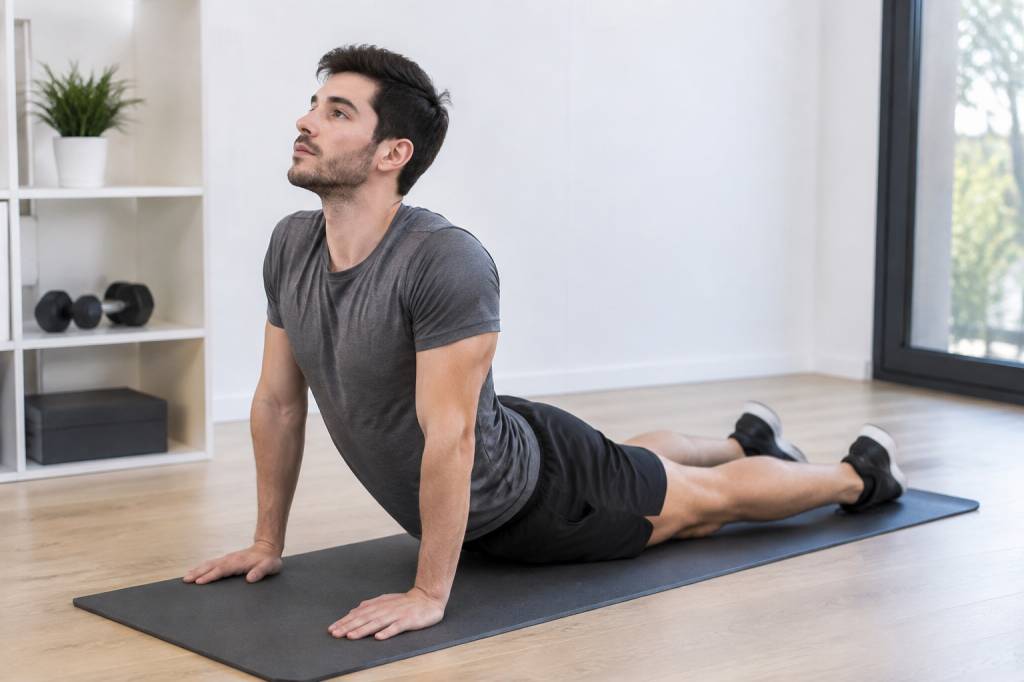
Stretching can provide a similar, although much smaller and temporary, feeling of decompression. Movements that lengthen the spine and open the hips may help you feel less compressed. Hanging from a bar, resting in a child’s pose or performing a gentle back extension will not permanently add height, but they can improve comfort and posture.
The effect is temporary because everyday movement and gravity eventually return. Think of it as polishing your posture rather than rebuilding your skeleton.
The posture effect: looking taller without growing
Posture has a remarkable influence on how tall, confident and athletic a man appears. Compare two versions of the same person:
-
In the first version, his head leans forward, his shoulders round inward and his hips tilt forward.
-
In the second, his chest is open, his shoulders are relaxed, his chin is level and his spine is comfortably aligned.
The second version will almost always look taller and more confident, even if the measuring tape gives exactly the same result.
Good posture also improves the way clothing sits on the body. A well-fitted jacket falls more cleanly, trousers create a longer visual line and shirts do not bunch around the waist. These details matter in men’s style, because looking taller is not only about numbers. It is also about proportion.
Stretching can support better posture by reducing tension in tight muscles. Strength training is equally important. A flexible upper back is useful, but it needs the support of strong back, abdominal and glute muscles. A body that is both mobile and strong is far more likely to hold a natural upright position.
Stretching exercises that can help you stand taller
The following exercises are designed to improve mobility, release tension and encourage a more upright posture. They are not height-growth exercises in the literal sense. Their real value is helping you move and stand as if you have more space through your body.
Cat-cow stretch
This gentle exercise mobilises the spine and is an excellent way to loosen up after sleeping or sitting for too long.
-
Begin on your hands and knees, with your wrists under your shoulders.
-
As you inhale, gently lift your chest and tailbone while allowing your spine to curve downward.
-
As you exhale, round your back and draw your chin slightly toward your chest.
-
Move slowly for eight to ten repetitions.
Do not force the movement. The goal is controlled mobility, not an audition for a circus troupe.
Child’s pose
Child’s pose gently lengthens the back and can be particularly relaxing after a long day at a desk.
-
Kneel on the floor and sit your hips back toward your heels.
-
Extend your arms forward and lower your chest as comfortably as possible.
-
Rest your forehead on the floor or on a cushion.
-
Hold the position for 20 to 40 seconds while breathing slowly.
If your knees are uncomfortable, place a folded towel beneath them or choose another exercise.
Chest and shoulder stretch
Tight chest muscles can pull the shoulders forward, creating a rounded appearance. This simple stretch can help open the front of the body.
-
Stand beside a doorway and place one forearm against the frame.
-
Keep your elbow around shoulder height.
-
Slowly turn your torso away from the arm until you feel a gentle stretch across your chest.
-
Hold for 20 to 30 seconds on each side.
Keep the shoulder relaxed. A stretch should feel noticeable, not sharp or painful.
Hip flexor stretch
Long hours of sitting can shorten and tighten the hip flexors. This may encourage the pelvis to tilt forward and exaggerate the curve of the lower back.
-
Step one foot forward into a comfortable lunge.
-
Lower the back knee to the floor if needed.
-
Keep your torso upright and gently move your hips forward.
-
Hold for 20 to 30 seconds before changing sides.
Do not arch your lower back to create a bigger movement. Keep the ribs gently tucked and let the stretch come from the front of the hip.
Standing hamstring stretch
Flexible hamstrings can make everyday movement easier and may help you maintain a more comfortable pelvic position.
-
Place one heel on a low step or stable surface.
-
Keep the knee slightly bent rather than locking it.
-
Hinge forward from the hips while keeping your back relatively straight.
-
Hold for 20 to 30 seconds on each side.
There is no prize for touching your toes. A controlled stretch is more useful than a dramatic collapse toward the floor.
Wall alignment exercise
This is not a traditional stretch, but it is an excellent way to practise upright posture.
-
Stand with your back against a wall.
-
Allow the back of your head, upper back and hips to touch the wall if comfortable.
-
Keep your chin level and gently draw your shoulders down.
-
Hold for 20 to 30 seconds and repeat two or three times.
Do not force your lower back flat against the wall. A natural curve is normal. The aim is alignment, not turning yourself into a human coat rack.
Can hanging make you taller?
Hanging from a pull-up bar is often promoted as a natural height-increase technique. It may create a temporary feeling of length through the spine and can strengthen the grip and shoulders. However, it does not permanently lengthen the bones of an adult.
If you try passive hanging, use a secure bar and begin with short periods of five to ten seconds. Gradually increase the time only if your shoulders feel comfortable. Avoid swinging, jerking or dropping suddenly from the bar.
Men with shoulder injuries, back problems, high blood pressure or other medical conditions should ask a qualified professional before trying hanging exercises. More is not automatically better, especially when your joints are involved.
Stretching and height during adolescence
For children and teenagers, stretching can support flexibility, coordination and healthy movement, but it still does not directly force the bones to grow longer. Height during these years is primarily influenced by genetics, hormones, sleep, nutrition and overall health.
A young person who wants to reach their natural height should focus on sensible habits:
-
Eating a balanced diet with sufficient protein, calcium, vitamins and minerals.
-
Sleeping regularly, since many important recovery processes happen during sleep.
-
Taking part in enjoyable physical activities such as swimming, running, football or strength exercises appropriate for their age.
-
Avoiding unverified pills, powders and online “growth systems” that promise extraordinary results.
If growth seems significantly delayed or unusually rapid, a doctor or paediatrician is the right person to consult. Stretching videos on social media are not a substitute for medical advice—however confident the presenter looks in his perfectly lit bedroom.
How often should you stretch?
Consistency matters more than intensity. Ten minutes of gentle stretching most days is usually more beneficial than one heroic session every two weeks.
A practical routine might include five minutes in the morning and another five minutes after work. Focus on the chest, shoulders, spine, hip flexors and hamstrings. Breathe slowly, avoid bouncing and stop if you feel sharp pain, numbness or unusual discomfort.
Dynamic movements are useful before exercise. These include arm circles, controlled leg swings and gentle torso rotations. Save longer static stretches for after training or separate mobility sessions.
It is also worth interrupting long periods of sitting. Stand up every 30 to 60 minutes, walk around the room and reset your shoulders. The best posture is not a rigid position held all day; it is the ability to move regularly and return to a comfortable alignment.
Stretching, style and the visual illusion of height
If your goal is to appear taller, posture is only one part of the picture. Clothing, colour and footwear can reinforce the effect.
Monochromatic outfits create a continuous vertical line. Trousers with a clean fit and a slightly higher rise can make the legs appear longer, while excessive fabric can visually shorten the silhouette. Jackets that fit correctly at the shoulders are usually more flattering than oversized styles that swallow the frame.
Elevator shoes can also add discreet height through specially designed interior lifts. Unlike exaggerated platform footwear, quality elevator shoes are built to look like refined everyday shoes. They can be useful for formal events, professional settings or simply those mornings when you would enjoy a little extra confidence with your coffee.
The most convincing result comes from combining these elements: a mobile body, good posture, well-proportioned clothing and footwear that suits your personal style. No single trick needs to do all the work.
What stretching cannot do
It is important to keep expectations realistic. Stretching cannot:
-
Reopen growth plates after they have fused.
-
Permanently lengthen the bones of an adult.
-
Replace sleep, nutrition or medical care during childhood.
-
Correct a serious spinal condition without professional guidance.
-
Guarantee a specific number of extra centimetres.
What it can do is improve flexibility, reduce muscular tension, support healthier movement and help you stand at your natural best. Those benefits are valuable even if the measuring tape remains stubbornly honest.
The taller feeling that actually lasts
Stretching may not make an adult permanently taller, but it can change the way you occupy space. When your shoulders are open, your head is balanced and your hips move freely, you often feel more confident before anyone else notices a difference.
Pair a short mobility routine with sensible strength training, regular movement and clothing that creates clean proportions. Add elevator shoes when you want a discreet lift. The result is not a magic transformation—it is something more practical and believable: a sharper silhouette, better comfort and the confidence of standing fully in your own frame.
So, can stretching make you taller? Not by lengthening your bones. But can it help you look taller, stand taller and feel more at ease in your body? Absolutely. And that is a rather handsome benefit for ten quiet minutes on a mat.