








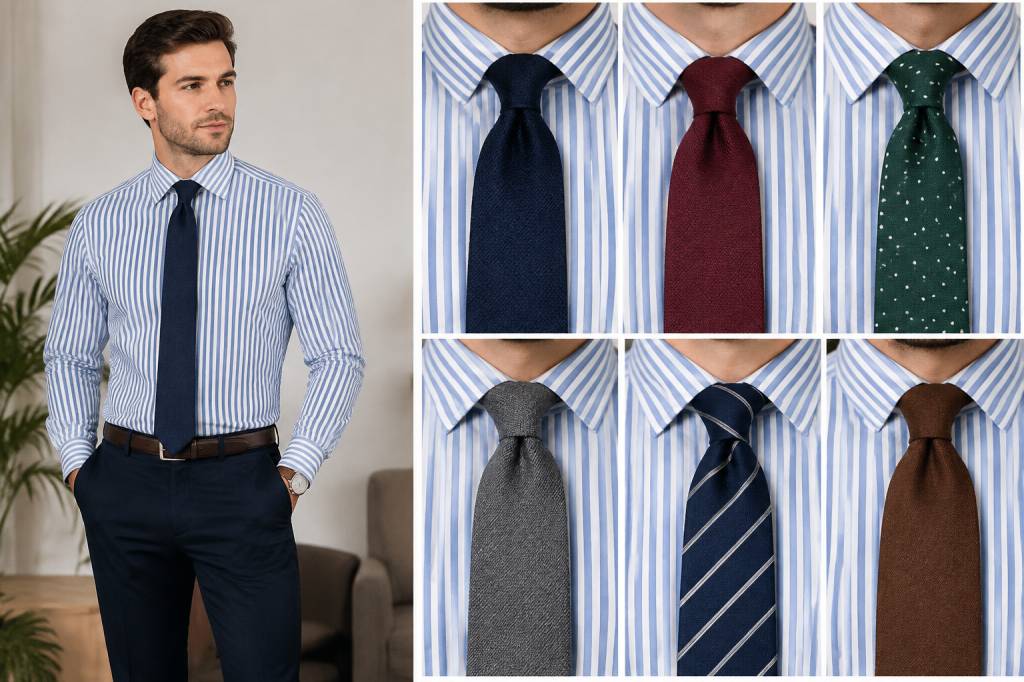
A striped shirt has a little more personality than a plain one. It can look crisp, relaxed, or quietly dramatic, depending on the stripes, the colors, and—yes—the tie. Choose well and the whole outfit feels intentional. Choose poorly and your tie and shirt may look as though they met in a crowded elevator and decided to compete for attention.
The good news is that pairing a tie with a striped shirt is not difficult once you know the basic rules. Think about scale, color, and the formality of the occasion. Then let one piece lead and the other play a supporting role. Here is how to get the balance right.
Start with the stripe pattern
Before choosing a tie, look closely at your shirt. Are the stripes thin or wide? Evenly spaced or irregular? Bold and high-contrast, or subtle enough to notice only when you step into the light? These details matter because the tie will introduce a second pattern—or a block of color—close to your face.
A useful rule is to vary the scale. If the shirt has narrow stripes, choose a tie with a larger pattern, such as broad diagonal stripes, generous dots, or a bold geometric design. If the shirt has wide stripes, a tie with a finer pattern is usually easier to wear. When both patterns are similar in size, they can blur together and create a restless, almost vibrating effect.
For example, a blue-and-white shirt with fine stripes pairs naturally with a tie featuring wide navy diagonal stripes. The contrast is clear, but the colors still feel related. A broad-striped shirt, meanwhile, can work with a small polka-dot tie or a restrained micro-pattern.
If you are not sure what counts as “different enough,” hold the tie against the shirt and take a few steps back from the mirror. If the patterns merge into a busy patch, try another scale. Your reflection should look composed from across the room, not just under the bathroom lights.
Solid ties: the easiest place to begin
A solid tie is the most dependable choice for a striped shirt. It gives the eye a calm place to rest and lets the shirt keep its character. This is particularly useful when the stripes are strong, colorful, or wide.
For a classic office combination, try a blue striped shirt with a navy tie. The colors belong together, but the solid tie keeps the outfit from feeling overworked. A burgundy tie adds warmth to a pale blue shirt, while dark green can make a subtle, handsome alternative to the usual navy.
White shirts with blue stripes are especially versatile. Pair one with a solid navy, burgundy, forest-green, or charcoal tie, depending on the suit and occasion. With a light gray suit, a navy tie feels polished. With a charcoal suit, burgundy brings a little warmth without turning the outfit into a festival.
Texture can make a solid tie more interesting. Knitted silk, grenadine, wool, and subtly woven fabrics add depth without introducing another obvious pattern. A textured navy tie, for instance, looks more considered than a flat, shiny one while remaining easy to coordinate.
One small caution: “solid” does not mean “any color will do.” Look for a shade that connects with one color in the shirt, suit, or jacket. A tie that seems to have arrived from an entirely different wardrobe can make even excellent clothes feel accidental.
Patterned ties without the pattern overload
You can absolutely wear a patterned tie with a striped shirt. The trick is to make the patterns distinct rather than identical in scale and intensity. A shirt with fine pencil stripes can look excellent with a tie featuring large dots, broad diagonal bands, or a loose paisley design. A shirt with bold stripes is usually happier beside a smaller, quieter tie pattern.
Color is the other part of the equation. Keep the palette controlled: two or three main colors are generally enough. If your shirt is blue and white, a navy tie with white or light-blue dots will feel connected. A burgundy tie with a small blue motif can also work, because the blue picks up the shirt while the burgundy adds contrast.
Imagine a pale blue shirt with narrow stripes, a navy suit, and a tie patterned with generous burgundy diamonds. The shirt’s lines are fine, the diamonds are larger, and the colors repeat across the outfit. Each element has its own job. That is what makes the combination look deliberate rather than merely busy.
Be more cautious with ties that have stripes of their own. They can look sharp, but pay attention to the direction and width. Diagonal tie stripes usually sit comfortably against vertical shirt stripes because the lines move in different directions. Still, choose stripes of noticeably different widths, and make sure the colors do not clash.
Choosing colors that work together
Color is often the first thing people notice, so keep the relationship between shirt and tie straightforward. You can choose a complementary contrast, a tonal combination, or a small accent color. Each approach has its place.
A simple way to build the outfit is to repeat one color at least twice. If the tie has a burgundy detail, a burgundy pocket square can echo it—but do not feel obliged to match them exactly. A similar shade is enough. The perfectly identical tie-and-pocket-square set can make a man look as if he bought his accessories in a gift box and never questioned the contents.
Also consider your skin tone and the shirt’s background color. A tie should brighten your face, not make you look as though you have just returned from a very demanding night train. Stand near a window, where natural light reveals the colors honestly.
Match the tie to the occasion
The same shirt and tie can feel formal or relaxed depending on their fabric and finish. For a business meeting or a formal event, choose a crisp shirt with narrow stripes and a silk tie in a deep, composed color. A neat diagonal pattern or a solid tie is usually a safe choice.
For a smart-casual dinner, you have more room to play. A soft cotton shirt with relaxed stripes can work with a knitted tie, a wool tie, or a patterned silk style. Leave the tie knot slightly less formal, and consider wearing the shirt with a textured blazer rather than a full suit.
At a summer wedding, a pale striped shirt and a light-colored suit can look elegant with a tie in navy, sage, or muted rust. Keep the tie fabric appropriate to the season: a heavy wool tie may feel strange beside linen, even if the colors are perfect. Fabric is part of the conversation too.
If the event is casual enough that a tie feels like an obligation, you may not need one. A striped shirt can stand on its own beneath a well-fitting jacket. But when you do wear a tie, make it look chosen, not borrowed on the way out of the door.
Think about the collar and the knot
The tie should suit the shirt collar. A spread collar leaves room for a fuller knot, such as a half-Windsor, while a narrow-point collar tends to look better with a smaller knot, such as a four-in-hand. The knot does not need to be complicated. A clean, balanced shape is more impressive than an elaborate one that looks like it required a rescue team.
Collar size also affects how much of the tie is visible. With a wide collar, a very slim tie can seem undersized. With a narrow collar, an especially wide tie may overwhelm the shirt. Aim for proportions that feel balanced around your face and shoulders.
As a practical check, the tie should sit neatly beneath the collar, and its tip should generally reach around the middle of your belt buckle. This simple detail keeps the outfit looking finished. A tie that ends halfway up the torso can shorten the visual line; one that hangs far below the belt looks equally careless.
Use proportion to create a cleaner silhouette
Clothing is not only about colors and patterns; it is also about the shape they create. A well-proportioned tie, a properly fitted shirt, and a jacket that sits cleanly at the shoulders help the whole outfit look more streamlined. Vertical shirt stripes can add to that effect, especially when they are fine and uninterrupted.
If you want a balanced appearance, avoid adding too many horizontal breaks at once. A strongly contrasting tie, a dramatically patterned pocket square, and a wide belt can each draw attention across the body. That does not mean you must dress cautiously. It simply helps to choose one focal point and let the rest of the outfit support it.
For men who like a little extra height, the same principle applies to the complete silhouette. Clean lines, a jacket that fits properly, and trousers with an appropriate length can help the outfit feel longer and more coherent. Elevator shoes can add discreet height, but the real style victory is when nobody is thinking about any one detail—they simply notice that you look well put together.
Common mistakes to avoid
And do not judge the combination only while standing close to the mirror. Look at it from a few feet away, in daylight if possible. If the shirt and tie still feel balanced, you are ready.
Three combinations worth trying
For the office: A white shirt with fine blue stripes, a navy suit, and a solid burgundy tie. The tie adds warmth, while the shirt keeps the look crisp.
For a relaxed dinner: A pale blue shirt with wider stripes, a charcoal blazer, and a textured navy knitted tie. The knit softens the outfit without making it look careless.
For a special occasion: A blue-and-white shirt with narrow stripes, a dark gray suit, and a silk tie in deep green with a larger, subtle pattern. The colors are restrained, but the pattern gives the outfit a little life.
When choosing a tie for a striped shirt, remember the essentials: vary the scale of the patterns, keep the colors connected, and dress for the occasion. Start with a solid tie if you want an easy win; experiment with patterns once you can see how the pieces relate. Style should feel like confidence, not a mathematics exam—and with the right balance, even the humble striped shirt can become the best-dressed man in the room.