





Some shoes announce themselves before you do. Apron toe shoes take a quieter approach: a curved line of stitching frames the front of the shoe, adding character without turning your feet into the main event. They are polished, versatile, and just distinctive enough to make a well-chosen outfit feel considered.
I first paid attention to them in a small shoe shop where the owner spoke about leather as if he were introducing me to an old friend. “Look at the seam,” he said, tapping the toe. That simple detail, he explained, was an apron: a separate piece of leather stitched around the vamp and toe. I left thinking about how one modest line could give a classic shoe so much personality.
Whether you are dressing for the office, a wedding, or a Saturday lunch that accidentally turns into dinner, apron toe shoes deserve a place in your wardrobe. Here is how to recognize them, choose the right pair, and wear them with confidence.
What Is an Apron Toe Shoe?
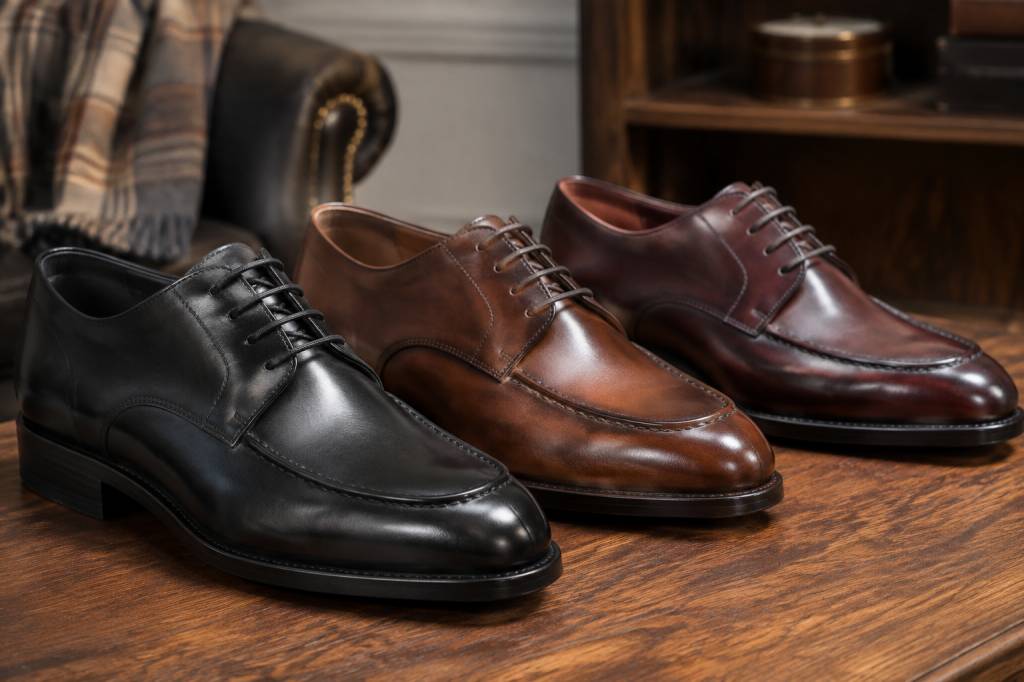
An apron toe shoe has a visible seam that outlines a piece of leather covering the front of the shoe. This piece is called an apron, and the seam usually runs around the toe and along the sides of the vamp. The result is a defined, slightly rounded front that gives the shoe more texture than a plain-toe design.
The style is often associated with moccasins and other hand-sewn footwear, though modern apron toe shoes come in many forms. You will find them as lace-up derbies, loafers, boots, and casual slip-ons. Some have prominent raised stitching; others keep the seam neat and subtle.
That variety matters. “Apron toe” describes the construction detail, not a single level of formality. A sleek leather lace-up can look right at a business-casual meeting, while a chunky suede loafer feels more at home with jeans. The stitching may be the common thread, but the leather, sole, shape, and overall finish set the mood.
Why This Style Has Staying Power
Men’s fashion has a habit of bringing back complicated ideas and pretending they are new. Apron toe shoes need no such reinvention. Their appeal comes from a useful balance: they look more detailed than a plain-toe shoe, yet less formal and sharp-edged than some cap-toe dress shoes.
The seam gives the upper visual interest, especially when the rest of the design is simple. It can soften a formal outfit, add polish to casual clothes, and help a basic pair of trousers feel less basic. That is a lot of work for one line of stitching.
They are also forgiving in the best sense. A classic apron toe does not depend on a short-lived trend, so a good pair can serve you for years. Choose a versatile color and a shape that suits your wardrobe, and you can reach for them long after a fashionable shoe has gone quiet.
Apron Toe, Moc Toe, and Plain Toe: What Is the Difference?
These terms are sometimes used interchangeably, which can make shopping feel like a shoe quiz nobody warned you about. They are related, but the details are worth knowing.
-
Apron toe: A separate piece of material covers the toe area and is outlined by a visible seam. The seam may sit flat or stand out in raised stitching.
-
Moc toe: Inspired by moccasin construction, this style often has a prominent U-shaped seam across the toe. Some moc toes are apron toes, but the terms do not always mean precisely the same construction.
-
Plain toe: The front has no additional panel or decorative seam. It is often the cleanest and most understated option.
When browsing, look at the shoe rather than relying only on the product name. Retailers sometimes use these labels loosely. A photograph showing the toe from above and from the side will tell you more than a clever description.
Choosing a Pair That Works for You
Start with the jobs you want the shoes to do. If you need one pair for the office and dinners out, a leather lace-up in dark brown or black is a sensible starting point. If your wardrobe is mostly relaxed, a suede loafer or a lighter-colored derby may get more wear.
Pay attention to the shape. A narrow, elongated toe tends to look dressier, while a rounder toe feels more casual. Neither is automatically better; the right choice is the one that sits comfortably on your foot and fits the proportions of your clothes. A shoe that pinches at the toes is not elegant. It is an argument with leather.
Fit deserves more attention than any trend. Try shoes on later in the day, when feet are often slightly larger, and wear the socks you expect to use with them. Your heel should feel secure, and your toes should have room to move. Leather may soften with wear, but it will not magically turn the wrong size into the right one.
Also consider the sole. A thin leather sole looks refined and works well in formal settings, but a rubber sole can offer better grip and greater comfort for everyday walking. If you spend long days on your feet, practicality is not a fashion failure. It is excellent planning.
How to Style Apron Toe Shoes
For business casual: Pair dark brown apron toe derbies with navy or charcoal trousers, a crisp shirt, and an unstructured blazer. The seam keeps the shoes from looking too severe, while the leather still gives the outfit a professional finish. A matching belt is a helpful guideline, not a law enforced by the fashion police.
For smart casual: Try suede apron toe loafers with chinos and a fine-knit sweater. This combination works beautifully for dinner, a relaxed office, or that family event where you want to look sharp without appearing as if you have come to negotiate a merger.
For jeans: Choose a simpler design with a moderate sole. Dark denim and brown leather make a reliable pairing; lighter jeans work well with tan or soft suede. Keep the jeans neatly hemmed so the shoe remains visible. A trouser leg that completely swallows an interesting shoe is a small wardrobe tragedy.
For colder weather: Apron toe boots offer the same stitched detail with more coverage. Wear them with wool trousers, dark denim, or a casual coat. If the boots have a thick lug sole, let the rest of the outfit stay relatively clean so the look feels balanced.
Color and Material: Small Choices, Big Difference
Dark brown is perhaps the easiest color to wear. It pairs naturally with navy, grey, olive, and denim, and it often feels a little less formal than black. Black apron toe shoes suit conservative workplaces and dressier outfits, especially when the leather is smooth and the stitching is restrained.
Tan and medium brown bring warmth to spring and summer clothing. They look particularly good with cream, pale blue, and lighter shades of grey. Suede adds texture and a relaxed feel, but it needs more protection from rain and stains than polished leather. If you live somewhere with unpredictable weather, keep that in mind before taking pale suede on its first adventurous walk.
For a first pair, choose a color that works with at least three outfits you already own. That simple test can save you from buying a handsome shoe that spends most of its life waiting for the perfect trousers.
Can Apron Toe Shoes Make You Look Taller?
They can contribute to a taller-looking silhouette, but the toe seam itself does not add height. The overall effect comes from proportion: a well-fitted shoe, trousers with a clean break, and a consistent color line can make an outfit look longer and more streamlined.
If you want extra height, some apron toe styles are available as elevator shoes, with discreet height-increasing insoles built inside the shoe. The added lift is hidden from view, while the apron detail keeps the exterior looking like a conventional dress shoe. Look for a design that feels stable and comfortable rather than chasing the biggest possible lift. A confident stride is more convincing than a few extra inches accompanied by a wobble.
Pay attention to your trousers, too. A closer fit through the leg and a hem that does not bunch heavily over the shoe can create a cleaner vertical line. The aim is not to disguise yourself; it is to dress in proportions that make you feel at ease.
Care Tips for a Longer Life
A little maintenance keeps apron toe shoes looking handsome and helps preserve the stitching. After wearing leather shoes, let them rest and dry naturally if they are damp. Cedar shoe trees help absorb moisture and maintain the shape. Avoid placing wet shoes next to a radiator; leather prefers patience to a sudden heat treatment.
-
Brush away dust after wear, paying attention to the seam where dirt can collect.
-
Use a suitable cream or conditioner on smooth leather, testing it on a discreet area first.
-
Protect suede with a spray made for suede and lift marks with an appropriate brush.
-
Rotate between pairs when possible, giving each pair time to air out.
-
Have worn soles or loose stitching repaired promptly by a professional cobbler.
That last point is easy to overlook. A good cobbler can often extend the life of quality footwear, and a repaired pair may become even more personal to you. Shoes, like old travel stories, tend to gather character with time.
A Dependable Detail for a Well-Dressed Wardrobe
Apron toe shoes are not loud, and that is precisely their charm. They offer a little more personality than a plain-toe design while remaining easy to wear across a range of occasions. Choose the right shape and material, make fit your priority, and style them according to the setting rather than the latest rulebook.
Most of all, wear them as though you chose them on purpose. The best shoes do not merely complete an outfit; they help you move through the day with a touch more confidence. And if a neat line of stitching can do that, it has certainly earned its place in the wardrobe.