







There is something wonderfully dramatic about a good pair of high heels. They change the way you stand, the way you walk, and sometimes even the way you enter a room. For men who want to look taller, heels can offer more than extra inches: they can become a genuine style statement, a conversation starter, and a small daily reminder to take up space with confidence.
Of course, wearing high heels as a man can feel intimidating at first. Will people stare? Which style should you choose? How high is too high? And, most importantly, how can you walk naturally without looking like you are negotiating with every step?
The good news is that men’s high heels have evolved far beyond theatrical footwear. Today, there are elegant boots, Cuban heels, platform shoes, and discreet elevator shoes designed to add height while maintaining a masculine silhouette. With the right pair and a little practice, looking taller can feel surprisingly natural.
Why high heels can transform your appearance
Height has always played a curious role in men’s fashion. A taller silhouette is often associated with presence, elegance, and authority. But the visual effect does not come only from the number of centimeters beneath your feet. Shoes also influence your posture, leg line, and proportions.
A raised heel encourages the body to stand slightly differently. Your chest may lift, your shoulders may settle back, and your legs can appear longer. Even a modest heel can make an outfit look sharper without shouting, “I am wearing special shoes!”
This is one reason men’s heeled footwear remains popular among actors, musicians, designers, and style-conscious men. A well-designed heel does not have to look extravagant. It can simply add structure and personality to an outfit.
I remember seeing a gentleman in Milan wearing dark leather boots with a subtle Cuban heel. Nothing about the shoes looked exaggerated. Yet he seemed to glide through the street with the confidence of a man who had already received excellent news that morning. The heel was not doing all the work, of course. His posture helped. His smile helped. But the boots certainly had a supporting role.
High heels made for men: choosing the right style
The first rule is simple: choose a heel that matches your personality and your wardrobe. A dramatic pair of platform boots may look fantastic on one man and completely unnatural on another. The best shoes are the ones you can wear with confidence rather than constantly monitor.
- Cuban heels: Usually between 3 and 5 centimeters, these slightly tapered heels are one of the easiest styles to wear. They work beautifully with leather boots, Chelsea boots, dress shoes, and even some loafers.
- Block heels: Wider and more stable, block heels are excellent for beginners. They provide extra height while making walking more comfortable and balanced.
- Platform shoes: Platforms add height through the sole as well as the heel. They can create a bold fashion look, especially with boots, but should be chosen carefully to avoid an overly heavy appearance.
- Heeled ankle boots: These are perhaps the most versatile option. Wear them with jeans, tailored trousers, or a wool coat. A pointed or almond-shaped toe can make the foot and leg look longer.
- Dress shoes with raised heels: For formal occasions, a discreet raised heel can add elegance without attracting unnecessary attention. These are ideal with suits, tuxedos, and evening trousers.
- Elevator shoes: These contain hidden internal lifts that increase height from inside the shoe. They are particularly useful for men who want a taller appearance while keeping the exterior design traditional.
If you are completely new to men’s heels, begin with a stable 3- to 4-centimeter heel. This is enough to create a visible difference while allowing you to develop a natural stride. There is no prize for beginning with the tallest pair in the shop. Your feet, unlike your ambition, may not be ready for that adventure.
High heels and elevator shoes: what is the difference?
High heels and elevator shoes share the same goal—helping you appear taller—but they achieve it in different ways.
With a traditional heeled shoe, the raised heel is visible from the outside. This creates a clear fashion detail. A Cuban-heeled boot, for example, communicates confidence and style. It says that the extra height is part of the design, not something to hide.
Elevator shoes use concealed lifts inside the shoe. The external heel may look fairly conventional, while the internal construction adds height beneath the heel and sometimes the entire foot. This design can be a practical choice for business meetings, weddings, interviews, or any situation where you prefer a classic appearance.
Neither option is better for everyone. It depends on the result you want. Are you looking for a visible fashion statement? Choose a stylish heel. Do you want a discreet boost with a traditional silhouette? Elevator shoes may be the smarter solution.
Quality matters enormously in both cases. A poorly constructed shoe can create pressure beneath the toes, restrict movement, or make your posture feel unnatural. Look for supportive insoles, a stable sole, breathable materials, and enough room for your toes to move comfortably.
How to look taller without looking uncomfortable
Extra height is only one part of the visual equation. The most convincing taller appearance comes from combining footwear with intelligent styling.
- Choose a slim, coherent silhouette: Clothes that follow your body without clinging tend to create a longer visual line. Extremely loose garments can make the body appear shorter and wider.
- Wear trousers with the right break: Trousers that gather heavily around the ankle can interrupt the leg line. A slight break or a clean, narrow fit usually looks more streamlined.
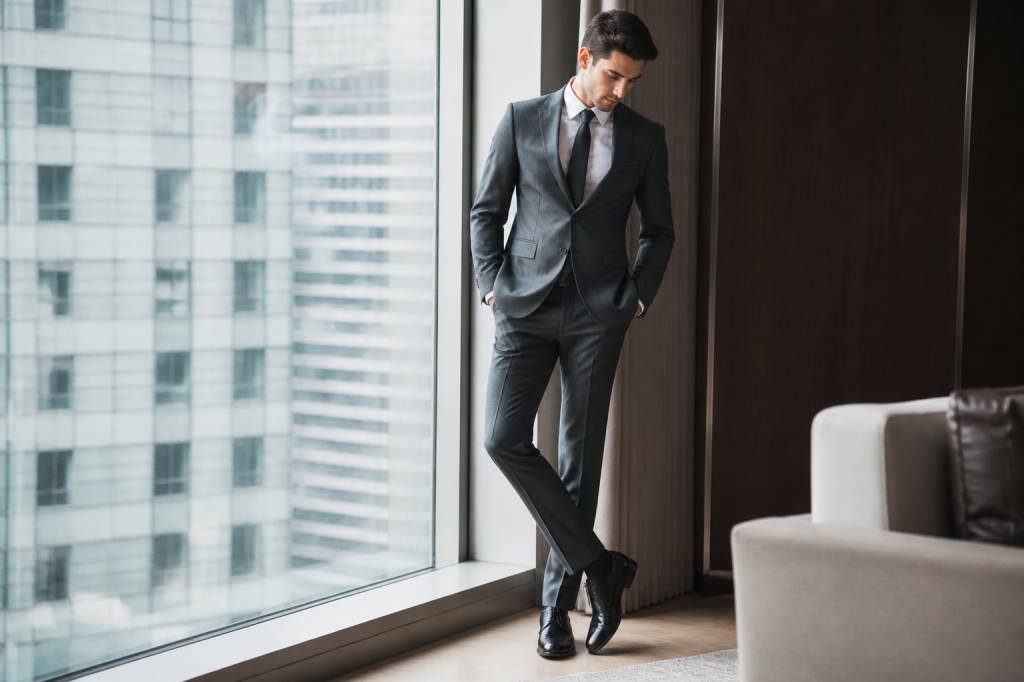
- Match your shoes and trousers: Similar colors create continuity from the waist down. Black shoes with charcoal or black trousers are especially effective for formal dressing.
- Use vertical details: Pinstripes, open jackets, long overcoats, and narrow lapels can guide the eye up and down rather than across the body.
- Avoid excessive contrast: Bright shoes with sharply contrasting trousers can visually divide the legs. That may be stylish, but it will not always create the tallest effect.
- Keep proportions balanced: If your shoes have a substantial heel or platform, avoid pairing them with extremely skinny trousers. The outfit should look intentional from head to toe.
Color can also help. A monochromatic outfit does not need to be boring. Try different shades of one color: navy trousers, a slightly lighter blue shirt, and a dark blue jacket. The result is elegant, modern, and visually continuous.
Posture is your most powerful height trick
A heel can add several centimeters, but posture can change your entire presence. Stand with your feet comfortably apart, keep your shoulders relaxed, and imagine the crown of your head moving upward. Do not force your chest forward or arch your lower back. The goal is length, not a military parade.
When walking, take slightly shorter steps than you would in flat shoes. Place the heel down gently, then roll through the foot toward the toes. Move from the hips rather than dragging the feet. If the heel is narrow, avoid rushing. Confidence looks calm. Nobody has ever appeared more powerful by sprinting nervously across a room in leather boots.
Practice at home on different surfaces. Begin with a carpet, then try a wooden floor, and finally a smooth outdoor surface. Pay attention to stairs, uneven pavements, and wet ground. A beautiful shoe is still a shoe, and physics remains stubbornly fashionable.
Building confidence before wearing heels outside
Confidence does not always arrive before the first step. Sometimes it appears after ten minutes of practice, sometimes after a compliment, and sometimes only when you realize that everyone else is more concerned with their own shoes than yours.
Start by wearing your shoes for short periods. Walk around your home, stand while preparing coffee, or wear them during a brief shopping trip. This allows your feet and ankles to adjust gradually.
- Wear the shoes for 20 to 30 minutes at first.
- Use cushioned insoles if the footbed feels firm.
- Apply discreet heel grips if your foot slips inside the shoe.
- Carry comfortable foldable shoes for long events or travel.
- Break in leather gradually rather than wearing new shoes for an entire day.
- Practice standing naturally before practicing a dramatic entrance.
Your first public outing should be somewhere relaxed. A casual dinner, an art gallery, or a stylish café is easier than a twelve-hour wedding celebration. Once you feel comfortable, you can take the shoes into more formal settings.
Finding the right fit and protecting your feet
Fit is not a minor detail. It is the foundation of comfort, balance, and confidence. Your toes should not be pressed against the front of the shoe, and your heel should not slide excessively when you walk. Try shoes at the end of the day, when feet are naturally a little larger.
Pay attention to width as well as length. Many men focus on shoe size but forget that different brands use different shapes. A narrow design may look elegant but become painful after an hour. If you have wide feet, search for styles with a rounded or almond-shaped toe and avoid rigid pointed designs.
The heel should feel securely attached to the shoe, and the sole should offer enough grip for normal movement. For higher heels, a stable base is more important than a dramatic angle. A strong block heel often provides a better introduction than a thin stiletto-style heel.
If pain continues after adjusting the fit, stop wearing the shoes and reconsider the design. Fashion should challenge your creativity, not your circulation. Persistent discomfort is a sign that the shoes are unsuitable, not that you need to become tougher.
How to style men’s high heels for different occasions
For everyday wear, try dark heeled Chelsea boots with straight-leg jeans and a fitted overshirt. This combination looks modern without appearing overworked. The elastic side panels make the boots easy to wear, while the heel adds a discreet lift.
For the office, choose polished leather boots or dress shoes with a modest heel. Pair them with tailored trousers and a structured jacket. Keep the shoe clean and refined; the office is generally not the place for enormous platforms unless you work in a wonderfully progressive fashion studio.
For an evening occasion, a pointed-toe boot with a 4- or 5-centimeter heel can look exceptional beneath black trousers. Add a velvet jacket, a crisp shirt, or a long tailored coat. The result is confident, elegant, and slightly theatrical in the best possible way.
For weddings and formal celebrations, elevator dress shoes are a practical choice. They can add height while maintaining the familiar appearance of classic formal footwear. Choose a style that coordinates with your belt, watch strap, or suit color.
The confidence behind the centimeters
Looking taller with high heels is not about pretending to be someone else. It is about choosing how you want to present yourself. Some men wear heels for fashion, others for height, and many enjoy both. There is no single correct reason.
The most attractive quality is comfort with your own choice. Wear the boots boldly, or choose discreet elevator shoes. Experiment with a Cuban heel, a platform, or a classic dress shoe. The important thing is that your footwear supports your style rather than controlling it.
When the fit is right, the outfit is balanced, and your posture is relaxed, the extra height becomes almost effortless. You do not need to announce it. Walk into the room, enjoy the movement, and let your shoes tell their own story.
After all, a few extra centimeters may change how tall you look. Confidence changes how tall you feel—and that is the detail people remember.